Climate change hits Ireland as extreme weather conditions set to become 'the new norm’
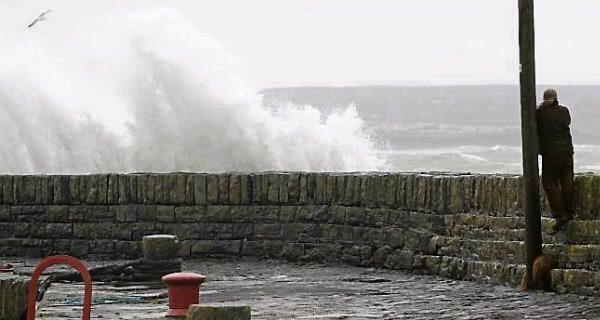
If you thought the weather couldn’t get much worse than the winter just gone by, think again. New research has found extreme seasonal conditions will be the “new-normal” by the end of this century.

Climate change hits Ireland as extreme weather conditions set to become 'the new norm’

In fact, Ireland is likely to be subject to periods of extreme temperatures, extreme rainfall and drought on an increasingly regular basis, according to researchers at Maynooth University.

Change is already at hand. The research also reveals that previously out-of-the-ordinary periods of extreme weather have become significantly more regular since the mid-19th century.

The authors of the study warn that extreme seasonal weather “has significant societal implications”.

They say wet and stormy conditions during winter 2013/14 resulted in widespread flooding and coastal inundation and that the increasing likelihood of wet winters implied a significant challenge for water resource management and agriculture.

“Similarly, hot summers have been associated with increased mortality in Ireland (Pascal et al, 2013), whilst rainfall deficits have impacted the agricultural sector (Stead, 2014). The effects of the latter have the potential to propagate internationally through Ireland’s agricultural exports (Hunt et al, 2014),” the report says.

Yet despite the economic and human costs associated with seasonal extremes being embedded in the public consciousness, communicating to stakeholders the exact scale of the challenge posed by climate change still presents significant difficulties, the report says.

Lead author Tom Matthews, previously of Maynooth and now at Liverpool John Moores University, said the impetus behind the research was “a desire to combat the ‘psychological distancing’ that is widespread among the general public and decision makers”.

“There is an undeniable need for us all to reduce our emissions and plan appropriately for climate change. However, there is a common perception that climate change is temporally, geographically, or socially distant from people’s lives, and this reduces public engagement with the issue,” Dr Matthews said.

While few of this generation will be around to experience it, 26 out of the final 30 years of the 21st century are expected to be warmer than 1995, the driest and hottest summer on record. Analysis shows the likelihood of an equally warm summer has increased 56-fold since 1900.

The researchers’ projections also show that one in every eight winters will be as wet as the wettest so far experienced (1994/95) and that the likelihood of a similarly wet winter recurring has doubled since 1850.

The research, published in the international journal Climate Risk Management, uses more than 150 years of collected data and sophisticated modelling to map and project extreme seasonal conditions in Ireland.

The publication of the paper is an output from the ongoing project, ‘Irish Climate Futures: Downscaling for Decision Making,’ led by Conor Murphy of Maynooth University’s Department of Geography. The university’s president, Philip Nolan, described climate change as “the most pressing problem facing humanity as a whole”.

More in this section

Lunchtime News

Newsletter

Keep up with stories of the day with our lunchtime news wrap and important breaking news alerts.

Cookie Policy Privacy Policy Brand Safety FAQ Help Contact Us Terms and Conditions

© Examiner Echo Group Limited