Our reporter reveals the power of Garda CCTV
Two gardaí sit in front of a wall of 40 screens, each showing a different window on a weekday morning in Cork.

Our reporter reveals the power of Garda CCTV

Behind them is a larger room, with four desks where screens relay information from across the county.

The windowless Garda Communications Centre, located on a top floor within the Anglesea St station in Cork’s city centre is the nerve centre of the force’s operations in Cork, where at any given time six gardaí monitor CCTV feeds, emergency calls and all information being fed into their network.

The main room, with dedicated desks overseeing operations on the city’s north and south sides as well as the rest of the county, is dimly lit and just above whisper-quiet.

There is no small talk here. When an exchange does happen it is strictly work-only, and the soft, flat conversational tones would be more familiar at a funeral home than in the manic command centres seen in action thrillers.

The atmosphere is exactly how Sergeant Peter Murphy, emergency response co-ordinator, likes to keep it.

“We aim to minimise our noise footprint,” Sgt Murphy explains as he guides me through the room.

“If I have to shout to be heard we are wasting time.”

Sgt Murphy’s desk is covered in screens and consoles.

A device on his desk looks like a joystick controller from an early 90’s game console, but with more buttons.

From here he can control any of the 40 Garda CCTV camera across Cork City.

Sgt Murphy punches a few buttons, moves the joystick, and shows off the impressive zoom on the cameras.

Each camera has a default position, a wide angle shot set to take in as much detail as possible.

Once moved, the cameras reset to these positions within 15 minutes.

By way of demonstration he pulls up the feed from the camera high atop a pole on Daunt Square.

With the zoom we can see the prices of the special offers inside the front door of the Dealz store.

“If you had somebody inside in Dealz and someone on surveillance calls to tell us they’re in there, he’s going to come out of there in five minutes then we can line up the camera and wait for him to walk into shot,” Sgt Murphy shows.

“But we can then, as a redundancy measure, have a second camera on it covering the bigger picture so that as soon as he walks out of shot, we don’t lose him.

“Sometimes you would see the lads following someone working in tandem so that they can really have everything lined up.

"If you don’t know if he’s going left or right, they have the camera lined up left or right. Sometimes the camera doesn’t move that quickly,” he says.

To illustrate his point Sgt Murphy moves the camera on Daunt Square towards the corner of the Coal Quay opposite The Roundy pub, where there is another camera looking back at us.

On another screen a map of Cork is lit up with blue icons.

This is the Automatic Vehicle and Personnel Location System.

Each squad car and garda radio has an inbuilt GPS chip, meaning that Sgt Murphy knows where every on-beat garda is at any given time.

The system shows icons at opposite ends of a bend in a road in West Cork. A single car has been involved in a minor crash.

“We can see our people are deployed tactically. The idea being traffic approaching from either side is being warned, and our patrol car is closer to the scene,” he says.

A cluster of icons is gathered at Washington St — court is in session and by glancing at the different call signs associated with each icon, Sgt Murphy can tell what town the gardaí in court have travelled from.

I put it to Sgt Murphy that for every person assured that the gardaí have such surveillance powers at their disposal, there will be others who will see these advancements in police technology as a further step towards an Orwellian future where privacy and civil liberties are gradually eroded.

What is to stop a garda using the camera to read my text messages from over my shoulder, for example?

“Theoretically speaking that’s all possible”, Sgt Murphy admits, before outlying why he believes there are enough safeguards in place to prevent abuse of the system.

“We’ve had these cameras in action since 2002, I’ve been a part of the project since then, it is evolving all the time and we’ve never had an issue.

There are rules and guidelines for using the cameras, that you don’t intrude upon people’s privacy.

We only zoom in to see what we need to see, to clarify what is happening or to see if the person we are looking at is the person we are looking for.

“The cameras generally spend most of their time zoomed out, in their homing position which is a wide- screen shot capturing the maximum amount of information,” he says.

Aside from the practical impediments to abusing the system, these specially trained operators must also follow statutory guidelines.

“Right across our technological databases there is a Garda IT policy which we have all signed up to and covers everything from Pulse, radio transmissions, telephone transmissions — that’s the statutory side of it, that’s what governs how we do our business and how we use the system,” says Sgt Murphy.

“None of us want to go down the road of knowingly breaching Garda information technology policy, but aside from that there is the moral imperative.

"People in here are just focused on their jobs, the same as any other occupation — get through your day’s work as effectively as possible.

"You’re not going to have time to be messing around with things, and if you are, you’ll be spotted,” he says.

Such footage and garda information could be useful to those pursuing a civil case, such as a road crash.

However, Sgt Murphy says that while the data is available, the public cannot seek it from the communications centre.

“If that was the case we would be crossing all sort of data protection boundaries. The release of any data or information is at the behest of the commissioner.

"People have to apply in writing, but in reality what happens is their solicitor applies.”

Footage is not the only information available, however. Every incident reported is logged with a unique identifier, and the details stored.

Sgt Murphy gives the example of a road traffic crash.

“When you have your accident, there is a unique number assigned to that accident and it never goes away. In five years’ time if there’s a civil claim it will still have the same number.”

So they can write in and request the record.

There’s the number, the exact time the call came in at, the time the gardaí were dispatched, who rang in, the details, what we did about it, who we dispatched.

“They can get that and if they wish then they can apply for the CCTV footage.

"If the footage is available, if it doesn’t contravene any data protection issues and if all parties are agreeable to it and if it is of use then it can be released to the solicitor,” he says.

With a background understanding of what goes on in the Garda nerve centre, it was time to take a walk.

The array of screens and ‘playground of technology’ all looks impressive, but what are their real-world applications?

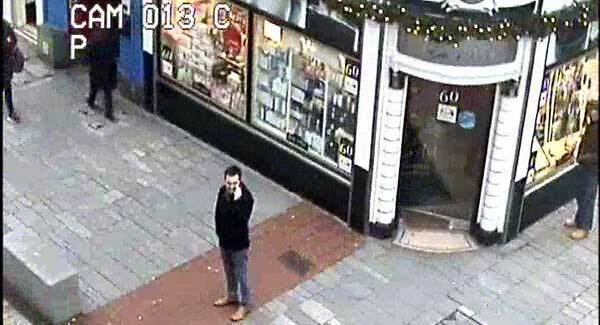
Putting the gardaí CCTV system to the test, I went for a short walk through Cork City to see how much of my journey would be picked up by the Garda cameras.

I left Anglesea St Garda station and turned right, crossing the bridge onto Parnell Place and turning down Oliver Plunkett St.

Stopping opposite the Post Office I put in a call to the communications centre to see if I was being watched.

“Look up,” the voice on the line said as a camera on top of a pole turned its head to fix its gaze on me. From there I continued onto Grand Parade before looping onto South Mall and back to Anglesea Street.

Upon my return the garda monitoring my progress had a list of times next to numbers indicating the cameras where I was picked up on my short walk.

While the entirety of my journey was not captured on camera, I was clearly visible for most of the journey and the footage produced was the result of the casual observation of a journalist, not the intensive surveillance of a criminal suspect.

Sgt Peter Murphy, emergency response co-ordinator at the communications centre, said the cameras can be used not only to track suspects but also people who feel unsafe.

He said that the cameras have been in operation since 2002 and can provide assurances to those who feel vulnerable as they walk the streets.

Sgt Murphy said that those in the communications centre have been able to speak to women who have called to report their concerns that they were being followed at night.

In these instances the gardaí adopt a three-pronged approach to remedying what can be a stressful situation for the caller.

A garda stays on the line with the caller, talking them through their walk.

Meanwhile, the information relayed by the caller is used to identify them on the CCTV system and to establish whether there is a threat.

Finally, the centre uses the automatic vehicle and personnel location system to locate the nearest available garda and to alert them to the ongoing situation.

Even in cases where a perceived threat fails to materialise, Sgt Murphy says the assurance is valuable to the caller.

Another example Sgt Murphy cites as an example of the safety benefits of the CCTV system is the recent turning on of the Christmas lights — a city centre event that draws crowds of thousands into a relatively tight space.

While gardaí on the ground deal with issues they see within their crowded peripheral vision, the bird’s-eye view afforded to the communication centre allows their colleagues back in base to identify other, less obvious issues such as troublemakers within a crowd or a lost child.

More in this section

Lunchtime News

Newsletter

Keep up with stories of the day with our lunchtime news wrap and important breaking news alerts.

Cookie Policy Privacy Policy Brand Safety FAQ Help Contact Us Terms and Conditions

© Examiner Echo Group Limited