Device from Tyndall National Institute in Cork will aid space missions
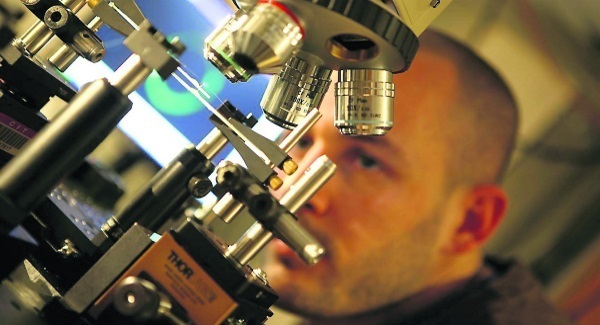
Experts at Tyndall National Institute in Cork have developed a robust new type of transistor which can withstand high doses of space radiation.
Their new ‘radiation hard’ device will improve the reliance of space probe computer systems, allowing them to successfully and reliably collect huge quantities of data while at the furthest reaches of our solar system.
There are now hopes their next-generation transistor could play a key role in the European Space Agency’s (ESA) Jupiter Icy Moon Explorer (JUICE) mission to the planet, scheduled for launch in 2022.
Conventional silicon-based transistors used on previous space missions, such as Nasa’s Galileo and Pioneer expeditions, tend to fail when exposed to high levels of space radiation.
The ESA approached Tyndall to develop a gallium nitride-based device which would be stable enough to withstand this damaging radiation.
Tyndall, led by Professor Peter Parbrook of Tyndall and ESA’s Dr Andrew Barnes, embarked on the technically complex project in a programme supported and funded by the Irish Research Council and ESA.
The device’s design and performance testing were done at Tyndall before a prototype was sent to an ESA facility in the Netherlands for a year of radiation tests.
Tyndall researcher Dr Matthew Smith has published the results of these tests in the Semiconductor Science and Technology journal which showtheir new transistor is far more stable and resistant to the effects of radiation than previous transistors. Their new device will ultimately help space probe systems avoid electronic failure, and to function and collect data more effectively.
“Gallium nitride-based devices are very thermally stable, chemically stable, and robust — basically everything that could be better than silicon, in terms of space reliability,” Dr Smith said.
Dr Barnes said the work done at Tyndall has provided valuable insight into the potential offered by such new transistors.

CONNECT WITH US TODAY



Be the first to know the latest news and updates