Hard work and serving the local people was the Healy-Rae way
Indeed, the family’s work ethic is reflected in the fact that it has never been defeated in a county council or Dail election over the last 42 years.
Donal Hickey, author of a new 200-page book, The Healy-Raes — A Twenty-Four Seven Political Legacy, says the family attributes that success in politics to hard work, service to the people and the efforts of a loyal network of supporters.
“The Healy-Rae machine is not a political party as the term is understood; neither does it fit into the left, right or centre slots on the Irish political spectrum.
“The approach is populist and intensely local, based on service to the general public — giving the maximum number of people what they want and limiting restrictions, in planning for example, as far as possible,’’ Mr Hickey writes.

Jackie Healy-Rae, who died last December, was defined as the politician who represented people who have their dinner in the middle of the day, but this underestimated a shrewd and intelligent man with a gift for attracting publicity.
Donal Hickey, who recently retired from the Irish Examiner, has covered the life and times of the Healy-Raes for more than four decades.
He tells how Jackie, a man from a frugal rural background on a small farm in the shadow of Mangerton Mountain, where his father Danny milked six cows and kept a horse for ploughing, left school at 13 years of age, having never sat an exam.
In the future politician’s own words, his mother, Mary, was a “miracle’’ worker. She cared for the family. His father was disabled for 24 years after damaging a disc in his back.
Jackie Healy-Rae became a successful businessman and a politician, who struck impressive deals with minority Governments for the benefit of his South Kerry constituency.

The dynasty is now into a third generation. Jackie’s son, Michael is an independent TD. Another son, Danny, and Danny’s own son, Johnny, are both poll-topping members of Kerry County Council.
All feature in the book. “Three for the price of one” was how Jackie once described the way the team works.
Jackie could whistle and dance, often at the same time. He played the melodeon and saxaphone, was a speedy Kilgarvan senior hurler and promoted traditional music.
He cut turf, worked in New York for a while, came home and bought a hackney car. He also acquired a tractor to plough fields and mow hay for local farmers. He opened a bar in Kilgarvan, started a plant hire business and became involved in Fianna Fáil.
Healy-Rae was regarded as a shrewd political campaigner, with an infectious sense of humour and an earthy turn of phrase.

He became a Kerry County Council member in 1973, was involved in several Fianna Fáil byelection campaigns and organised crowd-pulling final rallies with marching bands, bonfires, spectacular torchlights, and goalpost crossbars lit with sods of blazing turf.
The book traces Jackie Healy-Rae’s split from Fianna Fáil, his election as an Independent TD, his rivalry with consituency colleague John O’Donoghue and the issues on which he campaigned.
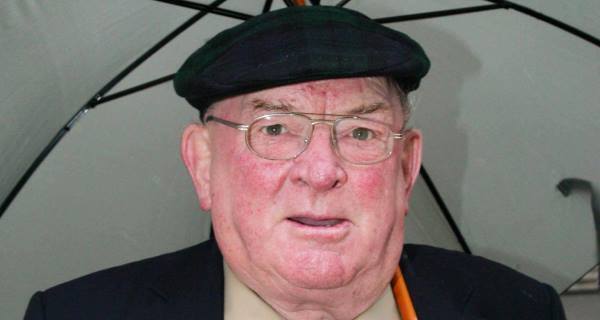
Noted for wearing trademark Russian style hats and tartan caps, Healy-Rae struck deals with Governments in return for his vote in the Dáil.
Details of his 2007 confidential agreement, costed at €66m, are revealed. Bertie Ahern signed it with Healy-Rae, not as Taoiseach but as Fianna Fáil president, which put it outside the remit of the Freedom of Information Act.
Mr Hickey, however, obtained a copy of the document from “sources independent of Fianna Fáil and the Healy-Rae organisation”. It fills six pages in the book and provides a fascinating insight into the detailed commitments sought by Healy-Rae and given by Ahern.
However, that agreement was not honoured in full because of the economic collapse and consequent spending cuts.
Some people saw Healy-Rae’s flamboyant style as being from another era that personified secret deals and backroom politics. But, Mr Hickey said, his constituents took little notice of such remarks from people “above in Dublin” who didn’t understand their ways.

Healy-Rae loved elections, of course, especially the endless speculation that minority Governments might be toppled. He never pulled the plug to cause an election but sometimes he issued thinly veiled warnings that he might do so.
Asked outside Leinster House one day about his voting intentions on some contentious issue, he repled: “The fellas inside there can be buying oil for the chains of their bicycles.”
The Healy-Raes – A Twenty-Four Seven Political Legacypublished by Rushy Mountain Books, will be launched by journalist Michael O’Regan in Healy-Rae’s Bar, Kilgarvan, tomorrow, between 3pm and 6pm.