‘If I had the option, I would impose a life sentence, not so much to punish the accused, but rather to protect society’
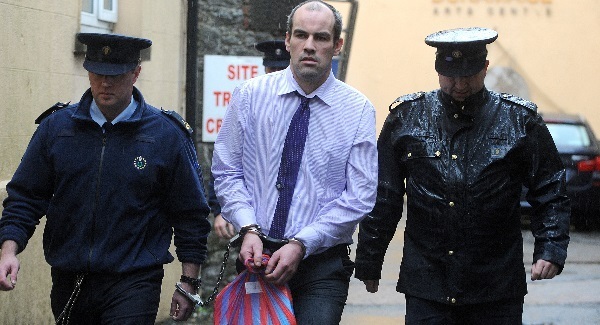
Judge Keenan Johnson described a psychological report on a man he jailed for the false imprisonment of a young girl as “disturbing”.
Michael Martin, aged 36, a father of two originally from Dublin and now with an address at Shandon Court, Yellow Rd, Waterford City, admitted to the false imprisonment of an 11-year-old girl at Cullohill in Co Laois on March 4.
He had 92 previous convictions and was on bail at the time of the offence.
He dragged the girl into a stolen 4x4. The girl escaped when one of her 10-year-old twin brothers distracted the accused by attacking him while clinging onto the moving vehicle.
Martin has suffered chronic post-traumatic stress disorder since the age of 12, when he witnessed a friend die.
Man who tried to abduct girl sentenced to 13 years in jail https://t.co/EZcJHGarxt (SN) pic.twitter.com/gvJEvHmG1k
— Irish Examiner (@irishexaminer) November 5, 2015
He has addiction issues, a mild mental handicap, and depression. A previous hearing was told that Martin suffered sexual abuse, physical abuse, and neglect as a child.
Judge Johnson said: “The Constitution says all children are born equally. However, a reading of the forensic psychological report in this case clearly illustrates that some children are born more equal than others.
“The accused’s previous record is very extensive. He has 92 previous convictions going back to 1999. These include a conviction for sexual assault in 2000 and abduction of a child in 2003 and threatening to kill or cause serious bodily harm in 2010. He also has a number of convictions for burglary, theft, criminal damage, unauthorised taking of a car, robbery, and some road traffic matters.
“While I don’t have a risk assessment in relation to the accused, the detailed forensic psychological report which has been furnished gives me great cause for concern. I’m satisfied from having looked at the issues of concern outlined on page 25 of the report that the accused cannot be but at high risk of reoffending over the next 12 months and indeed into the future.
“The accused’s background was both chaotic and unhappy. He suffered a number of significant bereavements throughout his life including the death of his first girlfriend by suicide, while she was pregnant with their child. She shot herself in the presence of the accused.”
Among other bereavements, Judge Johnson noted that, “at the age of 12, he witnessed the death of a playmate, who died when he fell into a septic tank”.
Judge Johnson said: “Two weeks prior to this offence, the accused presented himself to the relevant psychiatric services looking for assistance. This would indicate a recognition on the part of the accused, that he was in need of help and support.
“It’s a sad fact of life that, in our society, there are many people like the accused, who have fallen through the cracks and have not been provided with the supports and assistance, which would have helped them in their rehabilitation.
“In fairness, state agencies such as the HSE and the probation services do fantastic work in the area of treatment and rehabilitation of offenders. It could be argued that, if more resources were diverted from the penal side of the criminal justice system towards the probation side, the rehabilitation of offenders might be more effective. This is a debate for another day, but something worthy of serious consideration by the powers that be.
“Resources focused on rehabilitation rather than punishment could probably provide society with better outcomes.
“What he did was a terrible thing. However I am not sure that he fully appreciates that. If I had the option, I would impose a life sentence, not so much to punish the accused, but rather to protect society.
“However, the jurisprudence and the decisions of the Appeal Courts do not permit me to impose a life sentence.”
Judge Keenan instead imposed a 17- year sentence, with the final four years suspended for five years. He imposed a series of conditions on the suspended element of the sentence, which are aimed at supporting and assisting with his rehabilitation.
The judge recommended that prison authorities put measures in place to prevent Martin from being subjected to assaults while in prison and he asked that the media “exercise restraint” when reporting on the matter.
The court was told of the importance of a structure in order to manage the release of Martin. This is “to ensure that not only are his best interests served, but also that society is protected from any repeat of this criminal behaviour”, he explained.
The suspended part of Mr Martin’s sentenced has a number of conditions attached. The conditions included that he keep the peace and be of good behaviour, be under the supervision of the probation services, that he co-operates with the directions of mental health services and prior to release that he engages with the Building Better Lives programme at Arbour Hill.
Judge Johnson also recommend the accused be appropriately psychologically assessed prior to release.
Editorial: 12