DRONE TECHNOLOGY: Concern at machines over our heads
It started in the parking lot of 3DR in San Diego, California. As I watched it take off, and observed heartbeats from the GPS indicator glowing in the twilight, I knew I was home. This was the future, and for once, I was right on time.
Most people view drones with the same suspicion they once viewed personal computers: Why would I want that? Sure, there are reasons of utility — taking pictures of your house, your children, your dog — from a magical perspective. But there is also the sheer excitement and power of it all. That’s the hallmark of a truly mass market success.
The Economist estimates that more than 1m drones will be sold globally over the festive season. The market has been tripling or quadrupling every year. And this is not just an American phenomenon — the largest drone manufacturers ship as many products in Europe as they do in the US.
Despite being only a few years old, drone companies are collectively valued at well over $10bn (€9m). Profit margins are growing and the cost of drones and components is dropping. Drones are indisputably the first successful mass market robot. We are witnessing the dawn of something magical. The internet brought our computers and humanity together. Mobile gave us legs. Drones give us wings. They will extend the range of human capabilities far further and faster than any of these previous revolutions. But putting advanced technology in the hands of the mass market creates new risks.

In practical terms, drone technology democratises aviation. To some, this is liberating and once-in-a- lifetime business opportunity. To others it is terrifying.
Why? Aviation is perhaps the world’s most highly evolved, disciplined, globally integrated, heavily regulated priesthood. There is a very high bar to entry: Pilots are extensively trained, highly scrutinised, tested, and retested. Ditto for their aircraft: New planes require years of testing and certification where triple- redundancy is the table stake. The system depends on co-operation and following the rules — a single rogue can threaten the health of the entire system.
There have been more than 1,000 reported near misses between drones and manned aircraft in the US alone. The rate of incidents is now increasing faster than the increase in drone sales. Most of these reports are from well-intentioned but poorly trained and informed operators. There are rules in every major country governing the use of recreational drones.
Examples may include prohibitions against flying near airports, prisons, nuclear power plants, and sports arenas. And yet the incidents continue. Why? Governments are not equipped to tame the market for drones any more than guarantee safety on the internet. For one, there is simply too much traffic to police. Civil aviation authorities are staffed to enforce rules at major airports — but drones turn every backyard into a potential takeoff and landing site.
Police are already overburdened and lack the specialised knowledge and tools to enforce complex airspace rules. Second, the technology is changing too fast. Today’s drones are updated as quickly as iPhones, with significant advancements in capabilities — whereas aviation rulemaking is generally measured in years, and often spans decades. Finally, the very technologies needed to address drone issues, are not technologies with which governments — or the traditional cadre of contractors to them — are familiar or capable of building or keeping up with the times.

What then about the drone manufacturers? Our experience is that they are deeply concerned with the safety and reputation of their products. And for good reason. The bigger manufacturers face a statistical certainty their products are more likely to wind up on the front page attached to a significant incident.
Yet they are operating in a young, dynamic, and fiercely competitive market.
Success depends principly on superior hardware engineering (to an even greater degree than smartphones where software now plays an equal role). Solving the big problems of drone misuse is a business in and of itself and not a core competency of drone manufacturers. Even if it was, the concept of self-policing by product manufacturers does not have an encouraging historical track record (ask any Volkswagen owner).
Product manufacturers have their own view of the world, their own priorities, and limitations. Yet the problem of uncontrolled drones demands an immediate solution. Who or what can bridge the gap between governments and manufacturers while keeping the market thriving?
This has happened before. When the first internet browsers appeared, they offered an unfiltered view into what was a dark place. Fraudsters and hackers abounded, and people said and did whatever they wanted, as if they were invisible. There was little trust. Outraged governments threatened to step in. Ultimately the market beat them to the punch: Companies such as VeriSign pioneered identity verification and transactional security via encryption technologies. E-commerce was born. The rest is history.
This time will be different. Drones are robotic aircraft — but aircraft all the same. They can compromise international airspace systems, disaster relief efforts, power plants, and national security. Worse, they can do all these things operated by people who do not know they are doing anything wrong, and therefore can neither anticipate the penalties nor change their behaviour. The market needs more than rules and education: It needs technological guardrails. And, to make the situation more complex, it needs personalised guardrails. Drones supporting disaster relief efforts or law enforcement operations can and should be able to enter airspace off-limits to consumer drones.

Conceptually, we need a new breed of drone software company. Faster than government, more agile than manufacturers.
Verifly, the company I founded after Hailo, is one such company. We believe the root of the problems with drones are identity and activity management. We believe all drones capable of causing harm (say 1kg) should be registered and identity of owners verified.
Today, this can be done simply via a combination of email address, credit or debit card, and mobile phone number. SIM cards require more intensive registration. We believe registration and identity verification need to be global to be effective in any individual country.
Drones can be carried in a backpack from one country to another with ease. By the time you read this I will have relocated mine in exactly that way. Registration is important not so much for what it achieves in and of itself, but for what it unlocks for the future. It is robotics’ domain name system, bridging the language of computers to that of its consumers.
Drones capable of causing harm invariably have a programmable autopilot — a silicon brain which makes them so easy to fly. Autopilots are both a source of the current problems and part of the solution to them.
Drones are generally flown with a remote controller linked to a smartphone or tablet. This enables the operator to view real-time video, mapping, and information (battery, height, etc). One crucial piece of information currently missing is where drones should (and should not) fly. There is a thriving market for such data for aircraft flying at high altitudes. That’s largely what planes care about.

However, consumer drones operate in the surface to 150m corridor. Planes generally do not. So Verifly has been working — principly in Ireland — for the past year to build a universal guide for the drone zone. But, unlike traditional mapping services, we need to add the developing drone rules and regulations for every country. We then need to interpret those rules and build different types of fences — some of which can be unlocked by authorised operators and others which require permission of a third party (such as an airport control tower). We carefully balance the flyable airspace on our system and the need to protect consumers and the wider public.
Consumers do not like being told what they cannot do, so our focus is on telling them what they can do. Where they can fly. Helping them discover nearby safe areas and connect with other enthusiasts. The result makes for a much smoother and safer flying experience we believe will become the new seat belt. Most people don’t notice them anymore but few would think of not buckling up.
We expect that services such as Verifly working in partnership with manufacturers and collaboratively with governments will increase drone sales (and safety) by increasing their mass-market attractiveness and shifting stories and public opinion to the many positive uses of drones.
We believe that, over time, this will lead to an expansion of places where drones can fly, as confidence is restored. This, of course, will lead to more drones sharing the skies.
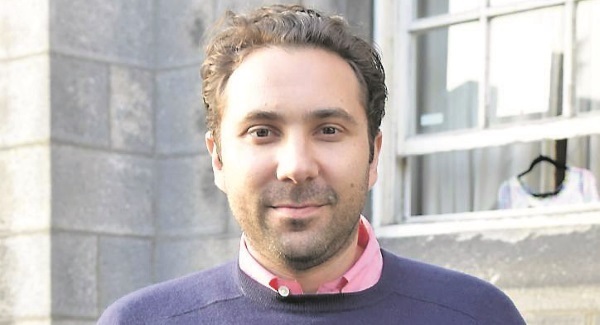
Jay Bregman is founder of Verify, which aims to make drones safer. He was previously founder and CEO of Hailo.