Responsibility of EU states to check for ‘defeat’ devices
The revelations about Volkswagen and other car manufacturers, according to reports from the usually well informed Transport and Environment NGO (T&E) come at a pivotal time in negotiations on new regulations.
T&E says three of the EU’s biggest car manufacturers —Britain, Germany and, France — have been working to ensure new tests can easily be manipulated by car-makers.
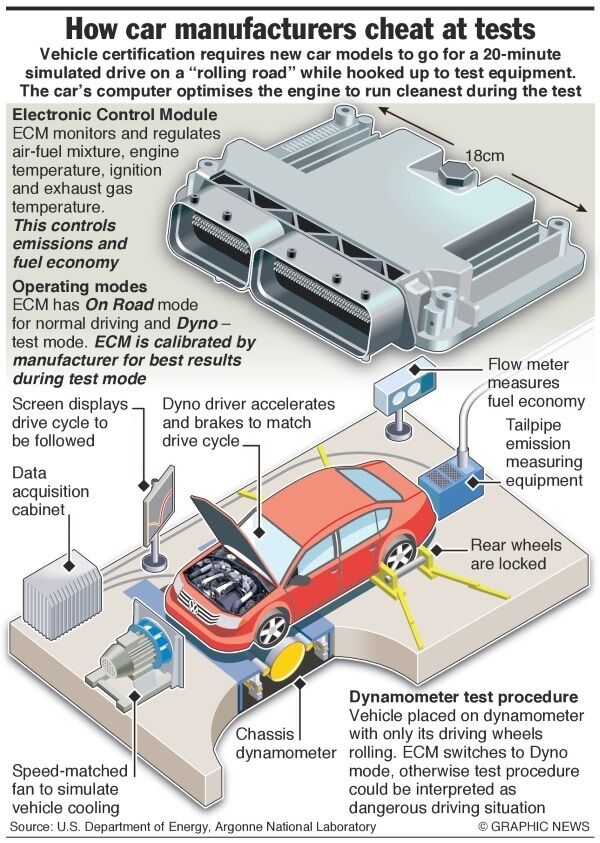
EU sources admitted that the current tests for carbon dioxide (CO2) emissions are incorrect by up to 20% and that nitrous oxide (NOx) emissions are up to 10 times greater in reality than the tests performed in the laboratory show.
Work began on developing more realistic road tests four years ago, with the EU’s Joint Research Centre devising a completely new method to do this. The first piece of legislation has been adopted and work is ongoing on the second, which will deal with the details of the testing and emission limits. These are due to come into force for new cars late next year and for all cars a year later.
However, the details are now the subject of huge lobbying, with member states fronting for their car manufacturers behind the scenes in many cases.
The technical committee, made up of experts from each member state, is due to meet on Tuesday, October 6, to discuss this, while it is expected to be on the agenda for competitiveness ministers next Thursday.
The whole structure of measuring car emissions is open to manipulation, with the EU only responsible for drawing up the limits and regulations, but member states responsible for testing and certification. If one country finds a vehicle is in compliance, then all other member states accept that.
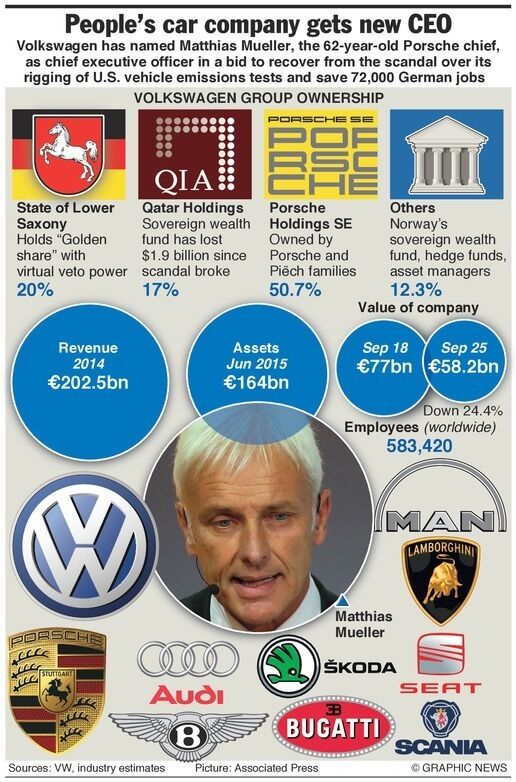
The vast majority of tests have been carried out by Germany, as it produces a third of the EU’s cars, and is the third-biggest globally. Its brands are Volkswagen and subsidiaries Audi and Porsche; BMW; Opel, and Daimler, including Mercedes.
Internal market and industry commissioner Elzbieta Bienkowska called on all member states to swiftly agree on the final measures needed so that measurements of air pollutant emissions reflect real driving conditions.
However, emissions vary according to how warm the engine is; gradient of road; altitude, and other variables that the industry is battling to ensure allow it maximum flexibility.
EU sources admit that even with new tests they will not be able to precisely calculate emissions but believe they can reduce the margin of error by at least a half.

CONNECT WITH US TODAY



Be the first to know the latest news and updates