Rose of Tralee ‘a super celebration of women’
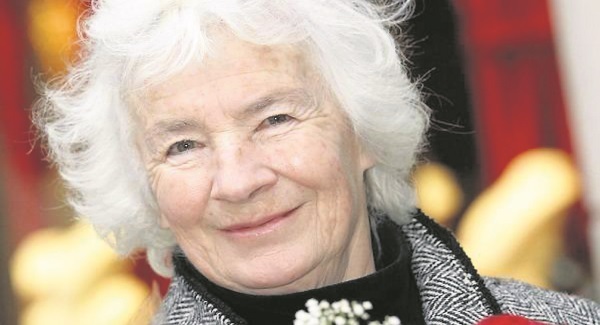
But what has changed in the last five-and-a-half decades of the world-renowned festival? Not much, according to Alice, it’s still Kerry’s most famous spectacle and continues to draw thousands of people, year after year.
With a twinkle in her eye, 75-year-old Alice remembers how, even in its first iteration, the competition attracted a huge amount of attention.

“In 1959 it was extraordinary because it was the first year of the Rose of Tralee and people didn’t know what to expect. And right from the word go it got a tremendous amount of publicity and I think it was very good for the town of Tralee, it kind of gave it an identity,” she said.
“There was no television in the country so when something was happening in a town it would bring a huge amount of people in to see what was going on. But it was on film in 1959, for the Pathé news.
“What people did in those days, there were news programmes in cinemas shown and the cinema was a really big kind of deal. And most people went to the pictures and you’d get a movie telling news, or something like that.”
Gliding through the crowd at this year’s festival, positively glowing with warmth and friendliness as she chatted with past and present Roses, it’s easy to see what those judges saw back in 1959.

Alice had been the Dublin rose, though she now lives in Wicklow, and, at the tender age of 19, was one of just five contestants. The others represented Tralee, London, Birmingham, and New York.
But Alice is adamant the contest, now more than ever, is far from a “lovely girls competition”, though she admits it has that reputation.
“You get to know the Roses from year to year, and they’ve always been good, strong, intelligent women and I think it’s just been brilliant. It’s great. It’s a really super celebration of women,” she said.
“And in 1959 I wouldn’t have had a fraction of the confidence that these young women coming today would have. I was quite shy so if somebody said to me ‘Didn’t you win the Rose of Tralee?’ I’d say ‘No, No, that was a cousin of mine’ because luckily I had lots of cousins also called Alice O’Sullivan.”
That first year of the festival, the budget for the event was just £750. Events included tug-o-war competitions, a donkey derby, a terrier derby, a bicycle race, and a sheaf toss.
For the first few years, each contestant had to be a native of Tralee, though this condition was relaxed in the early 1960s — the Roses still had to be natives of Kerry, however.
In 1967, the rule was amended once again — now only Irish birth or ancestry was required to take part.
But some constants have remained — the festival always ended with fireworks, a huge novelty in 1959, and the Roses always went down the road to the races after the festivities had come to a close.
Now, one week into the reign of 2015 Rose of Tralee Elysha Brennan, it’s clear to anyone looking back at the extravaganza that the festival is going from strength to strength, year on year.
Detractors of the festival, who voice their yearly gripes during the two nights of televised shows, may not agree but Alice O’Sullivan, for one, couldn’t be happier — Ireland’s first Rose hopes to be back in Tralee for next year’s festival, and for many more to come.