Banking Inquiry: By June, vulnerabilities in the sector came into sharp focus
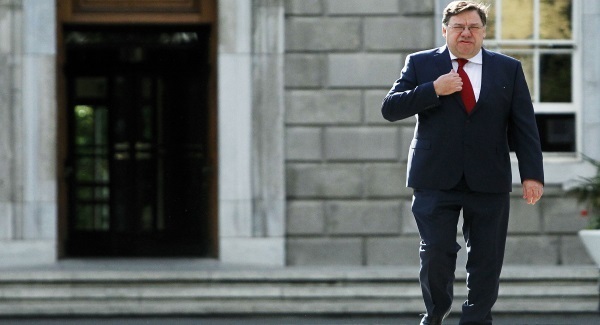
- “After I became taoiseach (May 2008) the domestic standing group briefing remained the banking system was sound. Banks were experiencing significant challenges. However, strong performance in recent years was providing a good cushion, it was believed.
By late June, the vulnerabilities in the Irish domestic financial sector and the high levels of exposure to the property and construction sectors had come into sharp focus.
The share prices of individual banks at this stage were worth about half of their values compared to February 2007. New mortgage lending had declined from €16.5bn in the first six months of 2007 to €13.8bn in 2008. Contingency legislation related primarily to bringing an individual institution under State protection and at no stage did this embrace the possibility of a systemic risk.
Things escalated in September 2008 when there were rumours about INBS. Reports of people withdrawing their money from Irish lending institutions became amplified through media commentary. A silent run by depositors had begun.
Ordinary individual depositors needed to be reassured. The Government decided to increase the existing deposit guarantee scheme from €20,000 to €100,000. The amount of money covered was over €70bn. It temporarily bolstered confidence.
By Monday, September 29 (guarantee night), money continued to leave the system to such an alarming degree arrangements were made for a meeting.
As the meeting began (at 6.15pm), the seriousness of the discussion became clear very quickly. Central Bank governor John Hurley outlined what had been happening during the day regarding the lending institutions. He said Anglo lost €2bn in deposits that day and they expected it to continue.
This had developed into a system-wide crisis. Governor Hurley had been in touch with ECB president, Jean-Claude Trichet, and confirmed we were on our own.
The minister for finance felt part of the solution would be the nationalisation of Anglo. I did not think nationalisation should be a first course of action and I said so.
Allowing Anglo to fail was simply not an option.
We further discussed it, and I adjourned the meeting for a short break.
The minister for finance and I weighed up options in my personal office. He was minded to go the nationalisation route and guarantee the rest. I explained my reservations. There was no question of our conversation being in any way adversarial or confrontational.
The (main) meeting resumed. Kevin Cardiff agreed with the minister for finance. Eventually, I put it to the table that a full guarantee be provided.
We decided that given market uncertainty, it might be best to include junior bondholders as they were a very small percentage of the total securities. An incorporeal cabinet meeting took place. I left the building around 3.30am.
Liquidity concerns continued to mount over the course of December 2008 and January 2009. €3bn in Anglo corporate deposits were lost, and the liquidity position in the days leading up to nationalisation (in January 2009) was extremely fragile. It was decided greater certainty could be provided by taking the bank into State ownership.
Throughout the bank guarantee period, September 2008 to September 2010, the ECB provided significant liquidity assistance, enabling banks to continue to function. However, from the time Greece required external assistance from other member states in April or May 2010, the interests rates on Irish sovereign debts increased significantly. By September 2010, Mr Trichet began to articulate concerns.
It became very clear people were trying to bounce us into a (bailout) programme in principle. The rumour machine went into overdrive.
I under-estimated the impact of the “IMF coming to town” element, which immediately sent the message that this was now a done deal.
On November 19 Mr Trichet, sent a letter to Minister Lenihan threatening ECB funds withdrawal in the absence of a formal bailout request. On Sunday, November 21, we formally requested assistance. It was made clear to us that any attempt by us to burden share with senior bondholders would mean no programme for Ireland.”
CONNECT WITH US TODAY



Be the first to know the latest news and updates