Banking Inquiry: Brian Cowen: Spending spree helped Ireland back on its feet
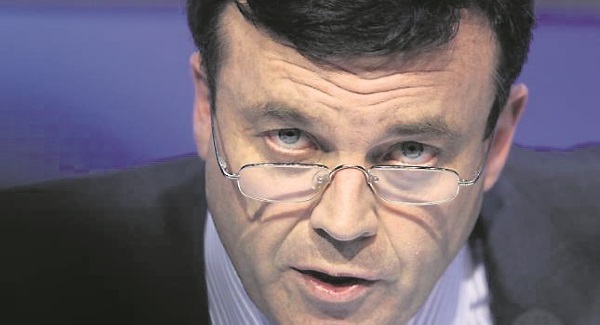
On his second day before the inquiry into the crisis, Mr Cowen said he takes responsibility for his role as leader of the country in the downturn. However, he said his policies while in power were “plausible”.
His Fianna Fáil-led government decisions were stress-tested against threats, but there was a “clear misjudgment of the risks and potential impacts”, he told the Oireachtas banking inquiry.
Mr Cowen also said his approach was “broadly shared” even by political opponents. At the time the public was questioning if spending on improved services and other investments was happening fast enough, he told the hearing. Mr Cowen said if his government had spent less during the boom, the country would not have suffered as severely in the dramatic nosedive from the late 2000s.
However, he said it would have also meant fewer jobs and lower growth before the crash, which “would have in turn reduced our ability to come out of recession as quickly as we have”.
“One way or the other the impact of the financial crisis has made the serious adjustment in the public finances which could not have been avoided in any event,” he said.
After four years as finance minister, Mr Cowen served as taoiseach from May 2008 to March 2011. He was responsible for the infamous blanket guarantee for six banks at the height of the financial turmoil in September 2008 — which will cost taxpayers €64bn.
He resigned as taoiseach and Fianna Fáil leader in 2011. The same year his party suffered a bruising wipeout in the general election by voters intent on punishing them for the crash.
Since then, Mr Cowen has taken more than €725,000 in pension payouts from the public purse. He said a broad banking guarantee, agreed in a late-night decision in September 2008, looked like a safer option than nationalising Anglo Irish at the time.
The lender has since been taken over by the State and wound up at huge cost.
He denied he overruled then finance minister Brian Lenihan, who had favoured immediate nationalisation.
“I did not think nationalisation should be a first course and I said so,” he said.
The pair weighed up their options privately in his office, and he assured Mr Lenihan that Anglo could be nationalised if necessary some time in the future, he told the inquiry.
The conversation was not “adversarial or confrontational”, Mr Cowen said, adding: “It wasn’t a question of overruling — the two of us were trying to grapple with a serious problem.”
In the event, he said, there was a consensus that Anglo could not be allowed to fail as it would cause a run on other banks and a meltdown of the entire system. “It was Wall St 1929 stuff,” he said. He apologised that there was no accurate and full note of the meeting, which, he said, would have been helpful.
Mr Cowen again denied he spoke about banking during a golfing and dinner meeting at Druids Glen golf club with three serving or former Anglo figures, including chairman Sean FitzPatrick, two months beforehand.