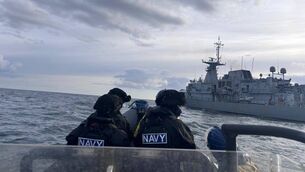
LÉ Eithne crew set for return after Med mission
A senior officer from the LÉ Niamh, which will replace her on the EU-led humanitarian mission, flew out to Malta last night to be briefed on operations by LÉ Eithne’s captain Commander Pearse O’Donnell.
He and his 68-strong crew still remain on standby in case of emergencies, but are currently anchored in Valletta harbour where the ship is taking on supplies.
Minister for Defence Simon Coveney visited them in the Maltese capital yesterday, along with Minister for Justice Frances Fitzgerald and Minister of State for Development Sean Sherlock.
Mr Coveney described the work of the Naval Service in the Mediterranean as “invaluable” and said LÉ Niamh will arrive there over the next week or so. “On behalf of myself and the Irish Government, I would like to thank you all for your outstanding work in the Mediterranean to date. I wish you every success for the future and a safe return to your families,” he told the crew.
It is likely the Naval Service will remain on migrant rescue duty in the Mediterranean until at least September when the mission will be reviewed.
Justice Minister Frances Fitzgerald said she was delighted to have the opportunity to pay tribute to “the exemplary professionalism of the crew” in the humanitarian search and rescue operation.
“Migration is one of the biggest challenges facing the EU and there are no easy answers. However, Ireland is committed to doing its part in solidarity with our fellow Europeans in tackling that crisis. The deployment of LÉ Eithne shows the real difference that Ireland, as a comparatively small member state, can make and we will continue to do what we can when we can as the situation evolves,” Ms Fitzgerald said.
Mr Sherlock said: “The heroic work of our Defence Forces in this exercise has been humbling.”
Ms Fitzgerald said the Government was considering resettling as many as 600 refugees, twice the number previously indicated.
The EU plans to resettle 44,000 of those who made the dangerous sea crossing. It’s estimated a further 1,850 drowned so far this year, attempting to get into southern Europe.
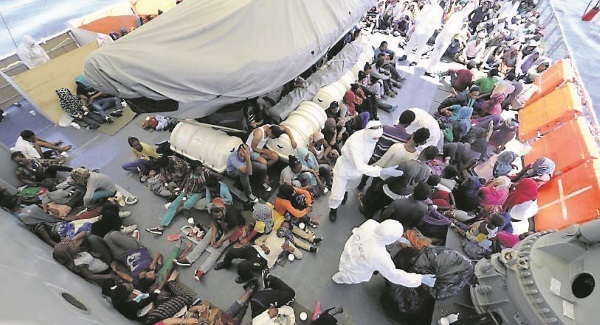
Of those rescued by LÉ Eithne’s 22 operations, 12% each came from Eritrea and Nigeria, 11% from Sudan and 9% from war-torn Syria. Other nationalities included Ghanaians, Moroccans, Somalis and Ethiopians.
LÉ Eithne’s crew found many migrants packed into leaking dinghies and wooden barges which were dangerously defective.
They destroyed the barges with axes, so they couldn’t be reused and didn’t become a hazard to shipping.