Morning-after pill ‘discrimination’
The organisation claims that the HSE is discriminating against women with medical cards when it comes to accessing the emergency contraception.
Since 2011, pharmacists have been allowed to supply the morning-after pill without a prescription, but women with medical cards still have to go to a doctor for a prescription to get the drug for free.
“The effectiveness of emergency contraception diminishes between the time of unprotected sex and the time of taking it, which emphasises the need for the convenience and accessibility of being able to get it directly from a community pharmacist,” said IPU president Kathy Maher.
“It is unacceptable that a medicine, which is known to be most effective within a 24-hour period, cannot be accessed immediately free of charge by women with a medical card.”
According to figures released by the IPU at their annual conference in Killarney at the weekend, one in every five women who seeks access to the morning-after pill has a medical card.
Ms Maher described the delay in accessing treatment as a “huge concern, given the potentially far-reaching and life-changing consequences of an unplanned pregnancy”.
Meanwhile, the conference has called for a reversal of cuts in professional fees under Financial Emergency Measures in the Public Interest (FEMPI) legislation. The IPU said any plan to unwind this legislation for health professionals should also be applied to pharmacists.
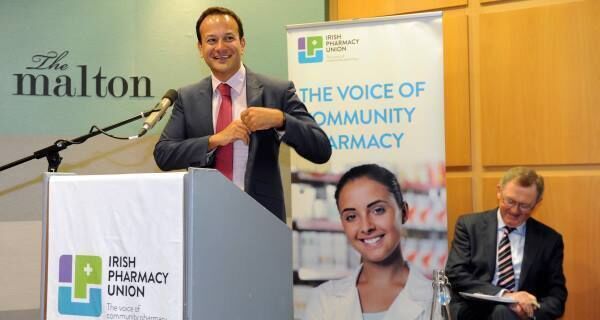
“The cuts introduced under FEMPI are undermining pharmacists’ ability to deliver services,” said Ms Maher. “It is impossible to expect pharmacists to deliver the same level of service to patients while dramatically reducing our ability to fund the infrastructure that delivers these services.
“Pharmacists have been disproportionately impacted by the FEMPI legislation in both direct and indirect cuts to pharmacy payments. Any mechanism to unwind the FEMPI legislation for other groups or professions must be applied fairly and equitably to pharmacists. We are not prepared to settle for anything less.”
A recent review showed the State saved €1.7bn since 2009 from community pharmacy payments through reduced reimbursements for medicines and cuts to pharmacists’ remuneration.
Pharmacists also want to see their roles expanded to help alleviate pressures elsewhere in the health system, and for more medicines to be made available without a prescription.
“It is now time to allow Irish patients to benefit more from pharmacists’ expertise and accessibility and we urge the Government to engage with pharmacists to extend the range of services offered to patients and the public,” said Ms Maher.
“Internationally, there is a great drive on to increase the efficiency of health services and, in particular, to reduce pressure on GP surgeries by diverting those patients whose needs can be dealt with more effectively by other healthcare professionals, such as pharmacists.”
Leo Varadkar, the health minister, said he would welcome a change in legislation to allow for an expansion of the role of the pharmacist.
DISCOVER MORE CONTENT LIKE THIS

CONNECT WITH US TODAY



Be the first to know the latest news and updates