Graham Dwyer trial: An acquittal would be ‘unpopular’, jury told
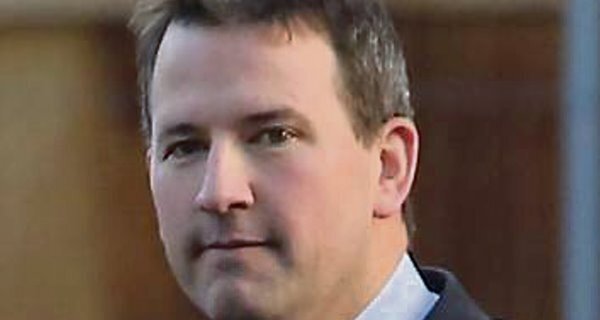
Earlier, the prosecution described the architect as “a sadistic and brutal pervert with nothing on his mind other than murder”.
Both sides were giving their closing speeches at the Central Criminal Court trial.

Cork-born Mr Dwyer, aged 42, from Kerrymount Close, Foxrock in Dublin is charged with murdering Elaine O’Hara at Killakee, Rathfarnham on August 22, 2012 after her discharge from a mental health hospital.
He has pleaded not guilty to murdering the 36-year-old childcare worker.
Remy Farrell SC, defending, began by reading from a document found on his client’s hard drive, entitled Killing Darci, a document the jury heard read in its entirety during the trial.
He quoted an extract in which the accused said he had fantasised about killing since he was a teenager, about deciding who lived or died like God, his hero.
Mr Farrell said the content of the document could be described as repellent in some aspects and he agreed with the State that it was disgusting, but said it was necessary to face up to the evidence.
He said he could not suggest the events of this case were even close to normal and acknowledged that the jury might even find his client repellent.
He said that a lot of the material on his computer was misogynistic.
He noted that they had seen videos of his client having sex and asked how they could possibly take him seriously now.
“I’m not here to try to convince you than Mr Dwyer is a nice guy,” he said.
Mr Farrell said there was a gaping chasm in the prosecution case and that the State’s evidence went only so far.
There was a distinction, he said, between reality on the one hand and fantasy on the other.
He said the State was pointing the jury toward an extremely elaborate theory that was not based on evidence, and was attempting to do a backward somersault over the gap in the case.
He said the prosecution claimed various documents in the case represented not just his client’s desires but his actual plans.
He then suggested that there was a deliberate attempt by the prosecution to adduce a strong emotional reaction.
He said that one of the first pieces of evidence to be heard was a document found on Ms O’Hara’s computer, entitled; A Woman’s Right is Slave.
What the purpose of it. “To shock, offend?” he asked.
He said a deliberate decision was also made to leave text message evidence until the end, even though it was clearly “all about the text messages”.
Mr Farrell said that the prosecution contended that the document, Killing Darci, was the template for the alleged murder.
“Look at that document, distasteful and all as it is. Read it,” he said. “If that’s what happened here, where is the forensic evidence? They’re trying to use the documents as a huge tub of Pollyfilla — to fill gaps in the case.”
He said that the State had suggested that a line was crossed when people fantasise about real people.
“Do I cross a line if I fantasise about Angelina Jolie?” he asked. “Do I cross a line if I fantasise about the girl next door?”
Mr Farrell referred to the numerous text messages about stabbing and killing that the prosecution said were sent between his client and Ms O’Hara.
He said the prosecution required the jury to jump a hurdle to find that when she mentioned such things it was fantasy, but that when the other person did, it was reality.
He said that the State had opened its case by describing the relationship between Mr Dwyer and Ms O’Hara as a manipulative one, where he was “normalising the idea and getting her used to the idea of suicide”.
“I suggest that cannot be so,” he said.
“Ms O’Hara needed no normalising or grooming. Her history discloses multiple and serious attempts at suicide.”
He noted that her doctor had said that the period following release from hospital was difficult for a patient.
He mentioned a conversation she had about suicide the night before she was discharged.
He said that on every occasion that the defence sought to raise the possibility of suicidal ideation, the prosecution sought to dispute it and establish that she essentially skipped out the hospital door that day.
He acknowledged that his client had “clearly told lies” in his Garda interviews, but said that people could tell lies for all kinds of reasons.
He said that it was relevant to bear in mind that Mr Dwyer was being questioned about an extramarital affair, which he said was a ‘genteel’ description of it.
“This is one of the points where you’re going to have to put yourself into Graham Dwyer’s shoes, difficult as that might be,” he said.
He asked the jury to consider the circumstances of his arrest carefully.
“The prosecution, in one fell swoop, avoided the difficult issue of what happened when he was arrested,” he said.
“It took place with the most unprecedented media circus.
“The gardaí had not only created a pressure cooker, but gave the pressure cooker a good couple of shakes.”
Mr Farrell said the prosecution had put up a very specific indictment, giving the date and place of murder.
He said this showed a remarkable dedication to tunnel vision.
“This is a case where there’s not a screed of evidence in relation to the cause of death,” he said.
He said the prosecution said it was a stabbing, but that the only evidence they had offered were fantasy documents.
“It is one of the most essential and basic elements in a murder case to actually decide whether there’s been a murder in the first place,” he said.
He said there was a gap in the evidence over which the jury was being invited to jump.
However, he said that everywhere they would turn, “the silent witness” that was the forensic evidence would turn up.
He said a unique feature of this case was “the immense and unprecedented public interest” in it.
“No doubt books will be written, films will be made,” he said, suggesting that Benedict Cumberbatch would play prosecutor Seán Guerin, while extras would play the jury.
He said that it would be silly to pretend that the case wasn’t of interest to people.
“It has all the features you’d expect: Sex, lots of it, kinky sex, a middle class professional…the kind of technical and forensic evidence you’d expect from an episode of CSI, evidence that has placed the participants, Graham Dwyer and Elaine O’Hara, under the spotlight,” he said.
“People tend not to survive that level of scrutiny.”
He said there was a “very real invisible pressure” on the jury.
“It is vital to acknowledge the expectation there is, an expectation in the media and among the very many barstool jurors as to what you should do,” he said.
“There’s an expectation you must convict.”
He said there was an expectation that the jurors really should convict Mr Dwyer, doubts or not.
“Most charitably, he could be described as having peculiar sexual tastes,” he said. “He may well be described as having deviant sexual tastes,” he added, referring to the videos they had seen of him.
“You’re expected to go with your gut,” he continued.
“You’re expected to convict without looking at the evidence.
“That’s what the pubic expectation is because that’s the conclusion of the story. That’s how it all gets wrapped up with a bow,” he said
“If you acquit Mr Dwyer, you will be doing the unpopular thing,” he said. “Make no mistake.”
He noted that, unusually, they had seen footage of the accused man having sex and much more.
“I ask you to look beyond the evidence that is emotive, turns your stomach or makes you want to look away,” he said.
“Look first and foremost at the forensic evidence,” he suggested.
“Ask yourself: What is it telling you? Why is it all pointing only one way?
“Why is the prosecution insisting you make intuitive leaps and flights of fancy?”
He said that when they’d asked themselves this, there would be a clear answer.
Earlier, Seán Guerin SC, prosecuting, had concluded the closing speech he began on Thursday.
He spoke of the plan that he said Graham Dwyer had formulated for murdering Ms O’Hara.
He pointed to text messages allegedly sent by the accused to Ms O’Hara, in which the sender had discussed finding both willing and unwilling stabbing victims and in which he described how he would kill them.
He asked the jury to look at the way in which Ms O’Hara was brought to where her body was found.
He said that what had happened was the implementation of a plan that had been elaborated in the text messages.
He said the first feature of a successful plan was that the location would be isolated
“You can certainly tick that box in relation to what happened to Elaine O’Hara,” he said.
He said the location of the alleged murder was a particularly well chosen one; it was on private land, not parkland where there would be hikers, and there was a double lock on the gate.
He mentioned texts sent by that phone user, talking about leaving the victim’s clothes in her car near the sea.
“While it’s not an exact account of what happened, it’s very close to it,” he said, referring to Ms O’Hara’s car being found near the sea but her clothes being found elsewhere.
He noted that other key elements of this phone user’s plan were the untraceable phones and a ‘vulnerable’ victim.
He said it was also important to make the circumstances look like suicide and noted that Ms O’Hara had been directed to the sea at Shanganagh.
He said it was a fortunate coincidence for Mr Dwyer that her mother was buried there.
“The fact and thought of suicide could be linked so close together,” he said.
The phone user had mentioned a hunting knife as being part of his tool kit for such a killing and Mr Guerin noted that Mr Dwyer had a hunting knife delivered to his office the day before the alleged murder.
He said that the prosecution couldn’t say whether he had used that particular knife on Ms O’Hara or “whether the plan was simply to show it to her for the purpose of enjoying the look of fear in her eyes”.
He said there was no evidence to contradict the content of the texts, the movement of the phones or the nature of the relationship, except the lies that the accused told gardaí.
“What I ask you to do is not to believe me when I tell you the evidence points towards murder,” he said.
“Take at face value the unguarded and open explanation of an intention to kill given by the accused … in the texts.”
He said the videos he recorded were the videos of his actions, captured and archived by him.
He said the documents were the product of his imagination and his desire. He said the texts repeated those desires and set out the plan.
“All I’m asking you do, ladies and gentlemen, is to believe that, when he shows himself in those documents and text messages, to be a sadistic and brutal pervert with nothing on his mind other than murder, that he was telling the truth,” suggested Mr Guerin.
“There’s evidence to satisfy you that he’s guilty of murder,” he concluded.
READ MORE: Graham Dwyer trial: ‘Mountain to climb’ for jury