Barriers to state help for trafficked migrants
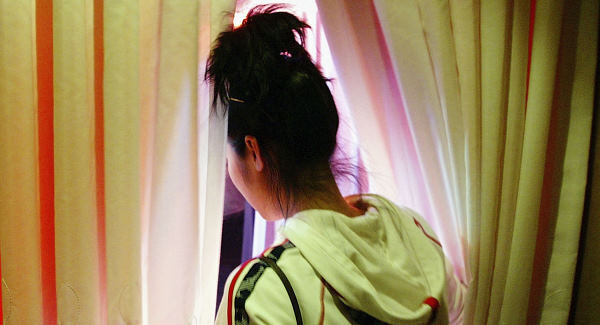
And as most face barriers to the services, particularly outside Dublin, their “anxiety and distress” is further compounded.
The report, published by Doras Luimni, a Limerick migrant rights charity, also documents:
- A growth in trafficking for criminal activity, including drug cultivation in cannabis farms;
- The emergence of trafficking of young men, typically from Eastern Europe, for drug distribution on the street;
- A “highly organised” on-street prostitution trade of migrant women, typically from Romania.
The report calls for a range of changes by state agencies; the removal of the habitual residency rule; the enshrining of the rights of trafficking victims in law; and an ending to the placement of victims in direct provision centres.
The document entitled No Chances, No Choices — human trafficking and prostitution in Limerick, found that prostitution and trafficking was “a serious, widespread and urgent issue in Ireland”.
It said official statistics estimated there were between 40 and 60 victims of human trafficking per year since 2009. While most are used for sexual exploitation, some are put into forced labour, with a recent rise of people trafficked for criminal activity.
The research examined 10 cases, where the victims presented with a range of issues, including physical and mental health. Doras Luimni said the issues were “exacerbated” by long periods of time spent in direct provision centres.
“In particular, anxiety, sleeplessness and feelings of anger are common among all victims of trafficking,” it said.
It also said depression was a common factor among female victims and women engaged in prostitution.
It said access to the National Referral Mechanism — a consultation structure involving governmental, non-governmental and international organisations — was problematic outside Dublin. “Victims of trafficking are, without exception, completely impoverished when they access services,” the report said.
Patricia Stapleton, anti-trafficking officer with Doras Luimní, said: “We would urge the government to increase resources in this area and to protect vulnerable migrants from further exploitation. They experience additional distress and anxiety when confronted by barriers in mainstream services.”
The research detailed a number of case studies:
- Mary, from a non-EU country, was denied refugee status. Doras uncovered evidence of trafficking: She had been groomed online and brought to Ireland to begin a new relationship, travelling on a temporary student visa. She was violently assaulted and sexually abused by the man who groomed her and forced into indoor prostitution, before escaping. Doras managed to get her a six-month renewable residency.
- There were 10 cases in the space of 12 months of young Eastern European men trafficked specifically for drug distribution. They were from particular countries, from certain socio-economic backgrounds and ordered to sell drugs in Limerick City.
The research also highlighted the Street Worker Outreach Programme, which is run with sexual health charity GOSHH.
dorasluimni.org, 061 310328

BLACK FRIDAY
Already a subscriber? Sign in

CONNECT WITH US TODAY



Be the first to know the latest news and updates