TV licence penalties show huge disparity
During 2014, 540 summonses were issued for the offence by the court office in Tralee.
The courts service in Cork city, which has a significantly larger population, issued just 256 summonses over the same period.
In fact, the court office in Mallow issued just six less than its counterpart in Cork city.
The wide disparity in prosecutions for non-payment of TV licence fees is even more clearly evidenced by the fact that the court service in Donegal only sent out 10 summonses.
In all, 16,566 summonses were issued last year, 9,761 of them in Dublin, though unlike the rest of the country, the capital’s figure included those which had not been served.
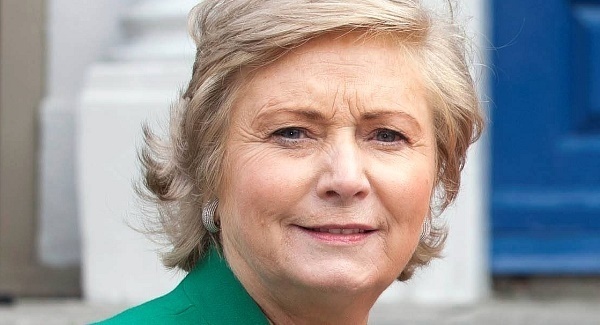
The figures were provided by Justice Minister Frances Fitzgerald in an answer to a parliamentary question from her party colleague, Patrick O’Donovan.
She pointed out that the initiation of a prosecution for non-payment of a television licence is a matter for An Post.
A television licence currently costs €160.
Last year, €213.3m was received in respect of television licence fee sales and ‘free’ licences issued by the Department of Social Protection. Of that total, €178.8m was given to RTÉ.
A further 7% of the net licence fee revenue is given to the Broadcasting Authority of Ireland (BAI) for onward distribution to assist independent producers and broadcasters for the development of programmes.
An Post also receives a portion to cover the cost of its activities as the Department of Communications’ issuing and collecting agent for TV licences.
When An Post was asked about the apparent disparity in prosecutions for non-payment of the licence, a spokesman said:
“An Post is aware of the apparent disparity in the number of summons issued in various parts of the country. This can be the results of a number of factors, including the number of staff assigned to TV licensing work in various offices from time to time. An Post addresses this issue on an ongoing basis.”
He said court proceedings are a matter of last resort.
“An Post encourages customers to make good revenue lost to the state. This includes purchasing a full licence in advance of a court sitting.
“An Post seeks to ensure that everyone has a full TV licence and provides a range of payment options including payment by direct debit, TV licence stamps or paying online.”
Michael Moynihan, Fianna Fáil’s spokesman on communications, said there was obviously an issue with uniformity of enforcement across the country and he said he intended to raise the matter at the Joint Oireachtas Committee on Communications and Transport as well as tabling a number of parliamentary questions to the minister.


CONNECT WITH US TODAY



Be the first to know the latest news and updates