‘Someone has to be punished for the cruelty these creatures suffer’
ANIMAL welfare groups have spoken out about a marked rise in the abuse and neglect of animals in Ireland.
Abby Wood, animal welfare officer at the Deise Animal Sanctuary in Waterford, says that this year has been one of the worst in terms of people mistreating animals, either maliciously or by neglecting them.
“We want to see better support within the legal system and to see animal abuse cases being pursued,” she says.
Margaret Twohig from Cork Dog Action Welfare Group agrees, saying that there are little to no consequences for those who mistreat animals.
“Very rarely, if ever, do we see someone being prosecuted in court and sent to prison for animal abuse,” she says. “Without a deterrent people will just continue to inflict abuse on defenceless animals.”
Legislation on animal welfare introduced earlier this year allows authorised officers more power to investigate complaints of animal cruelty.
New penalties for convictions in relation to animal abuse cases include a maximum of five years in prison and the ability of a judge to ban someone from owning an animal.
While the new law was widely welcomed, animal rights groups add that enforcement now needs to be a priority.
Cork Dog Action Welfare Group (Dawg)
Cork Dawg has been “overwhelmed” with the amount of animals needing to be rescued from abuse and neglect in 2014.
Spokeswoman Margaret Twohig says it has been one of the worst years for “sheer numbers” coming into the shelter.
“Cruelty and abuse is on the increase, and the apparent lack of perpetrators being brought to account is very disheartening,” she says. “There is a lack of accountability for animal cruelty.”
Currently, there are more than 30 puppies and 50 dogs being cared for in the rescue centre. Margaret says the calls never stop, and many people threaten to neglect their animals if the shelter does not take them.
“It is hard to understand how anyone can be deliberately cruel to an animal,” she says. “The emotional toll of being in animal welfare is often overwhelming.”
In terms of finances, she says fundraising is one of the biggest challenges.
“A rescue cannot run on kind hearts alone,” she says. “It needs funds to pay for kenneling, food, transport, and veterinary costs. Many of the dogs coming into care need expensive vet care.
“But the dogs never cease to amaze us. Despite having known nothing but neglect, indifference, and abuse, they still are grateful for the smallest acts of kindness.
“Taking them out of desperate situations, caring for them and them ultimately finding them the perfect home is the reason we do what we do every day.
“Their gratitude is expressed in the light in their eyes.”
-
The Donkey Santuary

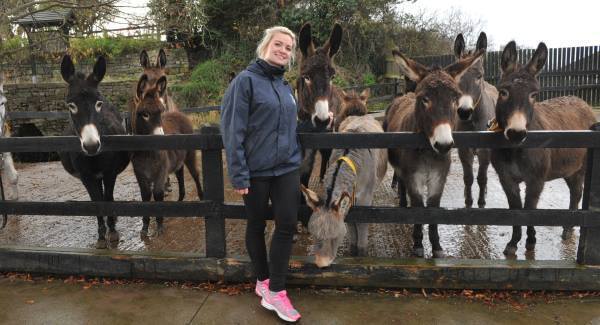
With more and more donkeys being abandoned, Noel Carton, the head of operations at The Donkey Sanctuary in Liscarroll, Co Cork thinks mandatory micro-chipping may only aggravate the situation.
“People who don’t want to spend the money getting their animals micro-chipped are now just leaving them on the side of the road,” he says.
“We’ve rescued 368 donkeys this year, which is 143 more than last year. The problems are getting bigger and bigger all the time.”
While cases of deliberate abuse in donkeys remain relatively low, Noel says abandonment is just as bad.
“To me, leaving an animal to starve and die, that’s abuse,” he says. “We came across one tied to a skip recently that had been abandoned after a horse fair. It was only a little foal and had no food and was on tarmac. After a few days someone called it in.
“The value of the donkey is still very, very low. The most expensive I’ve seen lately is €75 for a donkey and a foal. They have little or no value.”
The sanctuary hopes to re-home 100 donkeys next year. “People just need around an acre to keep the donkey on, plus food and suitable shelter and the time to look after it,” says Noel. “It’s very rewarding for both the donkey and the owner. They end up getting more attention and they make great pets.
“We don’t euthanise donkeys unless it’s in their best interests. We assess each one differently but if we think an animal is going to get better and have a good quality of life then we’ll help it to live.”
Since the sanctuary was founded in 1987, it has rescued more than 4,200 donkeys and is Ireland’s largest equine charity.
-
PAWS Animal Rescue

At this time of year, animal charities always struggle to make ends meet.
But this time around has been especially tough, according to Gina Hetherington, founder of PAWS Animal Rescue in Tipperary.
“Things aren’t getting better, they’re getting worse,” she says. “2014 was probably one of the hardest years to date.
“Our running cost each year is €234,000 and most of the money comes from fundraisers. But you really have to work hard for it — the days of people giving you money for nothing are long gone.”
Gina says the scandals involving the CRC and Rehab “did a lot of damage” and affected the public’s perception of charities.
“I was getting phone calls asking how much I made,” she says, revealing she earns as little as €5,200 a year and lives off this figure and her widow’s pension.
The vet bills are the biggest expense, she says, with the rescue paying for costly procedures and medication to deal with ringworm, mange, and amputations for sick animals.
“At one stage I got a phone call from the vet saying he was concerned because we owed him €24,500 and he had never had a place owe him that much before,” says Gina. “I had to get out a personal loan just to pay it off.”
On top of financial pressure, the rescue is finding it difficult to deal with the increase in animal numbers — many coming from people who are emigrating.
“We get phone calls nearly every week from people wanting to re-home their animals because they’re leaving the country,” says Gina.
“There are also a lot of people losing their homes.
“We have a man at the moment who has been thrown out of his house and he’s desperately trying to rehouse his dog or it will have to be put to sleep.
“It’s very hard emotionally — you feel responsible for every dog.”
But despite all the hardship that goes hand-in-hand with running the rescue, Gina says she’ll never stop caring for sick, injured and abandoned animals.
“It’s something you’ll never leave,” she says.
“It’s like a vocation. It’s as simple as that.”
-
The Hogsprickle

With no Government funding, running The Hogsprickle, a rescue for hedgehogs and other wildlife, is a struggle.
Founder Bev Truss started the unique shelter 10 years ago after spending some time as a countryside ranger in Scotland and going on to train as a veterinary nurse.
Now based in Clare, Bev says this year has been one of the busiest she has ever seen.
“We had bats, birds, badgers — 2014 was very busy with a whole range of wildlife,” she says. “There were a few foxes and a deer fawn who came off worse when they met cars.
“We also had a red squirrel pup knocked from his nest during the summer when there was some felling done. It’s illegal to fell trees between March and September but some people either don’t know or don’t care.”
Human impact on wildlife is one of the biggest challenges. “Habitats are being destroyed,” says Bev. “Trees and hedges are being decimated in the nesting season, which destroys not only the nests but threatens young animals like fledglings, hoglets and hares.
“There is also an overuse of pesticides and insecticides — I see a lot of hedgehogs poisoned by slug pellets but they also kill a lot of the food hedgehogs need to survive.”
After a recent battle with cancer, Bev said caring for animals at The Hogsprickle really gave her something to focus on, and she finds each rescue comes with its own individual story.
“I remember Franklin, a three-week-old ‘nailbrush’, as I call the little ones,” she says.
“He was found in his nest when his mum was scared off from work being done in the garden. His two siblings died but he was a strong little man and was bottle-fed for a week or two before being weaned onto solid food.
“Then we took in four nailbrushes less than a week old. They had been in a nest with mum on top snoozing, as they do, when she was killed by a lawn mower. One little one didn’t make it but the other three are fat and healthy now and will be released when the weather gets warmer.”
Next year, Bev wants to focus more on educating the public.
“Wildlife cannot be rescued like you would a cat or dog,” she says. “Wild animals can get really stressed being handled by people and have to be rehabilitated in a very specialised way.”
-For more, go www.tothehogsprickle.weebly.com
Deise Animal Sanctuary

One of the biggest problems facing animal welfare right now is a lack of support from the Irish court system, according to Abby Wood, animal welfare officer at the Deise Animal Sanctuary in Waterford.
“There’s definitely a lack of support on the prosecution side of things,” says Abby. “We’re seeing some very severe animal abuse cases and because the culprits are not being prosecuted it’s very difficult to stop these people getting animals again.”
There are more people abusing animals than ever before, according to Abby, who says abuse and neglect weren’t as widespread before the recession.
“Animal welfare in general was actually worse this year,” says Abby. “There have been a lot more extreme cases. We’ve seen a lot more animals come through our doors.
“There has also been an increase in owner surrenders. Other shelters are the same. A lot of people are emigrating for work and family reasons and there are a lot who can’t afford to keep their animals anymore.”
Abby says it’s extremely rewarding to see a rehabilitated animal go to their “forever home” — the shelter re-homes almost 1,000 animals every year — but dealing with cruelty cases can be tough.
“The hardest part about the job is knowing the worst case you’ve seen isn’t the worst one you’re ever going to see,” she says. “No matter what, there’s always worse to come.
“We had a case where a group of lads were terrorising an elderly home. They were outside beating feral cats to death with hurleys. We captured the cats and neutered them and now all 56 of them live in the sanctuary and they’re very happy now.”
Abby also recalled the case of a Yorkshire terrier they rescued from a dog hoarder. The dog was one of 58 kept in a two-bed house and had been locked in the bathroom for his whole life. Understandably, he has been terrified of people, but Abby said he’s doing much better now.
“Our main message is if you’re struggling to look after your animal, just ask someone for help,” she says. “Don’t let it get to the stage where it’s a cruelty case.”
-For more, see www.deiseanimalsanctuary.org
Seal Rescue Ireland
As the only seal rescue in Ireland, 60 to 80 seals a year could die if they ever close their doors — a situation which is looking more likely every year, according to spokeswoman Ally McMillan.
Originally known as the Dingle Wildlife and Seal Sanctuary, their premises in Kerry was destroyed by bad storms early this year.
“The storm literally ripped the place apart, sending fences flying, breaking up our pools and kennels and destroying equipment,” says Ally.
“The whole place was destroyed and the seals were everywhere. Thankfully none were hurt but it took all day rounding them up.
“There was no way we could afford to rebuild from scratch. It was a disaster.”
With no Government funding, the rescue relies solely on donations from the public and the work of volunteers.
After the storm, Ally created a crowd-funding page and raised enough money to relocate to a suitable site in Wexford.
“Without the public’s support we would never have raised the funds needed to move,” she says.
“We sought help from the Government and sadly received no help. The public saved the sanctuary.”
To run the rescue costs between €60,000 and €70,000 each year. While Ally is incredibly grateful to the public for helping them relocate, she says the shelter is unlikely to continue in the new year unless more funding is secured.
Apart from desperately trying to balance the books, Ally says the hardest part of her job is caring for seal pups that don’t recover.
“Often pups will pass away before they reach the rescue centre, while others might survive only a night or so,” she says. “But it becomes more difficult when a seal has been in care for a while and then needs to be put down.
“We rely on wonderful vets who make all the calls so we don’t have to make the tough decisions. But it never gets any easier if a pup doesn’t make it.”
The successful rescues make her work worthwhile, however, and Ally is looking forward to educating more people about seals in the new year.
“So many pups end up in our care due to human impact like boat propeller wounds, dog bites and net entanglements,” says Ally. “Education is so important; we try to get the message across to our visitors about the impact humans have on the environment and what we can do to minimise those.
“And remember if you find a seal pup on the beach it might be fine or it might be in trouble. Never put a seal back in the sea — it is on land for a reason and can survive indefinitely out of water.”
For more information, see www.sealrescueireland.org
Limerick Animal Welfare

More and more people are dumping animals on the side of the road, according to Marie Quirke, sanctuary manager of Limerick Animal Welfare.
“Lots of pups are still being dumped on the roadside and in car parks, while horses are being starved,” she says.
“We see so many acts of needless cruelty, from flea infestation to mange and untreated broken legs. The hardest part of our job is dealing with cruelty cases.”
The shelter holds more than 200 animals, including dogs, cats, rabbits, birds, goats, horses, and donkeys. It also provides emergency shelter for wildlife until they are ready to return to their natural habitats.
The sanctuary also urges people to microchip their animals, saying some vets will carry out the procedure for as little as €20 in an effort to reduce the amount of stray animals.
With a new building on the way, 2015 looks good for Limerick Animal Welfare. Its new hub will have a reception, visitor centre, a veterinary clinic, and re-homing units for dogs and cats.
However, Marie says 2014 has been another financial struggle.
“As the country tries to recover from the downturn in the economy, this impacts on all charities that are dependent hugely on the generosity of the public for donations to stay open,” she says.
“Our biggest challenge in 2015 is to finish the new building and kit out the veterinary clinic. We are appealing to large corporate groups to consider sponsoring different rooms and areas in the building.”
-For more, go to www.limerickanimalwelfare.ie