Bailey and partner under surveillance as late as 2012, says retired garda
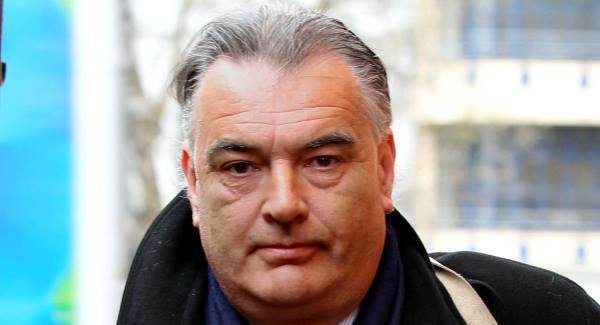
The former garda, in evidence on day 22 of Ian Bailey’s action against the State, said he had carried out a check on the Garda Pulse recording system as a result of becoming concerned about allegations of garda misconduct raised in Supreme Court proceedings, in 2011, involving Mr Bailey.
Mr Wilson said the Pulse system operated from 1999 and his check had disclosed about 150 entries up to February 2012 concerning Mr Bailey and his partner Jules Thomas.
They included a 2009 entry recording them drinking coffee in a cafe, a 2012 entry recording them shopping in SuperValu, and a 2011 entry recording Mr Bailey at a conference at University College Cork where he was studying law.
Other entries recorded Mr Bailey signing on at a Garda station concerning extradition proceedings.
This level of surveillance was inappropriate and was reserved for active criminal offenders, Mr Wilson told Ronan Munro BL, for Mr Bailey.
Mr Wilson said he made a formal complaint in April 2012 to the Official Recipient for Garda complaints, Oliver Connolly, alleging malpractice concerning the continued surveillance but had received no feedback or response.
He was not making any complaint against Mr Connolly who was a decent and honourable person, he added.
Cross-examined by Luán O Braonáin SC, for the State, Mr Wilson said that he had not seen a written standard in the Garda code or elsewhere setting levels of surveillance but he believed the level of surveillance in this case was reserved for indivduals involved in active criminality.
“In the Ireland I live in, it is not satisfactory the system be abused in this manner,” he said. It was “totally inappropriate” for police to be “scrutinising citizens without good cause”.
He agreed surveillance could be applied to certain unconvicted persons. There should be a reasonable suspicion and evidence to support that, he said.
Earlier, Marie Farrell, when asked about dealings with solicitors, said her daughter had sued her (Ms Farrell) in a personal injuries action. She herself secured about €5,000 damages in another action.
In re-examination, Ms Farrell said she was considering bringing an action about her phone conversations being recorded without her knowledge but had not issued proceedings.
The case continues today.
Marie Farrell has denied she told another woman that Ian Bailey was “in line to get millions” from his legal action against the State and she was getting her “cut” too.
Paul O’Higgins SC, for the State, said Geraldine O’Brien, who had worked in Ms Farrell’s shop in Schull, was in the shop in June 1997 when Mr Bailey was there.
Counsel said Ms O’Brien had also said, during a later conversation, Ms Farrell had mentioned Mr Bailey’s legal action to her, and that the journalist was in line to get millions and she, Ms Farrell, was getting her cut too.
Ms Farrell said she had spoken with Ms O’Brien in recent years about a beauty therapy course but had not said what counsel outlined.
“That never happened,” she said.
She agreed she got a letter from Mr Bailey’s solicitor, Frank Buttimer, in September 2005, stating Mr Bailey would not sue her.
When counsel said she previously said in a statement she had asked for that guarantee and that in return she would tell the truth about what happened and what she knew about other things, she said the letter was offered and she was glad to get it but she had not asked for it.
She denied she made her first contact with Mr Buttimer on April 18, 2005, as a result of “bad feeling” following several incidents involving herself and her family with gardaí. She agreed she was stopped by a garda earlier that same day for driving without insurance.
There was bad feeling due to a phonecall by Sgt Maurice Walsh in January 2005, she said.
In re-examination by Tom Creed SC, for Mr Bailey, she said Sgt Walsh told her she may have to give evidence at further court actions related to Mr Bailey and she told him she would never again go to court and tell lies for the guards.
She said she told Sgt Walsh if she was put under pressure again, she might go to Mr Buttimer and he replied, if she did that, she “would never again have a day’s peace in Schull”.
Ms Farrell concluded her evidence yesterday in the action by Mr Bailey against the Garda Commissioner and State over the conduct of the Garda investigation into the murder of French film-maker Sophie Toscan du Plantier. Her body was found near Toormore, Schull, on December 23, 1996.
The defendants deny all the claims, including wrongful arrest and conspiracy to manufacture evidence.
Yesterday, Mr O’Higgins put to Ms Farrell, before she went to Mr Buttimer in April 2005, there had been various incidents involving the Farrell family and gardaí, including incidents leading to her son Michael being convicted for driving without insurance after he was stopped a number of times.
Ms Farrell had four convicitions for driving without insurance and Garda Anthony Finn would also give evidence of incidents, including where her husband Chris threatened Garda Finn to leave his son Michael alone, counsel outlined.
Ms Farrell said her husband had told Garda Finn to leave their son James alone after he had talked of feeling suicidal as a result of things Garda Finn said to him.
Mr O’Higgins said Garda Finn would deny harassing James.
The case continues today.