Parents seek talks with teachers before any further strikes
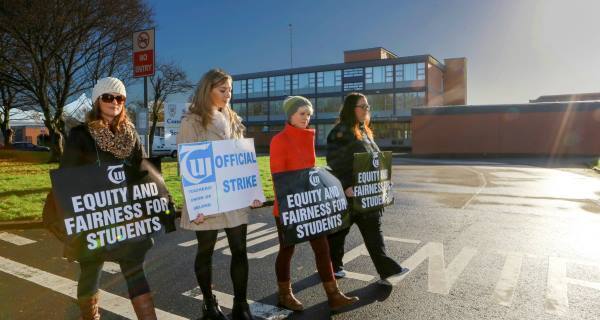
The leaders of the Association of Secondary Teachers Ireland and Teachers’ Union of Ireland will meet on Friday, when the date in January for another strike is likely to be chosen.
However, the president of the National Parents’ Council-Post Primary, Don Myers, said that last week’s one-day stoppage by 27,000 teachers that closed 723 second-level schools raised fundamental legal and contractual questions, as it was not about pay and conditions.
“The unions insist that their action was taken in the interests of children,” he said.
“Yet they never consulted us on it, never sought a formal meeting in relation to last Tuesday’s strike action. Once again the views of parents were ignored.
“We insist that before they take any decision about a second day’s strike they consult with us. Do they not realise the damaging effects a second day of action would have on the education of our children?”
A TUI spokesman said the union regretted any inconvenience caused to parents and students by strike action. However, he said that teachers were slow to take industrial action and their willingness to do so indicated the level of opposition to significant elements of the proposals.
“The current dispute is between teacher unions and the Department of Education and a solution can only be found between these parties,” he said.
Mr Myers suggested there was a basis for settlement in the minister’s compromise offer, in which written Junior Certificate exams worth 60% of marks in each subject would continue to be corrected by the State Examinations Commission, not by students’ own teachers as previously proposed.
“Their mandate to strike was based on earlier proposals from Ruairi Quinn which she has significantly modified. Why won’t they put the revised offer to a ballot of their members?” he asked.
An ASTI spokesperson said the initial junior cycle proposals were rejected by its members because they included school-based assessment, which is still a significant of Ms O’Sullivan’s proposals.
“Ultimately parents, students and teachers want the same thing — a better Junior Cycle experience for young people. However, teachers want to ensure that young people experience a State exams system which ensures equity, quality and objectivity,” she said.
She said a poll last May showed that 60% of the public agree that teachers should not assess their own students at Junior Certificate level.
CONNECT WITH US TODAY



Be the first to know the latest news and updates