Irish doctor warns number of patients at treatment centres does not reflect scale of Ebola epidemic
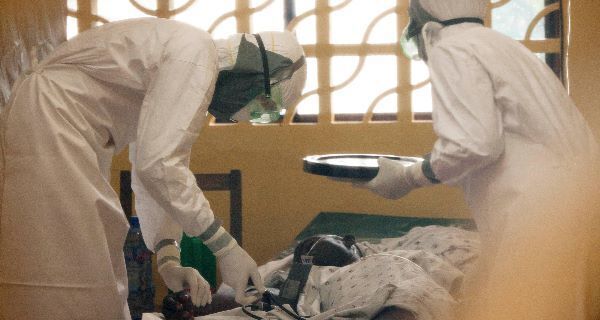
Dr Gabriel Fitzpatrick, who left Ireland on Wednesday, will be joining a team of doctors from Medecins Sans Frontieres is due in Kailahun in remote eastern Sierra Leone today after an eight-hour drive from the capital, Freetown.
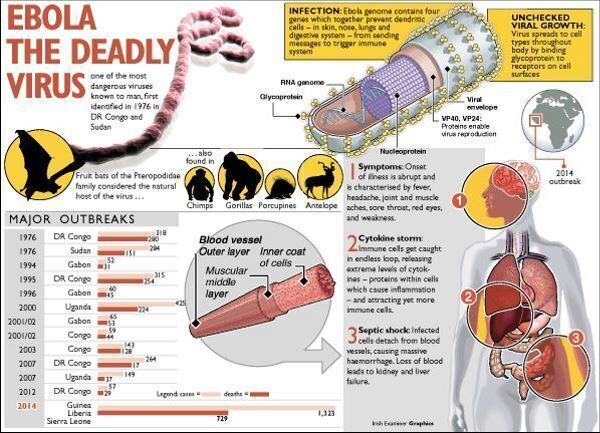
The district is on the border with both Guinea and Liberia, the other two countries struggling to contain the outbreak which is known to have infected more than 1,300 people and killed more than 700, but has also claimed lives in outlying areas no doctors have reached.
“The MSF team in Sierra Leone is overwhelmed with new patients,” he said after a briefing with colleagues in Freetown. “We are expanding our Ebola treatment centre in Kailahun from 64 to 88 beds to have extra capacity.
“Our top priority is to provide care for patients infected with the virus. We know that people are still dying in their villages without access to medical care.”
His comments come as the World Health Organisation conceded the epidemic was out of control and as the Department of Foreign Affairs here warned that anyone living in or travelling to any of the affected countries to register with the nearest embassy and to exercise caution in their activities.
Fewer than 100 Irish people are currently in the three worst affected countries, but there may be more in Nigeria where there are also concerns about the spread of the disease following the death of one man and the quarantining of dozens of others.
The Department of Foreign Affairs says people travelling in any of the affected countries should stay clear of people suspected of having the disease as well as avoiding contact with corpses, close contact with wild animals, consumption of bush meat and unprotected sex.
It is also warning anyone coming home to Ireland from the affected regions to seek immediate medical help if they feel ill within three weeks of their return.
Symptoms to watch out for include fever, unexplained fatigue, diarrhoea or any other severe symptoms. The department urges people to seek help by phone first so that medical personnel can put in place protections for themselves and others before arranging to see them.
The Health Protection Surveillance Centre has, meanwhile, issued three separate risk assessment documents for GPs, airport ambulance personnel and hospital staff reminding them of the protocols and precautions needed if a person who has been in the region displays symptoms of the disease.
The 12-bed national isolation unit at the Mater Hospital in Dublin would be put into operation to receive any patient suspected of having the disease, it said.
Travel insurers are also warning travellers to Africa — particularly backpackers and other independent travellers — who might be considering visiting the worst affected countries to think about altering their itinerary.
Ciaran Mulligan, manager of multitrip.com said while the health risks were the primary concern, travellers could also find themselves stranded, if countries within Africa begin suspending flights to and from Sierra Leone, Liberia or Guinea.
“In most cases, airlines will refund you the flight, if they cancel, but hotels may not be so flexible, if you have to cancel bookings,” he said.
He also warned that insurance may be invalidated if a policyholder travels to an area where a no-travel advisory has been in place from the Department of Foreign Affairs for the previous 14 days.
“Check your travel plans, check the Department’s advice and check your insurance are the main things,” he said.
Irish warned
The Department of Foreign Affairs has issued an ‘everybody out’ warning to all Irish citizens in Libya as the country slips further into violence and political turmoil.
The warning includes not just temporary visitors and contract workers but also those who have made their home and have family in Libya — around 100 people in total.
Minister Charlie Flanagan said: “My department has set up a crisis team and is currently in contact with these Irish citizens and their families, to offer advice and assistance.
“We are working closely with our EU partners, and will continue to provide direct assistance and updated information to Irish citizens and their families over the coming days.
“I would encourage all Irish people in Libya who have not yet been contacted to register with the department, and to follow our latest travel advice at www.dfa.ie or to call us at 00353 1408 2000.”
‘Outbreak moving faster than bid to control disease’
An Ebola outbreak that has killed more than 700 people in West Africa is moving faster than the efforts to control the disease, the head of the World Health Organisation (WHO) has warned.
The warning came as presidents from the affected countries met yesterday in Guinea’s capital.
Sierra Leone declared a state of emergency and called in troops to quarantine Ebola victims, joining neighbouring Liberia in imposing controls as the death toll hit 729 in West Africa.
The World Health Organisation said it would launch a $100m (€75m) response plan yesterday during a meeting with the affected nations in Guinea.
It is in urgent talks with donors and international agencies to send more medical staff and resources to the region, it said.
On Thursday, The WHO reported 57 new deaths in the four days to July 27 in Guinea, Liberia, Sierra Leone and Nigeria.
It said the number of Ebola cases had topped 1,300.
“The scale of the Ebola outbreak, and the persistent threat it poses, requires WHO and Guinea, Liberia and Sierra Leone to take the response to a new level, and this will require increased resources,” WHO director general Margaret Chan said.
Sierra Leone’s president, Ernest Bai Koroma, announced a series of emergency measures, to initially last 60 to 90 days.
“Sierra Leone is in a great fight. Failure is not an option,” he said.
Security forces will enforce a quarantine on all centres of the disease and help health officers and aid workers to work unhindered, following attacks on health workers by local people.
Liberia has put in place measures including the closure of all schools and a possible quarantine of affected communities.
The outbreak of the hemorrhagic fever, for which there is no known cure, began in the forests of eastern Guinea in February, but Sierra Leone now has the highest number of cases.
Koroma said he would discuss ways to combat the epidemic with the leaders of Liberia and Guinea at yesterday’s meeting.
The jump in the number of cases and the death toll has raised international concern and placed poor health facilities in the region under strain.
The United States was providing material and technical support to Guinea, Sierra Leone and Liberia, said the senior US diplomat for Africa, Linda Thomas-Greenfield.
African officials will discuss further assistance at a meeting in Washington next week, she said.

CONNECT WITH US TODAY



Be the first to know the latest news and updates