Decision to pay farmers for protecting birds ‘offers hope’ to endangered species
Birdwatch conservation officer, Dr Alex Copland, said that if properly implemented, the new scheme “offers hope of halting declines and restoring bird populations”.
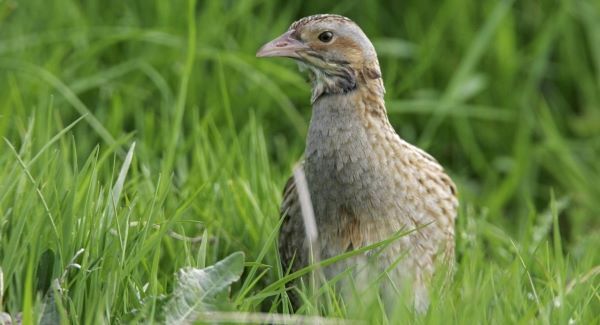
Under the scheme, participating farmers would have to farm more sensitively, agreeing for instance to delay cutting crops like silage and hay until at least August so that particular chicks and nests, such as that of the corncrake, wouldn’t be disturbed.
Similarly, farmers in areas known for breeding waders could be paid to reduce their cattle numbers as cattle are known to trample on waders’ nests.
Many bird species are threatened in Ireland, including the corncrake, grey partridge, hen harrier, chough, twite, and breeding waders such as the curlew, lapwing and redshank. Funding to conserve such birds is to be given priority status within the draft Rural Development Programme (RDP) which was formally submitted to the European Commission last week.
“Farmland birds have experienced some of the largest population declines and range contractions of any bird species in Ireland. Ireland’s biodiversity is facing very severe threats, as evidenced by losses in extent and quality of many, semi-natural habitats in the mosaic of Ireland’s farmed landscapes.
“Research in the UK, in particular, relates farmland bird declines to changes in agricultural practices since the 1970s, including increased use of pesticides and fertilisers, increased mechanisation and losses of hedgerow extent and quality,” Dr Copland said.
“The causes of these declines have been varied, but many are related to modern agricultural production methods, which leave little room for wildlife. Agri-environment measures, whereby farmers are paid to manage their land in a more environmentally-sensitive manner, provide an opportunity to halt and possibly reverse these declines, if properly administered.”
Meanwhile, the Federation of Irish Beekeepers has welcomed new CAP regulations around the spraying of fungicide and fertiliser, as up to 30% of Ireland’s 101 bee species are on the verge of extinction for a number of reasons, including the reduction in wildflowers in the countryside. “We are very keen to talk to farmers about planting seeds or plants, such as borage (herb) and phacelia tanacetifolia (purple tansy) on waste ground as they are so attractive to bees and bees are so important for pollination and hence food supply. There are also benefits to small farmers in getting involved in beekeeping as we import €9m worth of honey as we aren’t producing enough here. We are only producing 20% of what we consume,” he said.
CONNECT WITH US TODAY



Be the first to know the latest news and updates