Mallow to be test town for regeneration scheme
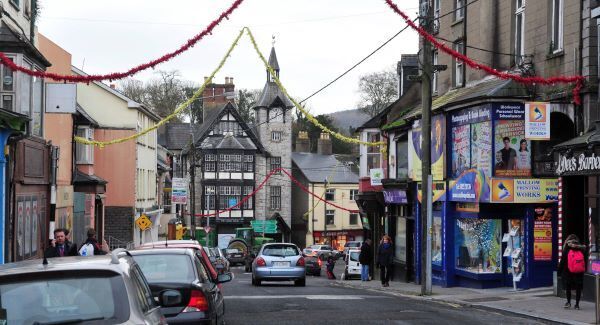
A conference, organised by the Royal Institute of Architects in Ireland (RIAI) will take place in Mallow tomorrow, to investigate the potential for a coordinated approach towards finding new techniques for the regeneration and development of these mid-sized towns over the coming years.
After years of unsustainable and mostly new-build growth — most of it suburban and peripheral development in towns and cities — the RIAI said there was an opportunity now to re-focus on the “sustainable and adaptive re-use” of existing and historic buildings, and to harness that aspect of Irish towns to drive wider regeneration.
Well-planned and well- executed urban design strategies will be essential, the RIAI said.
Mallow will be the location of the first in a potential series of towns which will be explored in terms of urban design, economic development and place-making.
The conference, which is being held in conjunction with Cork County Council, the Academy of Urbanism, Urban Forum and the Ireland branch of the Royal Town Planning Institute, will bring together key stakeholders from relevant government departments, local authorities, professional organisations, practitioners and local communities. Minister Sean Sherlock will give the opening address at the Hibernian Hotel.
Meanwhile, it has been confirmed that President Michael D Higgins will visit the town later this year to honour one of its most famous sons, Irish patriot Thomas Davis, as part of celebrations to mark his bi-centenary.
The President will unveil a statue to the revolutionary writer who was the chief organiser and poet of the Young Ireland movement, on December 11.
“It is fitting that in the year celebrating the bi-centenary of one of Ireland’s greatest patriots that we have our President in Mallow to officially unveil this monument to him that will tie together the new streetscape,” Mr Sherlock said.
He also paid tribute to the Mallow Development Partnership for its organisation of a range of celebrations marking Davis’s bicentenary, including an event in Mount Jerome Cemetery in Dublin, where Davis, who died of scarlet fever in 1845, aged just 30, is buried.
CONNECT WITH US TODAY



Be the first to know the latest news and updates