The rise and fall of new politics: the Coalition’s fall from grace
With Taoiseach Enda Kenny under increasing pressure to radically shake up the Fine Gael frontbench and Labour looking for a new leader, Conor Ryan charts the fall of the Coalition from the dizzy heights of its election success three years ago.

The rise and fall of new politics: the Coalition’s fall from grace

A DISCONNECTED arrogance is probably the most polite way to account for the Coalition’s collapse before the court of public opinion.

Fine Gael and the Labour Party were elected after the country had been put into administration by the troika. People knew what was in store and that cuts would have to be made.

It is telling that in 2011 voters did not vote against austerity. There was an increase in support for Sinn Féin and the independents but nothing of the scale witnessed last month.

Instead Fine Gael, still the closest surviving relative of the Progressive Democrats, almost won an outright majority. The electorate were realistic in their assessment of the country’s economic situation at that time.

But the dramatic swing in support towards the two opposition parties ahead of the general election revealed that voters wanted a change of tack.

The IMF programme could not be renegotiated but voters wanted a shift in attitude and different choices to those taken by the Fianna Fáil/Green Party coalition.

There were great promises of an end to cronyism and a government that would stand up for the people. From the start, the optics suggested the appetite for change ended at the gates of Leinster House.

A Cabinet drawn from career politicians, most of whom where in government when the same two parties joined forces in the mid-1990s, failed to reflect the fresh personalities the people had sent to Dáil Eireann with a powerful mandate.

An incredible 76 newcomers were elected to the 31st Dáil. Not one made it to Cabinet.

Instead, Taoiseach Enda Kenny and Tánaiste Eamon Gilmore rewarded their party stalwarts and picked a front bench that had an average of 20 years each in the Dáil before the March 2011 ballot.

A third of the Cabinet were already installed in Dáil Eireann before the youngest TDs elected in the current Dáil were born.

This old-guard preservation order happened despite the Taoiseach’s post-election observation that “while the anger about past failures was deep, their desire for real meaningful change was deeper”.

The initial failure to follow through on the demand for change foretold what was to transpire in 2012 and 2013.

The measure of faith people put in the Coalition, giving it the largest Dáil majority in the history of the State, exacerbated the feeling of being let down by the choices taken afterwards.

In the local elections the Labour Party, seen as the conscience of the Coalition, were punished for a string of unconscionable decisions.

But this was not helped by a number of key junctures when the decision making and presentation appeared to be detached from the people who had so recently handed them the reigns of power.

WATER CHARGES

Immediately after his election to Cork County Council, Sinn Féin’s Kieran McCarthy was asked what was the key issue for the voters he met.

“Water charges,” he said.

Mr McCarthy pulled in a running mate and watched his party sweep up council seats across the country. So they were obviously in tune with the mood.

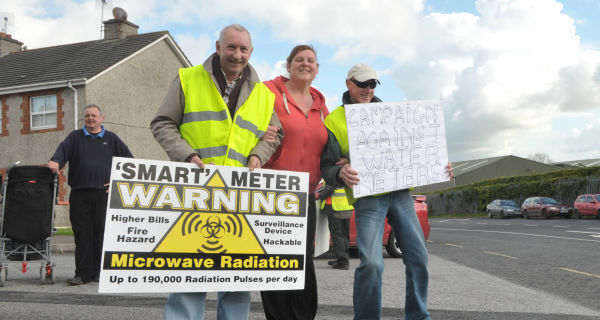
Since Irish Water was established, the Government has tried to downplay the eventual cost. But the local election campaign began with confirmation that the average household bill would be €240 a year. It is feared the real figure for households will be a lot higher.

And for a Government that has struggled to retain the trust of voters, those calculations contained so many caveats that people suspect it will be higher.

Meanwhile, throughout the campaign there were standoffs at estates in Cork and Dublin between residents and Irish Water contractors who were attempting to install meters.

This had all come after a property tax had been paid, real wages reduced, pensions hit, benefits cut and the deeply resented Universal Social Charge installed.

Yet the Government’s public relations approach has been to send out the boorish Phil Hogan to threaten the public that if they do not comply they will have their supply restricted.

EXIT FROM THE BAILOUT

This Government loves photo opportunities and choreographed media campaigns.

But the exit from the bailout in December 2013 really took it to a new level. Press conferences were held and ministers each got to praise themselves for their great work.

The Government’s approach appeared to be a celebration of its own success rather than an opportunity to humbly salute the public who suffered to make it happen.

Then, after throwing the confetti and getting patronising slaps on the back from Europe, the Government could only turn around and remind people that there were still plans to cut a further €2bn in Budget 2015.

If ever there was a premature party that was it.

PENALTY POINTS

The first half of 2014 has been dominated by a controversy that the Government seemed content to dismiss for so long.

Two garda whistleblowers had assembled a dossier of evidence about malpractice in the administration of the penalty points system.

Only one minister, Leo Varadkar, appeared to take the issue seriously and not even a damning report by the Comptroller and Auditor General appeared to wake the Cabinet up to the trouble it was in.

The crisis was managed by Alan Shatter and with each opportunity he allowed his own self-confidence to override the critical thought you might have expected from a renowned solicitor.

In the Dáil Mr Shatter tarnished the reputations of the two whistleblowers, Sergeant Maurice McCabe and retired garda John Wilson, and failed to act on reports of wrongdoing in the force.

It was not until independent TD Mick Wallace, Fianna Fáil leader Micheál Martin and, finally, the Taoiseach got possession of the same reports that action was taken.

The outcome has been two commissions of inquiry, three independent reviews and the removal of the Garda Commissioner, the Justice Minister and the Confidential Garda Recipient. It may yet claim the career of the secretary general at the Department of Justice.

Yet until the resignations started happening the Cabinet were queuing up to support the justice minister.

ALAN SHATTER

The demise of the man who was supposed to be the most reforming justice minister in the history of the State was inextricably linked to the penalty points controversy. But he was a major problem for the Coalition in his own right.

While trying to pursue his vision for changing the legal system in Ireland he displayed a reluctance to listen to those likely to disagree with him.

He also displayed a pettiness and inappropriateness that manifested itself in actions that were beneath his office.

On the lighter side he jokingly referred to himself as the “Minister for Time” in his press releases to remind people of the seasonal hour change and republished his erotic novel — Laura.

But more sinister was his attempt to smear Mr Wallace during a live television discussion by using sensitive material given to him by the Garda Commissioner.

All the while Mr Shatter, pictured above, stood shoulder to shoulder with the then Garda commissioner as allegations against the force grew in number and gravity.

He railed against the Garda Ombudsman Commission for suspecting that it might be bugged and commissioned his own report that quickly sought to discredit the office’s information.

Worse, he accused two whistleblowers of failing to co-operate with garda internal inquiries until he was dragged into a mealy mouthed apology.

He only made this apology when public opinion had already left him in a fight to keep his job.

Meanwhile, for whatever reason within his department, a minister who was said to begin work at 5am to keep on top of his schedule somehow did not get a key letter about taped telephone conversations in Garda stations until after this document had been sent to the Taoiseach.

Finally, on the eve of the local elections Mr Shatter decided to take his ministerial severance package, which was only his because one of his colleagues failed to sign an order forbidding it.

Mr Shatter gave the money to charity but many felt it was not his to give and he was seeking to earn political kudos on the back of children’s charity by using other people’s money.

HOUSEHOLD CHARGE

Before the property tax was handed over to the Revenue Commissioners, the Environment Minister Phil Hogan, pictured, made a dog’s dinner of its precursor, the household charge.

His clumsy and bullying attitude to those who threatened not to pay the charge meant that in the process he ignored genuine concerns about the scheme.

Even after the first six months of its operation he sounded a triumphalist note simply because the public had by and large volunteered to pay the charge.

Had he recognised the impact this had on people and the sour taste it left, he might have changed his bedside manner.

Instead he could not help using it at as another opportunity to score party-political points.

“Twelve months ago when this charge was introduced there was plenty of doom merchants who said the charge would not be collected and people wouldn’t pay. How wrong they were,” he said in December 2012.

For all his bluster and the way he shouted down internal and external discontent, the real measure of his failure was the way in which the replacement scheme, the local property tax, was handed to the Revenue Commissioners to administer.

Originally Mr Hogan was one of the favoured ministers to face the media. The household charge debacle, and his handling of the establishment of Irish Water, have seen him kept well away from the microphones.

BOTCHED REFERENDUM

After a flying start, the Government believed it could push anything through and refused to listen to apparently legitimate concerns.

This attitude came home to roost when the public got to have its say on the Oireachtas inquiries’ referendum.

Public Expenditure Minister Brendan Howlin had led the charge with a proposal that was supposed to beef up the powers of the Oireachtas inquiries. He was supported by Justice Minister Alan Shatter.

In the weeks leading up to the vote there was a growing disquiet about the extent of the powers that the inquiries might have, and their potential impact on private citizens.

There was also a lack of clarity on certain aspects of how the question was phrased, and its implications.

Largely, the concerns were dismissed as nuisance. This included a key open letter written by retired attorneys general, who urged a no vote.

Ultimately, the Government did not respond to the fears of the legal system and the public. Instead it ploughed into a referendum and got turned over by 100,000 votes.

A post-referendum consultants’ review found that it was “remarkable” how few people understood what they were supposed to be voting on.

The Government had failed to learn the lessons of previous referenda on Europe, where, if there was a poor effort made to explain the implications of votes, people invariably said no.

SEANAD REFERENDUM

The Taoiseach’s pet project appeared to be his desire to abolish the Seanad.

So, the choice was put the people in October 2013 and, following a disjointed campaign, the electorate decided to keep it.

It provided a real shot in the arm to the opposition, who had criticised the Taoiseach’s proposal to abolish the Seanad without introducing parallel reforms.

Like the previous referendum on the Oireachtas inquiries, much was made by opponents on whether or not people could release a Government without appropriate checks and balances.

The campaign also served as an opportunity to focus on the Government’s failure to bring about any measure of real Dáil reform, aside from cosmetic changes like opening a near empty chamber on Fridays.

The Government tried to focus the campaign on the need to save money, but relied on figures that fell asunder under scrutiny.

The no campaigners effectively made it a question as to whether people trusted the Government.

The answer was no.

MEDICAL CARDS

It was no coincidence that the Cabinet decided to scrap the review of discretionary medical cards last week.

The RTÉ exit poll after the local elections and the consensus from council candidates said that the issue had really stuck in people’s craw.

In October last year this newspaper published details of the types of chronically ill people who had their medical cards withdrawn. It put human faces to HSE bureaucracy.

In the Dail, Micheál Martin went through the list and put it to the Taoiseach that 80,000 people had discretionary cards in 2011 but it had dropped by 26,000 in two years.

As the controversy rolled on, a series of cruel case studies emerged where patients with obviously high medical costs were being contacted by the HSE to confirm that they still had illnesses like Down’s Syndrome or, in the case of right-to-die campaigner Marie Fleming, multiple sclerosis.

Fianna Fáil successfully hitched this policy choice to the parallel project by Health Minister James Reilly to deliver free GP care for all young children, including to “the healthy and wealthy”.

The Government should have known it had lost this battle long before the parents of children with Downs Syndrome were forced to publicly stand up to Taoiseach Enda Kenny.

But it was not until a drubbing at the ballot box, and a clear outcome of polls, that the Cabinet decided to take an empathic U-turn.

BROKEN PROMISES

Pat Rabbitte famously quipped that making promises was just something you did in elections.

But the clever ones are usually vague enough to allow wriggle room in office.

The Labour Party made bold assertions in the lead up to the 2011 vote. None were more categoric than the commitment not to cut child benefit.

This echoed Michael Noonan’s put-down of Brian Lenihan, after his Budget 2011 speech, when the Fine Gael spokesman asked was the minister bullied by a third child because of the way he targeted benefit cuts for larger families.

In office, the Coalition cut child benefit by €10 a month, with Mr Noonan imposing an additional hit for the third and subsequent children.

Not alone that but Social Protection Minister Joan Burton floated the idea, on a number of occasions, of finding a way to restrict universal access to child benefit.

The gap between this pre-election promise and the policy outcome was so clear it undermined any credibility attached to other coalition commitments.

Moreover, there has been no avoiding it because it affected a benefit drawn down by so many households, in a demographic most likely to be hit by the worst impacts of the property crash.

"NEW POLITICS"

The Coalition began life promising new standards and a new way of doing things, starting with a more transparent system of appointing people to State boards.

But the Cabinet was already finding ways to sidestep its own standards, Agriculture Minister Simon Coveney appointing Phil Hogan’s election agent to the chair of the Irish Greyhound Board just hours before its new transparency rules came into being.

Since then a plethora of other appointments have seen supporters and elected representatives of both parties get positions on quangos.

For example, a long-time Fine Gael consultant, Bill O’Herlihy, was made chair of the Irish Film Board. A man who worked with Alan Shatter in the mediation side of law became the confidential garda recipient. Leo Varadkar put a Fine Gael local election candidate from his own constituency on the board of Bus Eireann. Enda Kenny’s old college friend has a seat on the Irish Greyhound Board. Michael Noonan backed the Limerick City of Culture despite enormous public disquiet at how a former political adviser to Pat Cox was hired as CEO of a quango he chaired.

But it was not just appointments that revealed the old traits of clientelism.

Labour Party junior minister Roisín Shortall resigned her position because she believed Health Minister James Reilly was meddling in the locations of primary care centres in a way that favour his constituency.

And more recently, Dr Reilly has stood accused of ensuring that his constituency disproportionately benefited from National Lottery funding.

x

More in this section

Lunchtime News

Newsletter

Keep up with stories of the day with our lunchtime news wrap and important breaking news alerts.

Cookie Policy Privacy Policy Brand Safety FAQ Help Contact Us Terms and Conditions

© Examiner Echo Group Limited