Regulator rings in changes with plan to axe payphones
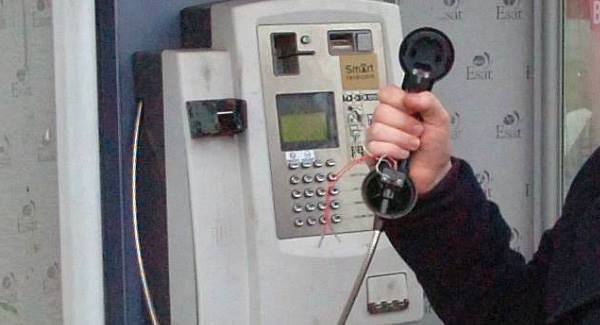
They once dotted every city, town, and village in the country, but the future of public payphones is increasingly under threat.

Regulator rings in changes with plan to axe payphones

Over a third could now be removed by Eircom under a new removals policy being considered by the communications industry regulator.

ComReg has signalled it will, in future, allow Eircom to remove phones without public consultation where usage is so low as to suggest they are no longer needed.

The regulator is expected to redesignate Eircom, the only operator of public payphones in the Republic, as the universal service provider for another four- year period from July 1.

It will require Eircom to maintain the country’s network of more than 1,300 public payphones unless their usage falls below a certain level.

Agreement from locals was required for removal. However, ComReg now plans to change the rules to allow Eircom to remove payphones where the average daily usage is less than one minute. This would permit Eircom to remove almost 500 payphones or 37% of the current total.

However, phones whose usage is under the daily threshold but which are used primarily for free-phone numbers and calls to emergency services will not be removed.

There were more than 8,500 public payphones in the 1990s but that figure had fallen to 4,690 by 2003. The number fell dramatically between 2006 and 2009 but has remained relatively static since.

At the end of 2013, there were 1,325 payphones in 712 locations, of which 91% were in full working order.

Dublin has the highest concentration with phones at 173 sites, while Kerry has the highest number of public payphones on a per capita basis.

However, the majority of the remaining public payphones are considered “uneconomic” by Eircom.

The company, which wants to be removed from its universal service obligation, claims just 92 phones, or 7%, are economic.

The cost of payphones has also increased with a minimum fee of €2 per call, plus 50c per minute for local and national calls, and €1 per minute for calls to mobile phones.

Most people who have a landline and/or a mobile use payphones for privacy or due to poor mobile reception.

According to Eircom: “There is evidence that, with the development of usage in Ireland and the overwhelming presence of a much more efficient and effective form of communication by way of mobile phones, public payphones are in decline and that there is no justification to reimpose a universal service obligation on Eircom.”

Eircom has also accused ComReg of not using expert or empirical evidence to justify its proposals to maintain the obligation — a claim rejected as “inaccurate” by the regulator.

x

More in this section

Lunchtime News

Newsletter

Keep up with stories of the day with our lunchtime news wrap and important breaking news alerts.

Cookie Policy Privacy Policy Brand Safety FAQ Help Contact Us Terms and Conditions

© Examiner Echo Group Limited