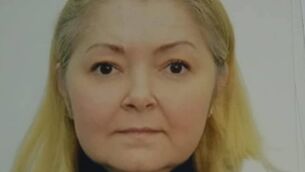
Cool Fitzgerald crusader has already led major breakthroughs

At the launch of Fine Gael’s local election campaign, Frances Fitzgerald sent the candidates out to do battle on the doorsteps with a speech beginning with the declaration that most people get into politics in order to change things.

Cool Fitzgerald crusader has already led major breakthroughs

One week later, the newly appointed justice minister is being required to show she can not only make change but manage change as she takes over a portfolio in bumpy transition.

But if she had to sit herself down, self-administer smelling salts, or breathe deeply into a paper bag before saying yes to the appointment, it wasn’t showing yesterday.

Characteristically cool and unruffled, she kept a scheduled appointment, joining the Taoiseach visiting a community college for the start of the Youth2Work initiative, and returning directly to the front benches of the Dáil announcement of her promotion with a focused Fitzgerald2Work demeanour.

Ms Fitzgerald, who will be 64 in August, was born Frances Ryan in Croom, Co Limerick, but her family moved to Kildare with their father who served in the army. Frances was educated at the Dominican College, Sion Hill, Blackrock, Dublin.

Leaving school, she knew what she wanted to do and went for it, graduating from University College Dublin with a degree in social science and taking a job as social worker at the now closed St Ultan’s Children’s Hospital on Dublin’s Charlemont St, which cared mainly for deprived inner city children.

It was during her early years in social work that she met her husband, the child and adolescent psychiatrist Professor Michael Fitzgerald, an expert in autism and Asperger’s.

They moved for a time to Britain, where Fitzgerald obtained a master’s degree in social work from the London School of Economics.

The couple now live in Castleknock, in the Dublin Mid-West constituency, in a suburb to which the overused description “leafy” truly applies. They have three sons, student Owen, accountant Robert, and stage actor Mark.

Back in Ireland, Fitzgerald worked in a number of hospital and social care settings and at the time of her first election to the Dáil, had most recently worked at the Mater Child and Family Centre in Ballymun.

She first got involved in politics through the Women’s Political Association, which she chaired from 1987 to 1989. But she really came to public prominence during her four-year stint as chair of the Council for the Status of Women — now the National Women’s Council of Ireland — from 1988 to 1992.

The final year of her term put her under the spotlight as she spoke out strongly on the need for reform of the laws on rape and treatment of victims following the Lavinia Kerwick case.

She was also vociferous on the right of women to make choices for themselves in the run-up to that year’s three-pronged abortion referendum, held on the same day as the general election.

Weeks before the election, Ms Fitzgerald was declared a candidate for Fine Gael in Dublin South East at the invitation of Garret FitzGerald, having also been approached by Fianna Fáil.

It was a breakthrough year for women in politics, with 20 female TDs elected, a massive leap on the previous record of 14; but with just 25 currently, the momentum has been slow since.

Ms Fitzgerald held the seat for 10 years, serving in opposition under John Bruton and Michael Noonan, firstly as party spokesperson on arts and then defence before putting her background to use in social, community, and family affairs, equality, and social welfare.

During this time, she was also elected to Dublin City Council, having lost her Dáil seat after Fine Gael’s slump in the 2002 general election.

She stood in the 2007 general election without success but returned to Leinster House via the Seanad and was made leader of the opposition as well as Fine Gael spokesperson on health and children.

It surprised nobody that when Fine Gael returned to power in 2011, Ms Fitzgerald not only got back into the Dáil but into Cabinet, being appointed the country’s first full children’s and youth affairs minister.

She has since scored notable successes, getting the children’s rights referendum passed, and establishing the Child and Family Agency to tidy up the baffling array of often overlapping and uncoordinated statutory agencies involved in child welfare.

She was also responsible for making creche inspection reports public, has action plans on childhood bullying and obesity, and generally speaks a lot of sense about youth drinking, crime, and pressure from social media.

She was a calm voice through last year’s abortion controversies and although she has attracted the ire and despair of many adopted people by moving slowly on releasing adoption papers, she rarely attracts criticism in either the public or political arenas.

But that could all change with her promotion to justice.

More in this section

Lunchtime News

Newsletter

Keep up with stories of the day with our lunchtime news wrap and important breaking news alerts.

Cookie Policy Privacy Policy Brand Safety FAQ Help Contact Us Terms and Conditions

© Examiner Echo Group Limited