Untimely public squabble provides another blow to a struggling party
Gilmore is safe for now, but a drubbing at the polls could reignite the debate, says Political Editor Mary Regan.

Untimely public squabble provides another blow to a struggling party

“RIGHT party, right name, right time” — this is how one supporter described then Labour candidate, Nessa Childers, during a canvass for the last European elections in April 2009.

How things have changed five years on, with candidates running a mile from the party brand and one going as far as to hang her leader out to dry in a desperate attempt to win some popularity.

Ms Childers was basking in the sunshine, and her high poll ratings, as she canvassed in Dublin yesterday, with her independent stance surely a tantalising prospect to many a jittery representatives in her former party.

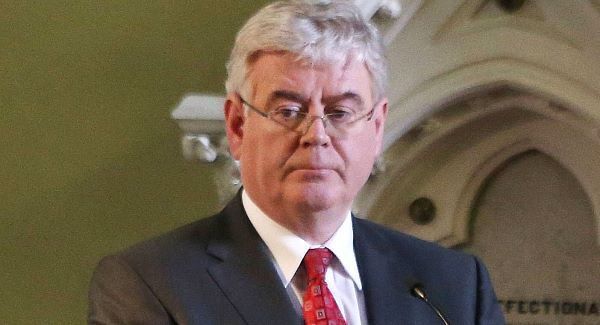
Chief among them was Ireland South Labour MEP, Phil Prendergast. Clearly spooked by a weekend poll which put her at just 4% support, she challenged her leader, Eamon Gilmore, and threw the party’s election campaign into turmoil.

Ms Prendergast was not exactly a household name. She was never elected to the European Parliament and was co-opted in to fill the seat after Alan Kelly was elected to the Dáil in 2011.

She got plenty of national media coverage yesterday when she declared that “urgent action” was needed to save Labour, including a “change of leadership,” and that Social Protection Minister, Joan Burton, should replace Mr Gilmore.

She said she was reflecting the views of “members of every level of the party,” adding that “ministerial level acknowledges there is a lot of negativity out there, that you have to talk people around”. Unsurprisingly, her remarks were considered as very unwise by her colleagues, who described them as a “desperate” effort to salvage her own campaign.

She may have calculated that she could win some support by distancing herself from the unpopular party leader. But she has run the risk of alienating the party’s core voters, who were probably the only ones going to vote for her in the first place.

Colleagues also pointed out that her panic was premature, prompted as it was by the first poll of the campaign which was based on a sample of just 507 voters — a large portion of them still undecided — in a huge constituency.

And most were extremely uncomfortable with the lingering leadership question being raised at this point of an election campaign.

Mr Gilmore acknowledged this himself, saying it was not helpful to have a “family row” weeks before polling day.

The party were also angry with the timing — just ahead of an expected compromise deal on water charges which could be sold as a Labour success in coalition.

The party has stood firm against Fine Gael plans to implement a €50 standing charge for water rates — regardless of usage — and fought for some assistance to “vulnerable groups” in paying bills.

They were hopeful that an agreement, expected at tomorrows’ cabinet meeting, could go some way towards rescuing its terrible standing ahead of the launch of its election campaign.

The controversy surrounding Ms Prendergast’s comments is likely to take the shine away from this achievement and will make things more difficult for all Labour candidates knocking on doors of angry voters over the coming weeks.

It is certainly more than just a nuisance for Mr Gilmore to have to deal with. But in some respects it might prove to be a blessing in disguise by giving him the opportunity to silence questions surrounding his leadership and disunity in the party for the remainder of the campaign.

It also gave Labour ministers the opportunity to rally around Mr Gilmore.

Public Expenditure Minister Brendan Howlin, who was yesterday out canvassing with Ms Prendergast, said she was wrong in her calls for a leadership change.

“We have done a job for the country in the last three years — a very difficult job, but most thinking people know we have brought Ireland from the brink of disaster,” he said.

Communications Minister Pat Rabbitte said the Labour Party had taken a “disproportionate share of the responsibility” for the cuts the Government had made.

Referring to Fianna Fáil and Sinn Féin he said one opposition party had “wrecked the country” and the other “would wreck it if they got the chance”.

And Mr Gilmore’s would-be successor, Joan Burton, insisted “there is no leadership question and I want to be firm on that”.

Whether that will remain to be the case following the May 23 elections is far from certain.

More in this section

Lunchtime News

Newsletter

Keep up with stories of the day with our lunchtime news wrap and important breaking news alerts.

Cookie Policy Privacy Policy Brand Safety FAQ Help Contact Us Terms and Conditions

© Examiner Echo Group Limited