Historian casts doubts over Battle of Clontarf
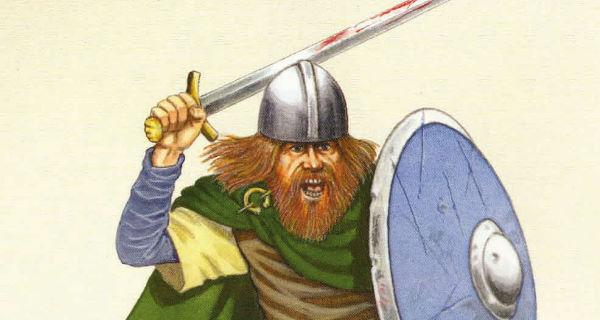
Widely accepted accounts of the Battle of Clontarf — a defining moment in Irish history fought on April 23, 1014 — was partly a “pseudo-history” borrowed from the tale of Troy, according to an academic from the University of Cambridge.
In popular history, the battle has been characterised as an epic and violent clash between the army of the Christian Irish High King, Brian Boru, and a combined force led by the rebel king and leader of the Dublin-based Vikings.
The disputed outcome saw the Vikings beaten but at huge cost. Brian was killed, and became a heroic figure and Irish martyr.
According to Máire Ní Mhaonaigh, from St John’s College, much of what we know about Clontarf may be rooted not in historical fact, but a brilliant work of historical literature which modelled sections of its text on an earlier account of the siege of Troy.
Rather than a trustworthy description of the battle, this account — or — was a work of fiction aiming to cement Ireland’s legendary past in the context of a grand, classical tradition, stretching back to the works of Homer and classical philosophy.
It means that despite the widespread portrayal of Clontarf as a heroic conflict in which the lives of Brian and others were sacrificed in the Irish cause, the historical truth is unknown.
While the advent of the battle itself and its significance is beyond doubt, the details of what happened are likely to remain a mystery, Dr Ní Mhaonaigh claims in her book, .
She said: “The casting of Clontarf as a national struggle has probably endured because that was what numerous generations of Irish men and women wanted to read.”