Curious timing and a bizarre lack of information-sharing on garda tapes
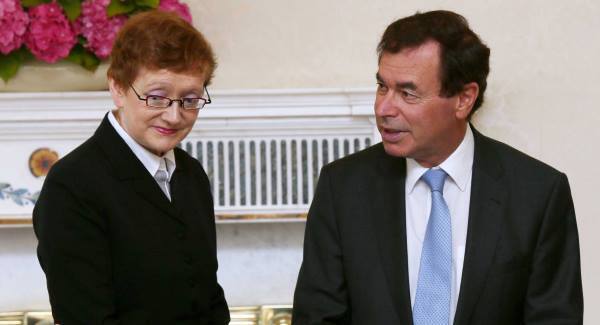
Máire Whelan, the attorney general, was informed in November by Martin Callinan, who resigned as Garda Commissioner this week, that recording had been taking place but she only told Taoiseach Enda Kenny last Sunday.
Justice Minister Alan Shatter offered an explanation for this when he spoke in the Dáil on Wednesday, saying Ms Whelan had no knowledge of the circumstances, legal background, or scale of the recordings until much later. It does seem strange that those questions were not asked, nor the information offered, last November.
The Department of Justice was told at the end of February that problems were brewing over the recording of phone conversations in relation to one particular court case. Apparently the question wasn’t asked whether this was a common practice — which seems a strange omission. A follow-up letter went to the department on March 10 and a meeting was held between department representatives, officials from the office of the attorney general, and the Garda commissioner the following day, but it is not clear if the bigger picture about the recordings was conveyed or why Mr Shatter wasn’t made aware of the issue.
The department knew by March 19, however, that there was a wider issue involved because the Garda commissioner disclosed communications he had with the Data Protection Commissioner about what should be done with the backlog of recordings.
Mr Shatter was on a St Patrick’s Day trip to Mexico by then and says he was told nothing until Monday evening — a full 24 hours after the attorney general informed the Taoiseach — which appears bizarre.
Time will tell but the potential for irreparable damage is real. At worst, the recordings could scupper pending criminal trials and result in convictions being overturned. This would occur if it is found that recordings were made of calls between an accused and their lawyer which were not previously disclosed and contain information damaging to the defendant.
At best, they’re going to delay just about every pending trial for murder, rape, terrorism, and organised crime offences while it is established whether there is evidence of relevant recordings.
If there is swift agreement between prosecution and defence sides that there is nothing to worry about, the delay will be minimal. Clarifying the situation will take time and resources.
What we don’t know is how easy it will be to determine if there are any relevant recordings — there are at least 2,500 surviving cassette tapes from prior to 2008 and an as yet unknown but potentially enormous number of hours of digital recordings since.
The DPP has responsibility in the first place for clarifying the situation in each case but the office has few spare resources to undertake such extra work. If the defence doesn’t accept the State’s evidence, an independent assessment could be requested.
The DPP hasn’t commented except to say it met the acting Garda Commissioner on Wednesday to discuss the issue and would continue to liaise with gardaí on it.
Again, it’s a waiting game. The Taoiseach has raised the possibility of tribunal findings being called into question — most likely the Morris Tribunal into activities of gardaí in Donegal and the Smithwick Tribunal into allegations of Garda collusion in murders during the Troubles. A lot will depend on what information comes out now the affair is in the spotlight.
The Government has committed to setting up a Commission of Investigation to inquire into the recordings, but first, a “full, detailed” report must be compiled by the acting Garda commissioner and Department of Justice. No deadline has been set. Once received, the terms of reference for the Commission of Investigation will be drawn up — a process that takes time.
Then, the commission has to seek voluntary co-operation from all persons of relevance to the inquiry or, if necessary, go through the process of legally compelling them.
Once hearings are completed, a report must be compiled and passed to the Government which then must make it public; unless publication might prejudice any criminal proceedings.
On the face of it, no, apart from the obvious fact that they both emanate from questionable practices within An Garda Síochána, they both damage public confidence in the force, cost the Garda commissioner his job and created a crisis for the Government.
But the timing of the recordings revelations is interesting, coming a day before Mr Shatter was due to make a statement — and, as it turned out, an apology — to the Dáil about the Garda Inspectorate report into the whistleblower allegations.
Another interesting backdrop is the fact one inquiry is under way into additional serious allegations by one of the whistleblowers, Sgt Maurice McCabe, and that another inquiry is taking place into the attempted bugging of the offices of the Garda Síochána Ombudsman Commission.
Possibly. The systematic recording of phone calls in and out of Garda stations was ordered, allowed, orignored by senior gardaí who will presumably have to answer for their action or inaction. The two inquiries under way could also have damaging repercussions.