Q&A: Shedding light on attorney general’s role
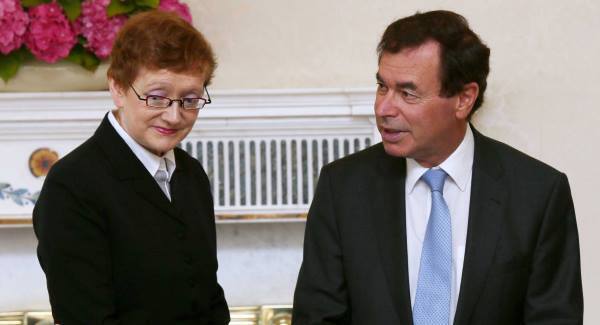
The job of the attorney general has been thrown into focus in the latest controversies surrounding the gardaí and Department of Justice. Here Caroline O’Doherty explains briefly what the State’s chief law officer’s functions are and how her office operates.

Q&A: Shedding light on attorney general’s role

Q. Who or what is the attorney general?

A. The State’s chief law officer, the person who advises the Government, government departments, government offices and various government committees, commissions and working groups on legal matters, including litigation by and against the State, the repeal of old legislation and drafting of new law, conveyancing, and the impact of EU law and other international developments.

Q. Sounds like a lot of work — is it all down to one person?

A. More like 140 people — about half of whom are solicitors and barristers and the rest are administrative staff.

Q. Who currently holds the post?

A. Máire Whelan, a Galway-born barrister who will be marking 30 years at the bar next year. A member of the Labour Party, she had a relatively low-key career before being appointed as AG in March 2011.

Q. How is such an appointment made?

A. The AG is a government appointee — he/she only serves as long as the Government of the day lasts and vacates the office when the Government does.

Q. How close is she to the Government?

A. Politically, see above. Practically, you don’t get much closer. She sits in at Cabinet meetings, something not even ministers of state are allowed to do, and the Taoiseach has an open door for her. When major political events are happening, the AG is centrally involved. For example, in 2012 the AG held the hands of the Government and Department of Finance through the restructuring of the banks and the debt crisis management and had intensive involvement with the troika inspection teams sent here to review our compliance with the bailout terms.

Q. So is it odd that she kept quiet for five months after issue of the bugging of Garda stations was brought to her attention?

A. Justice Minister Alan Shatter told the Dáil she “had no knowledge at that time [last November] of the circumstances surrounding the making of tapes, the legal background to their being made, the contents of such tapes, or the number of such tapes”. Public Expenditure Minister Brian Howlin also sought to explain her delay in informing the Taoiseach, saying there was “no red flag flashing” at the time and she was unaware of the scale and implications of what she was being told.

Q. Why was the information given her sparse and why was there no red flag waving?

A. Until we hear from her, we can only speculate that she wasn’t personally notified but that someone in her office was informed and failed to see its significance, or that she was informed but simply didn’t grasp the importance of it, or that she did see the potential implications and wanted to be sure of her advice before informing the Taoiseach, or perhaps even that she wanted to establish what, if anything, the Government already knew before she went to them.

Q. No answers there so. Are we likely to hear from her?

A. It would be a first. Communications with attorney generals and advice from them is legally privileged so it isn’t made public and is exempted from Freedom of Information legislation. The Commission of Investigation will be able to question her but may not be able to publish all she might tell them.

Q. Does it matter that she didn’t inform the Government sooner?

A. It would have left a bit of breathing space between the bugging revelations and the latest round of the whistleblower scandal if she had gone to the Taoiseach earlier — presuming he acted swiftly on her information — but what consequences that would have had for Martin Callinan’s career, Alan Shatter’s reputation and the court cases that are now in limbo is unclear.

Q. Why are court cases in limbo?

A. Any defence team that has a suspicion or concern that their phone conversations with an accused may have been bugged would be mad not to seek an adjournment/appeal/review of the case until the truth of the matter can be established. One case involving two defendants in the Special Criminal Court was adjourned on that basis on Wednesday and many more are expected to follow.

Q. Isn’t that just a matter of lawyers chancing their arm?

A. Possibly, but they’re chancing it on the very strong legal principles of the right to confidential communication between solicitors and clients, the right to full discovery and the right to a fair trial.

Q. Will judges by sympathetic to their arguments?

A. Yes — the president of the High Court has told the judges of the Central Criminal Court and Special Criminal Court they should clarify whether there are any issues arising out of the scandal that might impact on the case they are hearing.

Q. What are the implications of that advice?

A. It could take a long time and a lot of work to establish for certain if there was any recording of any particular conversation in any particular case. If recordings are found, it could take a long time and a lot of work to establish the importance of the information contained in them and what, if anything, was done with it. If important information was recorded, used and not disclosed, it could mean prosecutions being thrown out of court and convictions overturned.

Q. Gulp. Sounds serious. What should the Government do?

A. Tell the attorney general to put the kettle on — we’re on our way over and it’s going to be a long night.

x

More in this section

Lunchtime News

Newsletter

Get a lunch briefing straight to your inbox at noon daily. Also be the first to know with our occasional Breaking News emails.

Cookie Policy Privacy Policy Brand Safety FAQ Help Contact Us Terms and Conditions

© Examiner Echo Group Limited