Customers who are refused flood insurance advised to use brokers
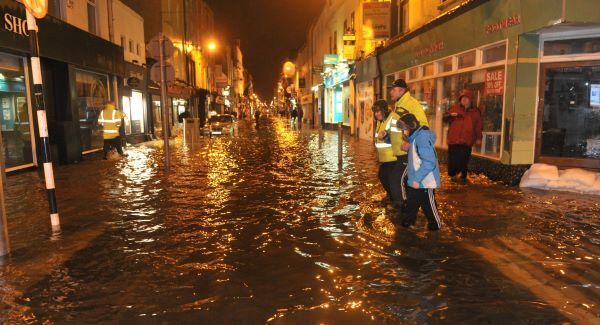
Speaking at a flooding conference in Cork, insurance broker turned public loss adjustor Eamonn Downey said “illogical” decisions to refuse flood and subsidence cover — even though a person may live up a hill or have underpinned their house — were due to industry’s over-reliance on a ‘geocoding’ system that arbitrarily refuses to cover houses in certain locations.
He said brokers have sufficient financial clout with insurance companies to “make them see logic where they don’t want to” and he advised householders to use brokers as “they will ensure that your policy is sufficiently broad”.
He advised businesses and householders not “to buy directly from insurance companies or from a company website as, very often, you’re not getting sufficient cover”.
Mr Downey called for the insurance market to be overhauled, as many vulnerable people “are not being well treated”. He accused the industry of moving “at a snail’s pace” in processing claims.
Mr Downey also said the humanitarian fund set up by Environment Minister Phil Hogan to help flood victims who do not have insurance was “a mess”.
He said the community welfare office-ran element of the scheme was “cumbersome” and “they give miserable payouts”.
He said the Red Cross scheme was “inoperable, involved far too much form filling and was not structured in a realistic way so that people on limited funding could access money for household equipment quickly”.
He said the Irish Claims Consultants Association sat down with St Vincent de Paul and devised a scheme that would be speedy, transparent and accountable and are offering to pilot it for the department. Mr Downey said the ICCA would give their services for free.
Meanwhile, John Martin of the Office of Public Works explained that, as part of the Catchment-based Flood Risk Assessment and Management programme, the OPW had hailed Cobh/Great Island area as the “most realistic” place for a tidal barrier in Cork harbour. He warned, however, that such a scheme would not be cost efficient, viable or justifiable until at least 2070.