Bitcoin gains currency with Dublin tech workers
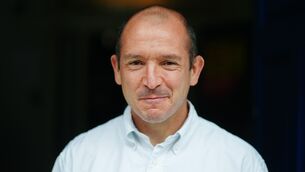
The head of the Irish Bitcoin Association, Alan Donohoe, said they have seen a rise in the number of transactions in his shop, GSMsolutions, in Dublin.
“We have seen a rise in transactions,” said Mr Donohoe. “We get two to three transactions a day in our shop in Dublin 1. It is mainly people buying electronics or computer accessories — the people who work in the Silicon Valley companies are very into it.”
Mr Donohoe’s association lists eight businesses across Ireland that accept Bitcoins, including a B&B in Offaly.
Carmel Carroll of The Ring Farmhouse in Offaly said they have not yet had any visitor use the virtual currency to pay for a stay at their B&B.
“It is just something my son is interested in,” said Ms Carroll. “It is a bit of gimmick on the website that we accept it.”
Mr Donohoe said the currency is still in its infancy and may not have spread beyond Dublin yet, but he believes in time Bitcoins will take over.
“It is like anything digital,” he said. “It is taking over everything we do. Everything is going digital, so why shouldn’t currencies?”
Another business listed on the Irish Bitcoin Association website bitcoinshop.ie offers what appears to be a convenient way to use the currency for the weekly shop by letting consumers purchase Tesco gift vouchers. Bitcoinshop.ie is charging 0.7 of a Bitcoin for a €50 voucher. At the current exchange rate, the voucher would cost the purchaser more than €400.
Mr Donohoe said the price anomaly was due to the fact the website had not updated its prices to reflect the volatility of Bitcoin values.
Other services that can be bought using the currency include web hosting from Webworld.ie, web design from Online Presence, CCTV monitoring from Visiconnex, bed sheets and earrings from tradeiteasy.ie, and electronic cigarettes from Vapourlights.com.
The Bitcoin is a virtual currency invented by an enigmatic cryptographer called Satoshi Nakamoto (not his real name).
He devised a system which allowed people to mine Bitcoins by solving difficult mathematical problems with a 64-digit solution. When the sums are solved, a new block of Bitcoins is released and the miner is rewarded with a number of coins. The mathematical problems get increasingly difficult to control the supply of Bitcoins.
To receive a Bitcoin, a user must have a Bitcoin address — 27-34 letters and numbers — which acts as a virtual postbox to and from which the Bitcoins are sent. The addresses are stored in wallets, which act like Bitcoin bank accounts. The Bitcoins can be bought on online exchanges.
Bitcoins came to prominence during the Cypriot banking crisis as a way to move money out of the country. The Chinese soon began using them to get their assets out of China and the price rocketed to more than $1,000 per Bitcoin.