Better to talk rather than cut crash victims from vehicle
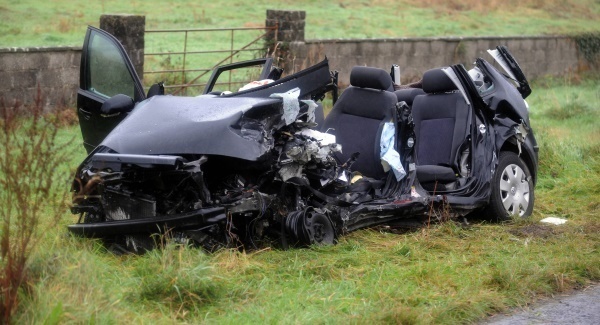
According to the resea-rchers, the current practice, aimed at reducing the risk of spinal industry, is based on “custom” rather than robust scientific evidence.
They found that with certain categories of patients, verbal instruction could be more effective than using specialist equipment.
Up to 20,000 cases of spinal cord injuries occur annually in Northern Europe and the US, with road traffic accidents the main cause of cervical spine injuries.
“Preliminary findings demonstrate that while seriously injured patients will still require the conventional technical approach, certain patients may have potential neck injuries reduced by following simple steps narrated by trained rescue personnel,” said Mark Dixon of University College Dublin, who worked on the research.
“If the findings of the preliminary trial are confirmed on a larger scale, then this could have implications in the future for more comfortable, less complicated extrications of stable patients.”
The University of Limerick and UCD research was conducted in collaboration with National Ambulance Service paramedics and Limerick City Council firefighters.
As part of the study, an 80kg man was fitted with a cervical collar and removed from a vehicle using various techniques.
During each removal, the patient’s cervical spine movement was biomedically analysed using 12 infrared motion cameras.
When the patient got out of the car by following paramedic instruction, his cervical spine only moved by 6.6 degrees.
In comparison, when paramedics used a long spinal board with and without cutting equipment, the spine was forced to move by 11.7 to 26.1 degrees.
UL’s Centre for Pre-hospital Research and its physical education and sport sciences department collaborated with UCD’s Centre for Emergency Medical Science on the research. It won the team a best scientific presentation award at the National Association of Emergency Medical Services Physicians’ annual meeting in Bonita Springs, Florida, recently.
A second phase of testing has now been funded by the Pre-hospital Emergency Care Council in Ireland and the European Falck Foundation with a view to possibly changing Irish and European extraction protocols.

CONNECT WITH US TODAY



Be the first to know the latest news and updates