Crab meat insight offers returns boost for fishermen
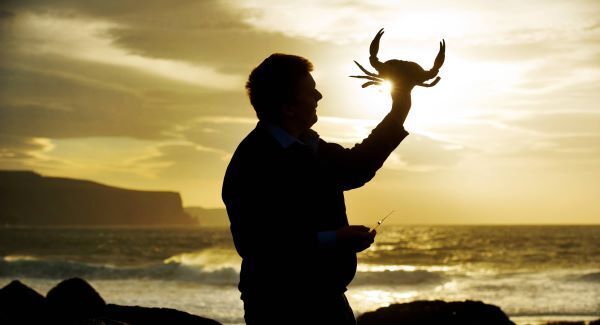
It might not be the weather for it at the moment but analysis of crabs caught off the north Clare coast could lend itself to better returns for fishermen.

Crab meat insight  offers  returns boost for fishermen

Stephen O’Connell, a fourth-year student at Mary Immaculate Secondary School in Lisdoonvarna, has collected data on protein levels and harvestable meat from more than 800 crabs from his father’s and uncle’s boat. The aim of his entry to the 50th BT Young Scientist & Technology Exhibition was to see how accurate the colour of the underside of the shell is at predicting the quality and quantity of meat in crab claws.

If this system of his father’s to grade crab proved accurate enough for use in modern-fishing, his plan has been to develop a colour chart that would enable fishermen easily classify the quality in their catches. Judging by his past experience as a two-times award winner at previous events, he may be in with a good shot of success when the winners are announced at teatime on Friday evening.

In the meantime, however, students are still putting up their project displays at the RDS, where the event opens to the public tomorrow.

The first winner John Monahan got a chance to see firsthand yesterday how the current generation of budding innovators andscientists are faring when he met students on site yesterday. The Kildare man went on to work in industry after his 1965 success, setting up a leading biotech firm and now based in California’s Silicon Valley, but still with a keen interest in Irish science and technology development.

Also dropping in will be Colonel Chris Hadfield, the Canadian astronaut whose version of David Bowie’s ‘Space Oddity’ was one of last year’s most-watched videos. He is signing copies of his book at the RDS on Saturday morning and will sample the atmosphere among entrants and visitors.

The amount of work involved in Stephen’s project is reflective of the tedious testing and recording undertaken by almost 1,200 students for their projects, which visitors to the event can judge for themselves on Thursday, Friday and Saturday. The official assessors will be doing their duties to select winners of more than 120 categories and other awards.

Other attractions at the exhibition — which is open from 9.30am each day — include creative inventions, interactive education and live robot and space exploration shows.

* btyoungscientist.com or search for BTYSTE on Facebook or Twitter.

* http://exa.mn/1le

Students boot up

Three Co Louth students didn’t come up with their idea on the hoof. They put their knowledge of farming to use to come up with a protective Moo Boot for cows. It is the entry in the intermediate biological and ecological category by Stephen Woods, Conor Ryan and Stephen Lynch from Bush Post Primary in the Cooley peninsula. The boot is designed to tackle the expensive problem of foot rot which causes pain and under-performance in livestock that can cost farmers thousands of euro.

“We are very excited and a little nervous about displaying our product to the judges and the public,” they said.

Lego refugee shelter plan

The manufacture of Lego refugee shelters in crisis zones was the subject of Cavan student Hugh Conlon’s investigations.

He is representing St Aidan’s Comprehensive School in Cootehill after testing to see if a Lego house could be successfully reproduced on a larger scale, by investigating its waterproofing, insulation and load-bearing capabilities.

Through those tests, part of his entry in the senior technology category, he has modified the design to try and create an ideal shelter that could be rapidly built without the use of tools.

Rock pool investigation

Rock pools on the Clare and Galway coast were the outdoor lab for another entrant.

Aisling O’Rourke’s familiarity with the shores of Doolin and Clahane inspired her after she noticed small fish moving around in numerous rock pools. The aim of the fifth year student at Mary Immaculate Secondary School in Lisdoonvarna was to see if there were differences between rock pool fish on both sides of Galway Bay, and whether any such differences were influenced by the pool sizes or location.

At each of four sites — two in north Clare and two on the Connemara side of the bay — she recorded all fish in 10 rock pools, and also the presence of shellfish, anemones and seaweed.

Event stats

* 65,000: students have entered 32,000 projects for the event in its 50 years.

* 40,000: people attend the exhibition each year.

* €5,000: top prize at this year’s event.

* 2,200: projects entered before participants were selected for this week’s exhibition.

* 1,200: students showcasing their projects.

* 550: group and individual entries picked for the exhibition.

* 379: schools from the entire island that had students submit entries last autumn.

* 230: projects entered for first running of the event in January 1965.

* 14: Irish projects have gone on to win the EU Contest for Young Scientists since it started in 1989.

* 12: lower age limit for entry.

* €4: starting price for admission (discount entry per person in groups of 20 or more primary pupils accompanied by teacher). Prices go up to €12 for adults and €25 for a family pass.

More in this section

Lunchtime News

Newsletter

Keep up with stories of the day with our lunchtime news wrap and important breaking news alerts.

Cookie Policy Privacy Policy Brand Safety FAQ Help Contact Us Terms and Conditions

© Examiner Echo Group Limited