‘The maximum shift any doctor should work is 24 hours’
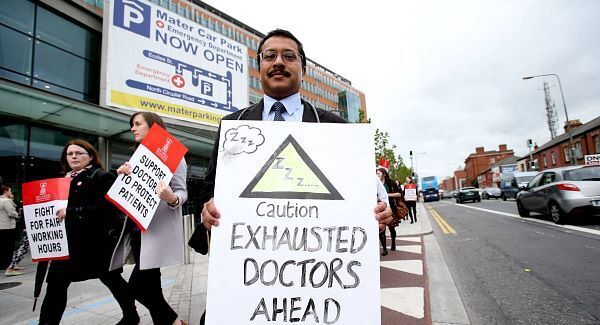
At the Mater Hospital in Dublin, some were still in scrubs, having operated throughout the night and into the early morning, but still determined to protest over their working hours.
One such doctor was Éadaíon Ni Shéaghdha from Dublin who had just finished a 24-hour shift.
The senior house doctor said it was impossible to work so many hours without making some errors.
“The hope is they are small errors and other medical staff who work with us help us to pick them up early,” she said.
Another junior doctor, Dr Anthony O’Connor, said they wanted to work in a system that valued their physical and mental well-being. “Our aim is very modest — the maximum shift any doctor should be expected to work is 24 hours. Now, if that can’t be provided with the resources available to the HSE, I don’t know what can.”
Asked if he was concerned something unforeseen might happen to a patient because of the strike action, Dr O’Connor said he believed the level of cover in the hospital was actually more than would be provided on a typical Sunday or bank holiday. “It is regrettable that some patients are being inconvenienced, but there has to be an acceptance that you can’t work people non-stop any more. Our working conditions are immoral.”
Dr Grainne O’Kane, a specialist registrar in medical oncology and chair of the Mater Hospital Non-consultant Hospital Doctors Committee, said doctors put their lives on hold to get to the prime of their career and it was very tough. Dr O’Kane admitted making a medication error at the end of a 30-hour shift when she was a senior house officer.
“It was a minor medication error and there were no serious repercussions from it, but I felt a huge amount of guilt over it,” she said.
Junior doctors picketing outside University Hospital Limerick called for a safer working environment for patients as over 300 procedures were cancelled at hospitals across the Mid-West region.
Speaking at the picket line in Limerick, Dr Emma Jennings expressed her disappointment with government and the HSE for failing to address the matter.
“I would feel I have been let down by the Government and the HSE who have a legal obligation to let us work legal hours. It is time to buck up and make us a legal working force that are safe for patients and safe for ourselves,” she said.
The affected hospitals were University Hospital Limerick, University Maternity Hospital, Ennis Hospital, Croom Hospital, Nenagh Hospital and St John’s Hospital in Limerick.
“Patients affected have been contacted by phone and their appointments will be rescheduled,” a HSE spokesman said.
Urgent care for areas such as oncology, dialysis and emergency was still being provided.
At Kerry General Hospital, Tralee, 13 junior doctors, who are not IMO members, reported for work, according to the hospital management.
However, the strike continued to have an impact on the hospital’s services, mainly affecting outpatients, but management said outpatients whose appointments had been cancelled, or deferred, had been informed in advance.
Dialysis and cancer treatment services were not affected.
The Emergency Department was operating, but management warned the public delays could be experienced as the day went on as there could be a knock-on effect on bed availability.
Upwards of 15 junior doctors mounted pickets outside the hospital. Several motorists honked car horns as they drove by and an IMO spokesman said they were getting a lot of public support.