IMF warns Government not to slip on committed budget cuts
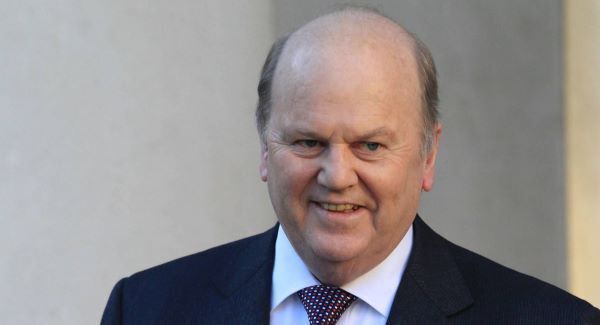
They have given Finance Minister Michael Noonan a very little leeway, saying that the total cuts of €5.1 billion in the budget for the next two years could be divided between 2014 and 2015 — but the full total must be achieved.
Craig Beaumont, the IMF’s mission chief, said that the bigger sum should be deducted from the budget to be announced by the minister later this month, and a smaller sum in 2015.
“On the cumulative sum there is the possibility to substitute from one year to another, but you would want to keep it on a downward path to support Ireland’s recovery,” he said.
He made it quite clear that the fund would not look lightly on any deviation from this, warning that they had one more final review of the Irish programme before the country exits the bailout in December.
The body that has overseen the series of structural changes and budget cuts over the past three years lowered growth expectations for this year and next, but noting that business sentiment surveys are positive for domestic demand and employment.
Their report, following their 11th visit to Ireland in September, warned that growth is very fragile and, if it slips further, the country’s debt could climb to 127% by 2015.
But the debt could climb even higher to an eye-watering 135% if there are shortfalls in the value of Nama assets acquired from the now liquidated IBRC; if the stress tests on the banks next year show they need more capital that cannot be raised on the market or from the EU; and the costs from restructuring the credit unions.
The IMF, that in all their reports has pushed the EU to do more, says that the EU’s rescue fund, the ESM, should provide funding to make up any shortfall identified by asset and stress tests in Ireland’s banks next year.
However, it is far from clear that the ESM will provide this as they favour shareholders, junior bondholders and even depositors and private investors being asked to pay first before the state would become involved, and with the ESM as last resort. However, the State is the main shareholder in AIB and Irish Permanent.
And they also favour a precautionary credit line which the Government could tap into if they had problems raising money on the markets or if the price was too high when they return to raising money on the markets next year.
Mr Beaumont said that the IMF normally provides such a credit line but in this instance the programme has been jointly with the EU.
Discussions on non-performing loans now at 26%, and tracker mortgages are continuing with the Irish authorities, he said, in an effort to have the banking sector support the real economy.
CONNECT WITH US TODAY



Be the first to know the latest news and updates