BAI code killed the radio star
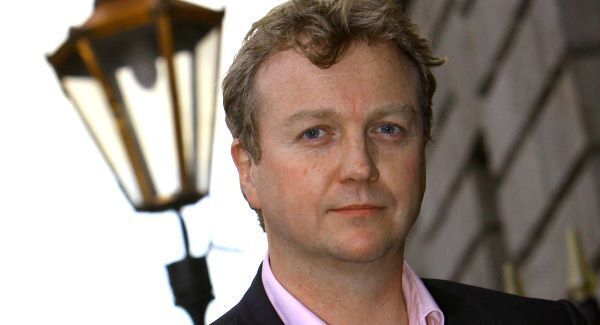
Conall Ó Fátharta asks if a new broadcasting code will curb debate.

BAI code killed the radio star

SOME of the country’s best- known and most popular radio presenters have hit out at the Broadcasting Authority of Ireland’s (BAI) new code for broadcasters.

The Code of Fairness, Objectivity and Impartiality in News and Current Affairs came into effect this week, and offers a range of more specific rules central to the Broadcasting Act 2009.

The main bone of contention centres on the inclusion of a provision that a broadcaster “may not express his or her own view on matters that are either of public controversy or the subject of current public debate”.

In fact, a similar wording was already included in the Broadcasting Act 2009 — namely that all material broadcast “is presented in an objective and impartial manner and without any expression of the broadcasters own views”.

Much of what is in the code is laudable, aiming to ensure that controversial or topics of public debate should be guided by “ensuring equitable, proportionate coverage”.

Chief executive of the BAI, Michael O’Keeffe, cited this as a challenge faced by the media in the face of an onslaught of other sources from which people can now obtain news.

“In the context of a huge growth in the diversity of sources from which the public can obtain news and current affairs, this code offers a framework to enhance and promote audience trust in the Irish broadcast media’s treatment of news and current affairs,” he said.

Unsurprisingly, politicians have welcomed the code, particularly the section prohibiting well-known broadcasters expressing their personal views on controversial topics.

Labour’s Ann Phelan issued some well-meaning platitudes about “highly respected” and “highly regarded” journalists and broadcasters before then telling us that they should not express opinions on air.

“I don’t believe that personal views on political issues or current affairs have a place in a news or current affairs show, as it may call into question the impartiality of the programme.

“In some instances it could be seen as an attempt to misconstrue or misrepresent the facts,” she said.

A large number of broadcasters have already come out against the code, stating that, in essence, it will kill talk radio by stifling debate and discussion.

Presenter of The Last Word and Irish Examiner columnist Matt Cooper said the code failed to cater for circumstances where it is virtually impossible to argue the other side of a story — citing the Anglo tapes as a case in point.

“I’m not a fan of so-called “personality-driven” radio and television. But I like the idea of choice, of people making their own choices as to what they want to listen to and watch. I don’t like the idea of prescribed radio, where every station is forced to do things in exactly the same way, according to some codes set down by a State agency.

“If a host wants to express an opinion let him or her do so, as long as he or she is transparent about personal interests that might influence that opinion, and let the public decide whether they want to listen or not,” he said.

Another presenter not shy of expressing his opinion on controversial topics, Ray D’arcy, said last month that he would simply ignore the code.

“I’m not going to be changing anything I do. I’m not going to be going on air without delivering my opinion, that’s part of what I do. We should be very proud of our radio in Ireland. We have really healthy radio.

“You need voices, you need opinions and personalities, and without that radio is nothing. I won’t be changing anything I do,” he said.

Local radio is heavily driven by talk and debate around well-known and often opinionated broadcasters.

Cork’s 96FM’s Neil Prendeville said the code was unworkable and that, if enforced, it would spell the end of the type of spontaneous, debate-led radio so popular in Ireland.

“I’ve read up on it in the last number of weeks and I’ve seen that other presenters have come out saying that they are going to ignore it, so that’s what I am going to do — ignore it. For shows like mine, it will mean that I might as well hang up my headphones, turn off the mic, and leave the studio.

“It’s insane. I mean where do you draw the line? Ad libbing, speaking off the cuff on radio, all of the things that make talk radio will become a thing of the past. It’s also unfair in the sense that it hits broadcasters for expressing a personal opinion on an issue, but print can do it in the form of analysis or opinion pieces from columnists,” he said.

Mr Prendeville also said he felt there was a political agenda behind the code, one which would welcome any efforts banning well-known broadcasters giving their opinions on air.

“I think there is a sinister political agenda at work here. Print, media, radio and TV are the watchdogs of what’s right and wrong in the political establishment and politicians are worried by that. I mean if you are wrong, you’re wrong and you have to come out and apologise for it but you can’t go on air with your hands tied behind your back,” he said.

However, Waterford’s Deise AM presenter Billy McCarthy was somewhat more sanguine about the code, saying there has always been an obligation on broadcasters to be fair and objective.

“I’m not sure how restrictive it is going to be in practice and if it’s really going to change things all that much.

“I mean regulations demanding broadcasters to be balanced and impartial have been in existence for the past 23 years.

“I think most of the broadcasters doing a show like mine are experienced enough to know where to draw the line. We know how to bring people into an argument,” he said.

Mr McCarthy said policing of the code was important, and that it should not be a method for cranks to attack certain broadcasters.

“Obviously, on certain controversial issues, say if you are a member of either side of the abortion debate, you should make that known.

“Essentially, I think it will all come down to how it’s policed. Otherwise you could have cranks waging campaigns against certain broadcasters. It seems that it will be down to the listener and I think the system for reporting complaints is fairly sensible as it is,” he said.

x

More in this section

Lunchtime News

Newsletter

Keep up with stories of the day with our lunchtime news wrap and important breaking news alerts.

Cookie Policy Privacy Policy Brand Safety FAQ Help Contact Us Terms and Conditions

© Examiner Echo Group Limited