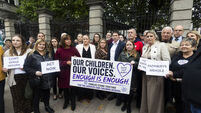
Allowing abortion in fatal foetal cases dominates debate
Health Minister James Reilly came under strong pressure from Government and opposition TDs to consider legal opinion that terminations should be allowed in cases of fatal foetal abnormalities — or commit to dealing with the issue at some stage in the future.
The Oireachtas subcommittee on health last night began examining proposed amendments to the legislation, allowing abortion in limited circumstances — after the general provisions of the law were passed in the Dáil by 138 votes to 24.
Four Fine Gael TDs who voted against it — Billy Timmins, Terence Flanagan, Peter Mathews, and Brian Walsh — were last night expelled from the parliamentary party.
Around seven other party members — including junior minister Lucinda Creighton — have urged the health minister to introduce amendments restricting the circumstances when an abortion is permitted, when the Bill passes through committee and report stages the coming days.
Dr Reilly rejected an amendment to allow terminations in cases of fatal foetal abnormalities.
He said there was no constitutional certainty that this would be compatible with the right to life of the unborn and could leave the legislation open to a Supreme Court challenge.
Richard Boyd Barrett of the United Left Alliance suggested it could be included as an accompanying Bill so that if it was struck down by the Supreme Court, it would not effect the main provisions of the legislation.
He said in the estimated 1,500 cases every year of fatal foetal abnormalities, the foetus is not compatible with life and “therefore there is no clash” with the constitutional protection of the unborn.
Labour TD Ciara Conway said that it was “incumbent” on legislators to address situations where women and their partners who travelled abroad to terminate unviable pregnancies were “bringing babies home in the boot of their car or waiting for DHL to deliver their ashes”.