Magdalene survivors to receive up to €100k
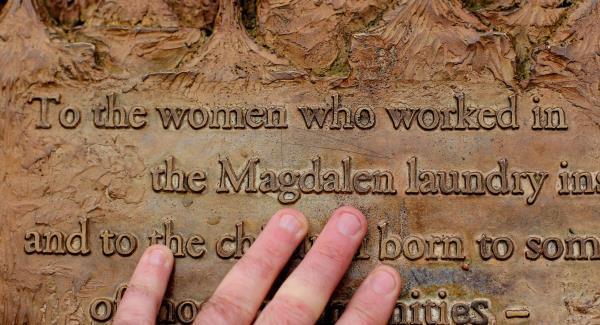
Women who were incarcerated in the institutions and forced to work without pay will be entitled to a range of payments depending on how long they spent in the institution.
Women who spent 10 years or more in a laundry will be entitled to a general payment of €40,000, followed by an additional €60,000 for their years of labour.
Women who spent three months or less in a laundry will receive a lump sum payment of €11,500.
Those who spent a year in a laundry will be paid €20,500, increasing to €68,500 for women who were incarcerated for five years. The maximum payment is €100,000 for women who were in a laundry for a decade or more.
The report, prepared by president of the Law Reform Commission, Mr Justice John Quirke, recommends that any women in receipt of €50,000 or more receive the money in weekly payments rather than a lump sum.
It also recommends that survivors be granted access, without charge, to a wide range of medical services as part of an enhanced medical card.
It also advised that all Magdalene women who have reached pensionable age should have an income equivalent to the state contributory pension, and that those who have not yet reached pensionable age have an income from the State of €100 per week.
Justice Quirke stated that before taking part in the scheme, the women should agree to waive any future claims against the State.
However, he pointed out that they should seek independent legal advice and that the cost of this should be borne by the State.
The report also recommends that a dedicated unit be set up to provide advice and support, assistance in meeting with the religious congregations, social opportunities to meet other such women, and to provide for the creation and maintenance of a memorial park.
While preparing the report, Justice Quirke and his team spoke to 337 Magdalene survivors and all of the religious orders involved.
A common theme that emerged in those discussions was the health problems suffered by survivors.
About 66% reported serious health issues, while just 11% had health insurance. A total of 90% had received an education to just primary school level. About 68% spent between one and five years in a laundry, while 13% spent between five and 10 years. Just 9% were resident in an institution for less than a year.
The McAleese Report into the laundries stated that 61% of Magdalene women spent less than a year in one of the institutions. However, it acknowledged that the duration of stay for 42% of the women was unknown.
Justice Minister Alan Shatter said the Government had accepted all of Justice Quirke’s recommendations and said arrangements had been put in place by his department to start processing applications for the redress immediately.
He also said he has informed the four religious congregations which ran the laundries that they are expected to contribute to the compensation, but declined to put a figure on how much.
“There will be great disappointment within Cabinet if the congregations fail to make a contribution. I think, perhaps, the taxpayers of Ireland, would expect that they make a contribution,” he said.
*Department of Justice helpline: 01-476 8660
The main recommendations of the Quirke Report:
*Survivors should all receive cash payments in the range €11,500 to €100,000 depending on length of incarceration.
*Survivors should all be granted free access to a wide range of services (GP, hospital, drugs, dental counselling, etc).
*Those who have reached pensionable age should have an income equivalent to the state contributory pension.
*Those who have not reached pensionable age should have an income from the State of €100 per week.
*The cash payments should be exempt from taxes and should not be taken into account for the purposes of means testing social welfare or other entitlements.
*The creation of a dedicated unit to provide advice and support, assistance in meeting with the religious congregations, social opportunities to meet other such women, and to provide for the creation and maintenance of a memorial park.
*The extension of the Nursing Homes Support Scheme Act 2009 so that persons are appointed to look after, on an individual basis, the best interests of Magdalene women.
*Any previous payments made to these women under the Residential Redress Scheme should not be taken into account.
CONNECT WITH US TODAY



Be the first to know the latest news and updates