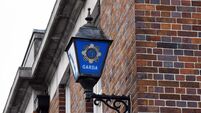
Youths put in cell to work out plan to remove graffiti
They were sent there by Judge Eugene O’Kelly to consider how they intended to remove some of their handy work from the famous Frank McCourt Museum in Harstonge Street.
Una Heaton, owner of the museum, told the court a major international Frank McCourt event was taking place at the museum on July 19 which will be attended by foreign media.
She said walls at the red brick listed building were a mess with graffiti which would cost up to €4,500 to remove professionally.
One painted word JAMS, it emerged, measured 10ft x 8ft.
The four defendants were Nathan Murray, aged 19, 213 Mahon House, Upper William St, Limerick; Ian Hopkins, aged 21, Kildooms, Clonlara, Co Clare; Ruairi Fogarty, aged 19, 165 Drominbeg, Rhebogue, Co Limerick and Jonathan Noonan, aged 19, Apt 5, Upper Cecil St, Limerick. They all admitted offences of defacing property under the Litter Pollution Act 1997.
They accepted responsible for their graffiti on some public and privately- owned buildings and some large road signs on major roads around the city.
Judge O’Kelly sent the four to the cells to come up with a plan of action to remove the graffiti — with a deadline of July 17 to clean up the Frank McCourt Museum.
He said: “I could understand it if they defaced the former Anglo Irish Bank building, but to deface a building of such extreme importance to the history of Limerick which attracts international tourists to the city.”
Ms Heaton addressed the four in court, saying: “I wish you could come and clean it up personally. It is atrocious what you have done.”
She admitted to being very upset by what had been done to the building.
She accepted the judge’s offer to get the four to conduct a clean-up.
Judge O’Kelly said none of the four had money to pay to have the graffiti professionally removed and getting the four to perform work, to remove it, was the best way forward, at this time, rather than sending them to jail.
Judge O’Kelly said it seemed as if the graffiti was a joint enterprise with the paint work carrying the personal monikers of the four SEVER, MIBJESK, GEON and ZONER.
The judge wondered if the four were involved in some kind of competition among themselves or a campaign to cover Limerick with graffiti.
Darach McCarthy, solicitor for one of the defendants, said he would not call it a campaign.
Sgt Donal Cronin said there definitely was a connection.
Gerard Reidy for Limerick City Council said over the past 18 months the council had spent over €20,000 on removing graffiti in the city from public and privately owned buildings and from major road signage.
He said the council wanted an undertaking from the four that they would desist from graffiti work.
Judge O’Kelly said he wanted a progress report on Jul 17. He said the four, all unemployed, would have plenty of time to do the work requested of them.
On that date, the judge said he would then consider making orders regarding the removal of graffiti from other buildings which the four admitted to causing.
Máiréad O’Donovan, administrative officer at the council’s environment department, said after the hearing graffiti had become a serious problem and the defacing of important road signs posed a danger to motorists and other road users.
The council, she said, had spend over €1,600 removing graffiti recently from road signs.
The council, she said, wanted to send out the message that court action will be taken against those found engaging in graffiti in the city.