Why doing it by the book is wasting schools’ time
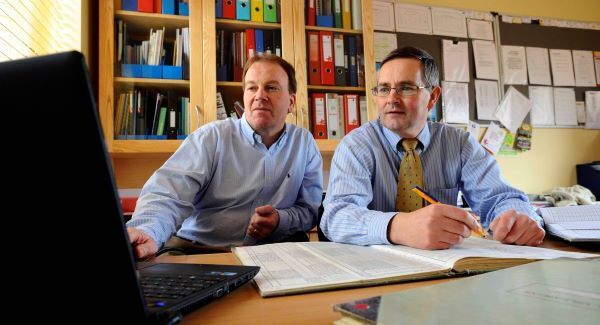
It’s 21st century Irish education — but not as the Google, Facebook, Microsoft or other hi-tech employers in Ireland might like to imagine it.
Department of Education rules mean each school must have a manually filled leabhar tinrimh laethúil, detailing weekly and monthly attendance records for all their pupils, for any visiting inspectors.
And so they do, despite in most cases having all this information and much more stored on easy-to-use software programmes, most of them designed and provided by Irish companies.
Paul’s principal at Scoil Barra in Ballincollig, Co Cork, is Donal O’Sullivan. He says there is an endless list of more important administration and educational work he or his deputy could be doing with the time needlessly filling in the leabhar tinrimh.
“We have 492 pupils, so you’re looking at a number of hours’ work each week. Paul is a resource teacher in the school and does this work as part of his post of responsibility duties,” said Donal.
“The administration element of this will, from time to time, cause disruption to his day and require him to spend time that could be spent reviewing assessments or planning work for his pupils,” he said.
What is even more frustrating for the staff is that the work could be done more quickly and comprehensively by their own computer software. But instead, they must comply with the Rules for National Schools that govern much of what they do every day, despite having been last updated in 1965 before most of the country’s 30,000 primary teachers were even born.
By the letter of the law — or in this case rule 55 (4) (d) of the Rule for National Schools — at least 10 minutes must be set aside in the daily timetable for roll-call.
“I suspect very few teachers in Ireland devote 10 minutes of their day to that task, but the rule is there.
“The system we use is simple. A class teacher takes a minute to check the number of children in class, then goes on to the computer in their classroom and marks in who is absent. That then filters into the system used by the deputy principal,” he explained.
Using the information from each class teacher, he can then generate analysis of average daily attendance and other information, as required by the two-page rule 65.
Another big ledger to be found in every one of the country’s 3,300 primary schools is the clár leabhar, the official registration book that is filled in at each pupil’s initial registration. But again, this could be held electronically, and is already done by schools that have the appropriate software programme.
The Irish Examiner reported last week how dozens of schools do not submit annual attendance reports (AARs) to the National Educational Welfare Board (NEWB) with figures on total days missed through absence, the numbers of students absent for more than 20 days and how many were suspended or expelled in the past year.
But while many schools curse what seems a never-ending amount of form-filling associated with the NEWB, it is acknowledged they can at least submit these and some of the statistics required by the Department of Education online.
But it makes it all the more frustrating that many practices required of them by the department are still stuck in the 1800s, when the national school system was in its infancy.
The director of the Irish Primary Principals’ Network (IPPN) Sean Cottrell said the task of creating the next generation of knowledge workers and well-adjusted citizens begins in primary schools.
“That means adopting policies that enable the creation of digital natives in our classrooms. The Government must show leadership and deliver on the promised electronic school management systems, rather than relying on anachronistic ledgers,” Mr Cottrell said.
“Having pupil data recorded electronically would also help track educational performance and better target resources,” he said.
The department said the nature of roll books in schools is one of a number of issues it will be discussing with principals and other education partners over the coming months.
It is also planning a pilot system soon, ahead of the extension of a pupil database used in second-level schools into the primary system.
This is something principals like Donal would equally welcome, given the time spent by schools up and down the country answering queries from state agencies, many of which have nothing to do with education.
“It all comes down to unnecessary duplication and it’s taking time from the teaching and learning process all the time,” he said.