‘Lauren’s dreams are as real to her as reality’
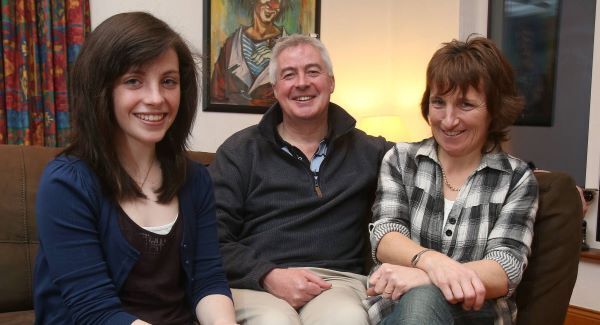
“What she experiences is way beyond my definition of bad dreams,” says her father, Larry. “Her dream is as real to her as reality.”
Lauren, 14, from Piercestown, Co Wexford, is one of 47 people in Ireland diagnosed with narcolepsy as a result of receiving the swine flu vaccine Pandemrix. As a result of this incurable sleep disorder, Lauren suffers hallucinations, nightmares, and successive daytime sleep.
Lauren and younger brother Luke both got the vaccine in 2010 but it wasn’t until early 2011 that Lauren’s parents began to notice something was amiss. “Lauren was very involved in camogie and football, training for Féile na nGael,” says Larry. “But she would fall asleep as soon as she got into the car. We asked her teacher how she was doing, and she said Lauren was putting her head down and falling asleep in class. So, between us, we agreed to lay off on the homework and the sport.
“She was 12 at the time, so we thought maybe it was a developmental thing.”
By the summer, naps were more frequent. During the Féile festival, Lauren was getting into the car for naps between games. During one game, she collapsed after suffering a muscle weakness. Her parents had no idea what was wrong.
After a family activity holiday in August, where Lauren’s exhaustion persisted, Larry contacted a paediatrician in Wexford. She spoke with a colleague in Crumlin Children’s Hospital about Lauren’s symptoms and the word “narcolepsy” loomed. More tests followed.
Up to then, the Kavan-aghs had been “completely, utterly in the dark that narcolepsy was linked to Pandemrix”, Larry says. Lauren was formally diagnosed before the end of the year.
Her parents now keep a sleeplog, and not a night goes by without some sleep disruption. Lauren needs to nap when she comes home from school and she is on the stimulant Ritalin to help combat daytime drowsiness.
Her participation in sport continues — unlike many of the other youngsters with the same diagnosis, Lauren does not suffer from cataplexy, an abrupt loss of muscle function that can cause immediate collapse.
The State has offered educational supports and Lauren does have a temporary medical card, but her father worries about long-term provision. After an initial “fruitful period” of discussion with the departments of education and health, parents have been left waiting to see what the State is proposing by way of support for their children in the future.
“If Lauren is unable to hold down a job because of her condition, I want some sort of safety net in place within the welfare system,” says Larry. “I want guaranteed psychological support if she needs it at any point. These kids were collateral damage in pandemic warfare and they need to be lifelong recipients of gold-plated State benefits.”
CONNECT WITH US TODAY



Be the first to know the latest news and updates