Austerity is not working, charity report suggests
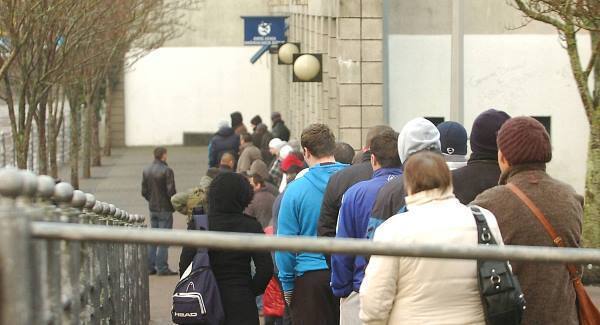
A charity report on Ireland and four other EU members notes that they now have higher levels of child poverty and youth unemployment than other countries in the bloc.
The report calls for a Government-backed investment package to tackle the unemployment crisis.
Caritas Europa, a network of charity and religious bodies, examines the impact of policies in Ireland, Greece, Portugal, Spain, and Italy. Four out of five nations have also been bailed out.
Charity secretary general Jorge Nuño Mayer said: “We have the situation of 750,000 [people] now living in poverty in Ireland and more than 1.3m at risk of living in poverty or social exclusion. Children are also the ones suffering most in this crisis. This is not a natural disaster, this is a man-made disaster.”
In relation to Ireland the study finds:
- Youth unemployment rates are particularly high (30.7%);
- The long-term unemployment rate is now third highest in Europe behind Greece and Spain;
- 1.3m people are at risk of poverty;
- Without social welfare payments, 90% of over-65s would be living in poverty.
Report contributor and Social Justice Ireland director, Sean Healy, said: “The key to the issue is addressing of the jobs issue. Without investment there will be no jobs, without jobs there will be recovery, with no recovery we’ll all be stuck in austerity for the foreseeable future. Vast swathes of people have been badly impacted upon as a result of the initiatives that have been taken and the austerity that has been imposed.
“It’s a short-sighted approach. It may well rescue banks, it may well rescue gambling investors and bondholders... but not poor people who had no part in that and are now saddled with repaying the actual debt.”
The report notes measures taken to improve Ireland’s economy in recent years have included cuts to welfare for the under-25s, reductions in child benefit, cuts to public servant wages and increased taxes through the universal social charge and Vat.
Labour MEP Nessa Childers said she was disturbed by government policy and was pushing her party in power to avoid austerity.
“I would be disturbed by some of the things I see happening in the Irish government and presided over by the Labour Party.”
She said she and other MEP colleagues were pushing her party to introduce the European proposed financial transaction tax as an alternative to cutbacks for the vulnerable.
Former Green party senator Déirdre de Búrca has said she regrets the policies her party implemented in government in the lead-up to the economic crash.
The former MEP candidate also warned current junior coalition partners Labour there were similarities now compared to what happened to the Greens in government.
Ms de Búrca said she was now freer to speak of her party’s responsibilities for the economic crash as a member of Caritas Europa.
She said she was watching with “dismay” the role Labour was now playing in Government, adding: “I see such clear parallels to what happened to the Green Party and what is now happening to the Labour party.”
Ms de Búrca, now social policy director with the charity, suggested that her party had lost its way when in power.
“The trajectory that the Green Party followed — imposing policies that we were uncomfortable with, where the analysis and particularly the economic analysis ... we weren’t really that clear about. I think that the same thing is happening now, there’s a sort of willingness to go along with the logic of austerity.
“I do look back with regret what the Green Party did in government. I’m not saying it was through any bad faith, I think we really did try. We probably weren’t as true to our values as we should have been.”