Farming primed for era of change
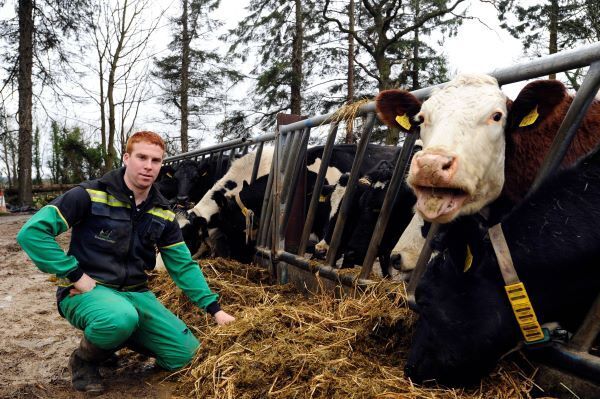
IT IS often said about land “they aren’t making any more of it and you don’t have to paint it to maintain it”.
It is true the amount of utilisable land in Ireland (11.29m acres) will not significantly change, but how it is farmed has changed over the years and will change significantly in the future.
The decoupling of premia and subsidies, the removal of intervention and export refunds in the last reform of the EU Common Agricultural Policy (CAP) has allowed farmers the freedom to farm. Even though many farmers feel burdened with paperwork on traceability and legislation such as the nitrates directive, they are now free to farm whatever enterprise they choose on their land.
So what direction will the future of farming take in Ireland and what will influence it? It is clear there will be both on-farm and off-farm factors at play in shaping the future of Irish farming. The on-farm factors are: *Enterprise profitability; *Size of farm; *Age of farmer; *Tradition and pride.
Imagine the country as one big farm and you are the farm manager with the job of putting in place a system of farming, what would you do? If you are profit driven you would fill the country with dairy cows and forestry. Cows on the good land and commercial forestry on the poor land.
The average farm size in Ireland is 81 acres up slightly from 77 acres in 2000. The old CAP regime discouraged the amalgamation of farms due to limits on production and five-year plans in agri- environmental schemes such as REPS. The demise of such schemes, decoupling and the proposed new CAP reform, will ensure farm size will increase at a faster rate in the future.
The age of farmers is often cited as a hindrance to development on farms. The 2010 census showed 51% of farmers are over 55 years, up from 39.5% in 2000. The average age of farmers from a census can be misleading as there are many farmers aged over 55 but their sons or daughters in their 20s are really the farmers on the ground, waiting for their parents to reach the pension age of 66 before the land is transferred.
It is interesting that the average age of dairy farmers over 55 is a much lower 36.4% reflecting the full time, labour intensive nature of milking cows. The big imponderable to the future shape of farming in Ireland is tradition and pride. Most Irish farmers are not motivated by profitability, expansion, and Ireland being the greenest cleanest food producer in the world. Family tradition, pride of place, and carrying on that tradition to the next generation take centre stage in the moulding of most Irish farm businesses.
Off-farm factors such as EU policy, government policy, tax breaks, schemes, and grants pale in significance when the future of the family farm is discussed or planned. Who will inherit the farm was a genuine fear for most farmers during the Celtic Tiger. Nowadays former builders, engineers, architects, and estate agents are queuing up to be full-time farmers.
The future of farming in Ireland will change significantly and rapidly in the coming years. There will be fewer farms, but these farms will grow larger in size. There will be bigger dairy farms with beef, sheep, pigs, poultry, and tillage holding their own. There will be more people employed in ancillary industries such as the processing sector. Agriculture and food will contribute to the recovery of our economy but it will not be the sole savoir of the nation. The traditional ‘family farm’ will still exist but in name only. It will develop into a new model as a lean, smooth running business with clear goals, a business plan, budget versus actual cash flow monitoring and performance benchmarking. The future of Irish farming is primed for an era where it will be one of the best exporting farm industries in the world. Let the real farming begin.
*Michael Brady is president of the Agricultural Consultants Association and managing director of Brady Group — Agricultural Consultants and& Land Agents.
The number of farms in Cork in 2010 was 14,222 and the area farmed was 541,314 hectares.
The average farm size was 38.06 hectares. Almost a quarter (3,712) of farms were between 30-50 hectares and a further 3,032 were between 50-100 hectares. There were 2,500 between 10-20 hectares and only 575 were over 100 hectares.
Just over half the area being farmed (276,637 hectares) was pasture and a third (143,381) was for silage. Of the 55,141 hectares used for crops, 40,519 were for cereals and just 972 for potatoes.
In 2010, Cork had 990,603 cattle, 247,766 sheep and 9,895 horses.
There were 14,192 farm holders, 5,416 spouses, 7,691 other family members and 1,930 non-family workers.
The most common age of the farm holders was between 45-54 years (3,806) followed by 55-64 years (3,328). Just 1,132 were under the age of 35 years while 2,946 were 65 years and over.
There were 7,738 farms in Co Tipperary in 2010, accounting for 312,953 hectares of land.
The average farm size was 40.44 hectares.
The most popular farm sizes were 30-50 hectares (1,983 farms) followed by 50-100 hectares (1,856 farms). There were 1,058 farms with less than 10 hectares and 394 with more than 100 hectares.
The most common use for the land was as pasture (177,789 hectares), followed by silage (83,728 hectares).
There were 25,240 hectares given over to crops, 21,059 of which were used for cereals. Just 356 hectares were used for potatoes.
There were 599,079 cattle on the county’s farms, 171,095 sheep and 8,818 horses.
On the Tipperary farms, there were 7,720 holders, 2,658 spouses, 4,103 other family members and 1,215 non-family farm workers.
The most common ages of the holders were 45-54 years (2,086) and 55-64 (1,837). There were 1,652 over 65 years and just 541 were under the age of 35 years.
There were 3,933 farms in Waterford in 2010, with a total of 162,267 hectares farmed.
The average farm size was 41.25 hectares.
The most common farm sizes were between 30-50 hectares (979 farms) and 50-100 hectares (936 farms). There were only 225 farms over 100 hectares.
Of the total land farmed, 91,445 hectares were given over to pasture. A further 42,259 hectares were used for silage.
Of the 15,395 hectares used for crops, 12,800 were given over to cereals and 146 hectares for potatoes.
Of the 304,964 cattle in Waterford in 2010, 1,914 were bulls, 65,324 were dairy cows and 202,691 fell under the designation of “other cattle”.
There were 104,296 sheep and 4,922 horses.
On the farms, there were 3,923 holders, 1,371 spouses, 2,064 other family members and 697 non-family workers.
The most common ages of the holders were 45-54 years (1,082) and 55-64 (916). There were 878 over the age of 65 years and just 266 under the age of 35.
There were 6,550 farms in Co Clare in 2010 and the total area farmed was 213,449 hectares.
The average farm size was 32.59 hectares. The most popular farm size was between 30-50 hectares (1,780 farms). There were 1,571 holdings of between 10-20 hectares and 1,311 of 20-30 hectares. There were 830 farms of less than 10 hectares and 157 of more than 100 hectares.
More than half (119,518) of the hectares farmed were given over to pasture. A further 55,493 hectares were taken up with silage. Only 198 hectares were given over to crops, 64 for cereals and 18 for potatoes.
In 2010, there were 276,947 cattle in Clare, 28,405 sheep and 5,494 horses.
There were 6,548 “holders”, 2,307 spouses, 3,383 other family members and 579 non-family workers.
The most popular ages of the farm holders were 55-64 years (1,707) and 45-54 years (1,673). There were also 1,633 farm holders who were 65 years and over. Just 370 of the farm holders were under 35 years.
There were 5,991 farms in Limerick in 2010 and the total area farmed was 206,954 hectares.
The average farm size was 34.54 hectares. Approximately a quarter of the farms (1,479) had between 30-50 hectares of land, 1,138 farms had between 10-20 hectares and 1,111 had between 20-30 hectares.
There were 981 farms with less than 10 hectares and 194 with more than 100 hectares.
A total of 125,793 hectares in Limerick were given over to pasture with 59,573 given over to silage. Crops accounted for a total of 2,058 hectares, 923 given over to cereals and a further 23 given over to potatoes.
Limerick had 388,129 cattle in 2010.
On the farms, there were 5,981 “holders”, 2,077 spouses, 3,166 other family members and 717 non-family workers.
The most common ages for the farm holders were 45-54 (1,539) and 55-64 (1,531). There were only 386 farmers under the age of 35 years, while 1,359 farmers in Limerick were aged 65 years and over.
There were 8,412 farms in Co Kerry in 2010 and the total area farmed was 286,386 hectares.
The average size was 34.04 hectares. Just under a quarter (1,949) were 10-20 hectares and a similar number (1,938) had 30-50 hectares. There were 1,461 farms with less than 10 hectares and 332 with more than 100 hectares.
Of the total land used for farming, 144,569 or just over half, was given over to pasture. The next most common usage was rough grazing (69,771 hectares) and silage (60,344). There were 2,650 hectares given over to crops, 1,696 of which were used for cereals and 160 for potatoes.
In 2010, Kerry had a total of 323,957 cattle, 433,546 sheep and 3,681 horses.
On the farms, there were 8,406 “holders”, 2,797 spouses, 3,737 other family members and 772 non-family workers.
The most common ages for the farm holders were 55-64 (2,194) and 45-54 (2,133). There were just 595 holders under the age of 35 years, while 1,912 were 65 years and over.
CONNECT WITH US TODAY



Be the first to know the latest news and updates