Detrimental effect of staying afloat
In a sector where there will be more casualties, those existing within the protectorate of Nama and the banks have a distinct advantage
THE offer looked too good to be true. See the Ring of Kerry in style. Hop aboard a bus in Dublin — or at an appointed stop — and scoot down to the Kingdom, feast on the scenery and hospitality, and enjoy three nights at the fabled Parknasilla Hotel. Three dinners were thrown into the deal and all for an unbeatable €439 per person sharing. You could live a lifetime and not get a second chance like that.
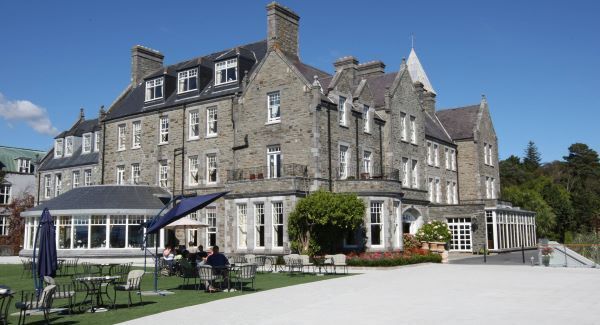
Some might say it is too good to be true. Value is crying out for the consumer in today’s hospitality market, but there is growing evidence that value can sometimes translate as unfair competition. The three-day deal that was advertised in the national press was organised by a tour company, but the reality is that Parknasilla isn’t competing on a level playing pitch with the array of hotels that dot the Ring of Kerry. For, as far as can be told, it is the only establishment on the Ring which is effectively controlled by a bank. Last February, the hotel was one of three owned by the developer Bernard McNamara, which was placed into receivership by Lloyd’s bank. It continues to trade as a going concern, which is in the best interests of the bank in question. If it were to be closed until a buyer can be found, then the sale price would suffer with the loss of goodwill. So it stays open to do its duty for the bank, which often collides with the interests of the market.
The hotel industry has just endured another rotten season. Beyond a few critical centres — such as Dublin and Killarney — hotel, catering, and B&B markets this year suffered a pincer attack from the economy and inclement elements. And then there is further — in many ways more critical — threat from the fallout from the property collapse. A huge array of hotels are still functioning and competing at the behest of banks or Nama, thus distorting the market, and threatening the very existence of those businesses operating under their own steam.
As far as the vast majority of the public is concerned, this is all great stuff, because it means there is terrific value available in hotels right across the country. For the tourism industry, however, it represents a ticking timebomb in which the product on offer by the country could end up distorted and damaged. And with tourism as one of the few industries that can offer a bright future at the moment, that would be nothing short of disastrous.
Hotels were not immune from the property madness that gripped this country in the middle years of the last decade. In 2004, there were about 45,000 hotel rooms in the State, according to the Irish Hotels Federation. By 2008, this number had increased to 60,000, up 33%. In the same four years, the size of the market for hotel rooms increased by just 12%.
Hotels began appearing in the most unlikely places. Driven by the prospect of tax breaks and a ballooning property market, all manner of establishments were built. Some were built in places that had no obvious attraction as a destination beyond the presence of the hotel itself. Others were raised on the outskirts of towns all around the country.
Today, in a market shrunk by the global and local recession, there are simply too many hotel rooms. The natural fallout from such a scenario would normally be that the strong, the profitable, will succeed while those who can’t attract customers, and those not run effectively, or which are not quick enough to adapt to the changed environment, would not make the cut. Not so in post-crash Ireland. Instead, the signs are that those businesses which find themselves in receivership, or being controlled by Nama or one of the non-Nama banks have a better chance of making it through the night.
Over the past three years there has been much comment on the effect that Nama hotels are having on the hotel market. What is often forgotten is that Nama isn’t the only show in town in this regard. Many developers and hotel operators are in hock to non-Irish banks, which are beyond the remit of the agency. And when these loans are not performing, the bank, either directly or through a receiver, has control of the hotel. Parknasilla is one such establishment. There are many others.
An analysis on the website Nama Winelake, based largely on documentation in the public domain, estimates that one in six hotel rooms is now in the control of Nama or the banks. The analysis concludes that of the 900-plus hotels in operation in the country, 81 are under the control of a bank or Nama. In terms of hotel rooms, this equates to about 13% of the market. (The Irish Hotels Federation says that officially it is not known how many hotels are actually in bank control.)
In each case, the state agency or the banks is faced with a dilemma of what to do with the hotel. A sale is usually not an option. Who would want to buy into a market that is over-serviced? This is particularly the case in relation to the large number of properties built in less than salubrious locations.
The bank may then look at other possible uses for these properties. Except it’s not easy to find an alternative use for a huge hulk of concrete, sometimes located in the middle of nowhere.
The only alternative from the bank’s perspective — and that of Nama — is to keep the hotel open in the hope that the economy may turn around, or that at least this establishment will survive while others fall. In a sector where there will inevitably be more casualties, those existing within the protectorate of the banks and Nama have thus a distinct advantage. Instead of being a case of survival of the fittest, it could turn into survival of those who owe the banks the most.
“We do have excess capacity,” acknowledges Tim Fenn, chief executive of the IHF. “And that has led to price competition. There is a degree of unfairness in the market because the banks have an enormous problem and they will take whatever position the can to maximise return.”
The pinch is already being felt. Industry sources point to many hotels in receivership which appear to have plenty of money to advertise their rooms, and which also manage to provide the most competitive pricing.
The whole industry is aware of the problem. Fáilte Ireland produces a regular Tourism Barometer Report to check the temperature of those who work in the sector. Last September, it reported that “aggressive pricing by Nama or bank-owned hotels is still a major issue of concern for hotels with other types of ownership as the industry deals with oversupply”.
One hotel owner was quoted in the report as saying that “Nama and other bank-run hotels and golf courses are charging lower prices and yet can still afford to maintain their business. There is anecdotal evidence that they are the only hotels spending money on carpets, curtains, etc. The losers in the end will be the smaller, family-run businesses.” Other hoteliers identified the issue as the worst of the array of challenges being faced in the industry at the moment. In a season where the whole tourist product was under severe pressure, the problem has inevitably got worse.
John Brennan, who runs the Park Hotel in Kenmare and co-presents the RTÉ series At Your Service, says that banks are definitely lending to properties that are unviable, in order to keep them going.
“If I was a banker, I’d be saying keep it open as well. What else can you do with these places. If you close down a hotel, you’re not going to get another tenant.”
He points out that the interests of the banks and that of the long-term future of the tourism industry are diametrically opposed in this regard.
“What’s being killed is the backbone of Irish hospitality. These [bank-run] hotels are taking pricing to a place that is not sustainable. The rates are maybe 30% below what they should be. That’s a savage amount to be down in the current environment.”
Brennan says that one of the big problems in the building surge was that hotels began popping up in places where no discernible market existed. In the ludicrous manner of much of the property frenzy, it was a case of build it and they will come.
“To a certain extent these hotels have led to a generic tourism product, mid-market, built on the outskirts of towns,” he says. By way of reference he points to South Kerry, one of the better-known tourism destinations in the country. Despite being subjected to the same level of development as elsewhere, the only bank-controlled hotel in the area is Parknasilla.
Beyond the issue of pricing, the unfair competition can also spread to seeking loans to fund investment.
Refurbishment is a vital part of the industry. Like all other sectors, hotels are experiencing difficulty in obtaining loans from banks. However, these businesses must also deal with the fact that it may be in the interests of banks to fund hotels they control. Equally, the bank would have an interest in refusing loan facility to a business in competition with one the bank controls.
“At a time when hotels need to be refurbished, and many of them are around for 30 or 40 years, family-run, well-run, they need support,” says Tim Fenn of the IHF.
“A lot of them don’t have huge levels of debt but it’s getting harder to get funding, and if they can’t get it over the winter some of them could have a problem.”
The position may be critical, but it would appear that at government level it’s not regarded as serious. In July, Finance Minister Michael Noonan addressed the question of Nama hotels in a reply to a Dáil question from Kerry South TD, Michael Healy Rae. Noonan said that just 13% of hotel rooms were under Nama or in the control of Nama banks (this ignores the hotels which are controlled by foreign-owned banks).
“Its [Nama’s] potential impact on the overall viability of the sector is overstated. The deputy may wish to note that Nama have advised that while the Competition Authority received complaints about Nama’s impact on the hotel sector, the authority decided not to pursue these complaints after engaging with Nama.”
He went on to say that Nama advises that as a secured lender it “will not advance funding to hotels that are not commercially viable as there would be no foreseeable return on such funding.”
This, of course, leaves it up to Nama to discern whether a hotel might be viable in the future, irrespective of whether it is currently losing money. It also once again focuses on Nama’s position vis-à-vis the wider economy. If Nama were to close down a hotel that is deemed unviable, this reflects badly on the agency’s books, yet it might well be in the wider interests of the economy. Identifying what exactly is best for the economy is a large duty to be placed on the shoulders of those running Nama.
There is no easy answer to what is a major problem in the tourist industry. John Brennan suggests, half in jest, fully in earnest, that some of the unviable hotels could be put to some good use.
“You could get a big one, build a wall around it and use it for a prison for white-collar criminals,” he says. While that won’t happen, there is some sweet logic to the proposal.
As of now, the Government appears not to be giving the issue much attention. Like many others, it’s one that is being kicked down the road to be addressed some other day.
Tim Fenn says something will have to give.
“The banks should be working with the industry. This is a critical industry as part of tourism.
“The pillar banks in particular are going to have to rely on a recovery of the domestic economy. They should be the ones looking to where to invest in the economy.”

CONNECT WITH US TODAY



Be the first to know the latest news and updates