UNEMPLOYMENT FOCUS: DAY 1 - Ireland's job crisis
NO COUNTY, no city, no town, no village has been spared the creeping and malodorous waft of unemployment since 2008, the year when phrases such as âLehman Brothersâ and âcredit crunchâ and âbank guaranteeâ first entered the national lexicon.
But often it seems Waterford has been hit the hardest by ever-lengthening dole queues.
For high-profile, large-scale job loss announcements the county has endured more than its fair share, with the result that itâs now regularly described as one of the nationâs worst âunemployment black spotsâ with little to be positive about on the horizon.
Even the Government has acknowledged Waterford is an area deserving of special attention on the job-creation front, following years of too-frequent closures and too-rare openings when it comes to business.
It may be decades since Waterford Crystal could count its employees in the thousands, when young people growing up in the city could hold a reasonable hope of securing work in some department or other of the world-famous crystal production plant on the Cork Rd.
Yet you only need to go back a few years to a time when âthe glassâ employed up to 1,000 men and women in what seemed like secure, well-paid and well-treated positions.
That all changed in January of 2009 when the receivers were brought in, the great furnaces were turned off, the doors were closed and the remaining employees passed out of the once booming, now idle premises for the last time.
In the meantime, the admirable work of Waterford City Council and other state agencies meant little time was lost in opening a Waterford Crystal showroom and visitor centre closer to the city centre and it has proved a great attraction for tourists and locals alike.
However, in employment terms that facility is little more than a shadow of the crystal powerhouse of old and, with mass production now concentrated in the low-pay economies of Eastern Europe and South America, the days of major jobs in the sector are likely to be gone forever.
That business could be seen as a microcosm of the unemployment problem in Waterford â where manufacturing industry has declined, factories have closed down and their workers consigned to the dole, often for the rest of their âworkingâ lives.
And donât forget that Waterford Crystal once had a thriving factory on the other side of the county, in Dungarvan, before closure back in 2005 with the loss of almost 500 jobs. At the time, those positions were sacrificed in the name of âconsolidationâ of all operations in the Kilbarry plant in the city, which still had about 1,000 employees at the time.
But the employment crisis across the county is not confined to the old industries of assembly lines and production. So-called âcleanâ businesses have also been hit and just last September another 575 workers â drawn mainly from the local area but also with a sprinkling of well-educated UK and continental European graduates â were told their services were no longer needed.
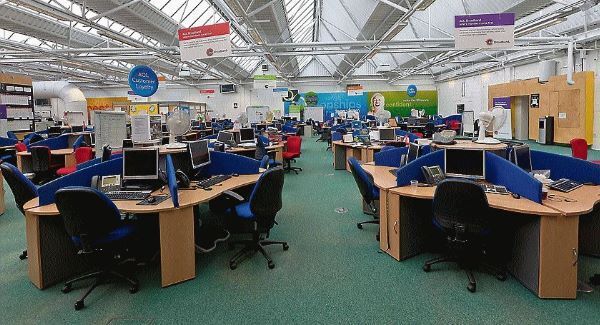
The closure of the TalkTalk call centre at the IDAâs business park on Waterfordâs Cork Rd was all the more shocking because of its sudden nature.
One Wednesday early in September all of the staff were called to a meeting â by that evening they knew they would be out of a job within a month.
Much criticism of the UK telecommunications giant followed but the public opprobrium, and also the pleadings of government representatives and other politicians, made not one whit of difference to the decision of top management.
They even threw a party in England, celebrating their company-wide performance, which coincided with the wind-down of the Waterford operation â and invited their soon-to-be ex-employees for good measure.
Not even the intervention of TĂĄnaiste Eamon Gilmore in the days after the closure announcement could persuade company top-brass to change their minds, or even extend the âconsultation periodâ leading up the shutdown. They were âextremely concerned,â Mr Gilmore said at the time, but those concerns were ignored.
Many who lost their jobs at TalkTalk spoke of how little hope they held of securing alternative employment in the Waterford area and intimated their best chance of getting new jobs lay in commuting the 120-odd kilometres to Cork, or even travelling up the new motorway to Dublin.
Thatâs not an enticing prospect for the (mostly) young workforce, many with new families, new mortgages and other such commitments, but sometimes the only alternative to the emigration plane or boat.
Then there was ABB which closed its manufacturing plant in Waterford in 2009, making 178 people redundant; Guhring tools last October with the loss of 38 jobs; Bausch & Lomb which left over 300 people go in 2009; GSK in Dungarvan where 130 jobs have gone out of commission in the last couple of years; and Teva Pharmaceuticals where well more than 300 jobs have been lost since 2009.
Thatâs not an exhaustive list by any means â just some of those which caught the mediaâs eye in recent times, while smaller, less well-known businesses have also gone to the ground during the recession (and even before it) with people being forced onto the dole queues every time.
Not forgetting, of course, the construction industry which, countrywide, has probably been hardest hit of all sectors across the economy in the last five years.
Jobs and Enterprise Minister Richard Bruton admitted last September, during a visit to Waterford, that the south-east has been worse hit than most regions by falling employment levels. âItâs very evident that thereâs an unemployment problem here,â Mr Bruton said, somewhat unnecessarily.
âThe statistics on unemployment point to Waterford which has to be a priority for the [state] agencies.â
But even before the TalkTalk calamity, even before the announcements of many hundreds of job cuts which occur with depressing regularity in the county, local politicians and community figures had long described Waterford as a particularly deprived area when it came to jobs.
For a stark illustration of how much local employment has gone over a cliff since the heady days when we thought we had an economic boom, all thatâs needed is a look at the figures. Of all people aged over 15 who are considered part of the labour force in Co Waterford, 11,572 were unemployed at the end of last year â the majority of those as a result of losing or giving up jobs as opposed to being on the market for employment for the first time. Thatâs a major jump since 2006, the year when the property bubble peaked in many areas, when the unemployment figure across the county was 5,166 â less than half the more recent figure.
When the IDA or Enterprise Ireland announce major job creation projects in places like Dublin, Cork, or Galway, the cry from places such as Waterford is âwhat about us?â
Particularly in light of the major blows which have rained on the county in the last few years.
There have been some good news stories when it comes to new businesses setting up in the area, or existing businesses expanding, but overall they are thin on the ground.
Site visits by potential clients to the South-East are expected to be 100% up on last year after Enterprise Minister Richard Bruton reported last month that the number for the first six months of 2012 was already higher than for the whole of 2011.
This, he said, was a result of his direction to the IDA to make the South-East a âpriorityâ for such visits.
A spokesperson for the IDA said 12 site visits have taken place across Co Waterford this year and insisted that the authority had a âstrong focusâ on the region, with particular attention being paid to Waterford as a gateway city, along with the neighbouring hubs of Wexford and Kilkenny.
At the moment, 31 IDA-backed companies employ about 5,000 people across the county.
Meanwhile, as part of the South-East action plan for jobs, 20 state bodies involved in employment and enterprise development have resolved to take action to develop the sectors where the region has a competitive lead.
Eight Waterford-based entrepreneurs were among 14 winners of a competition across the South-East aimed at giving start-up businesses a boost by making a âŹ200,000 prize fund available to develop such enterprisesâ potential.
The Waterford winners included a project to develop a medical device to combat infant colic, low-cost wind turbines, âhigh-endâ box design for the food and drink industry, and waste management software.
The âŹ200,000 was described as a âpilot fundâ so the hope is that it will become a regular scheme under the aegis of Enterprise Ireland.
Meanwhile, the biggest jobs boost to the area this year has been by Eishtech â a contact centre services company established in the Kilcrea Business Park on the edge of Waterford.
The company was the brainchild of Heather Reynolds, Colm Tracey, and Brian Barry â two of whom are former employees of TalkTalk, which closed down last September. Ultimately, 250 people will be employed at Eishtechâs state-of-the-art offices.
Other welcome advances included 30 jobs at pharmaceutical company EirGen, 30 jobs at Rigney Dolphin, and 65 jobs in Dawn Meats at Carrollâs Cross which will soon be processing the beef for 20% of all McDonaldâs burgers in Europe.
As Mr Bruton put it last September: âWe recognise that Waterford has an acute unemployment problem which has been particularly severely hit over recent years. It didnât particularly share effectively in the good years and we need to see an effective programme.â
The county had not been âas successful as other areasâ in attracting âkey sectorsâ, according to the minister, who used his visit to Waterford to announce the establishment of the South-East Employment Forum.
âWe need to ask why is that happening? What are the weaknesses and what can we do to address those weaknesses?â
Strengths which should appeal to potential investors include the regionâs young, mobile population; infrastructure such as the Suir Bridge, the Waterford outer ring road, and Belview Port; âturnkeyâ sites and premises for new or expanding businesses; and Waterford Institute of Technology.
âIf you asked me what [are] the chances of me getting a job again, the answer would be nil.â
Michael Power from Waterford city is not optimistic about his prospects of getting a job, having been unemployed since the construction sector went belly-up in 2008.
Now aged 51, Michael has completed four courses since the downturn but has not been able to take up employment as a result of any of that training â two of the courses were in computer studies, one in forklift driving and the other in the private security industry. The latter has caused him most frustration.
âI actually completed that course and had the cert in my hand and almost had a job but couldnât put my hand up and say I got that job â the drawback was I needed âŹ80 to get the licence, which I didnât have, and I couldnât take the job without a licence.â
Since leaving school at 16, Michael initially worked with a kitchen manufacturing company in Waterford, then worked with Bausch and Lomb, with a tiling company, a builders providers, and then back in the kitchen business, which proved lucrative for the peak years of the building boom â until 2008.
âIt wasnât going to survive. It wasnât a progression, it happened overnight. All of a sudden we had nothing in the books. We had a book with all the orders and prior to that there could be work there for two or three months. All of a sudden we looked at the book and there wasnât a dayâs work in it. I was working for someone else, it was just me and him, but that business ended up going to the wall. It was a good business but it went to the wall through no fault of his.â
Today, he âtrawls through the jobsâ online and in the newspapers and, one day, applied for 18 jobs but got just two replies â of the âthanks, but no thanksâ variety.
âI have a wife and she goes out to work four hours a day. I tell her, âIâd love to be going out thereâ.â
At the moment, the familyâs mortgage, on the house at Bracken Drive near Kilcohan, is on a moratorium but with âŹ140,000 still outstanding.
Michael has told the bank that âunless Iâm lucky enough to win the Lottoâ, thereâs no chance heâll be able to pay it off.
In the meantime, he tries to find ways to keep busy.
âMy shed is in pristine condition. I shift stuff from A to B and then the next day shift it back again. Just to have something to do. Itâs soul-destroying.â
Running a recruitment business should give a person a useful handle on the jobs market â or lack of one â and where lessons can be learned and solutions can be found.
Former Waterford hurling captain Fergal Hartley has been a director of Hartley People for the last 11 years and has seen the employment situation from pretty much every angle by now.
A time when job creation was growing; a time when it was peaking and it seemed there was gainful employment out there for anyone who wanted it; a time marked by the the sudden destruction of the construction industry and the near-collapse of so many reliant businesses in its wake; and now a time when heads are being scratched nationwide, policies are being produced and ministers are trying to fan the flames of hope with talk of stimulus programmes, job strategies and action plans.
From a Waterford perspective, Mr Hartley identifies a number of priorities and number one on the list is the establishment of a university in the city, upgrading the innovative and successful institute of technology. âThere are some infrastructural things that could be done. The roadway is superb and has very much opened up the south-east to Dublin, but the major infrastructural element that we need is the university.â
Designating WIT as a university â even as the main campus of a university of the south-east with satellite bases in outlying places such as Kilkenny and Wexford â would bring investment in research and development, he believes, as well as an increase in the student population and make the area more attractive to business.
âIt would just reform the city and the whole south-east and I think it would have a massive knock-on effect. The university of the South-East is absolutely critical.â
Hartley People is about recruitment but also provides other services such as training, outsourcing and human resources. According to Fergal Hartley, the sector is âstill busyâ but he can see that while there are jobs out there, they donât always suit the people who need them most and who have the least prospects of gaining employment when a business goes bust.
âThe unfortunate reality is that those who lose their jobs in construction or with banks or call centres â there havenât been jobs created for them and theyâre just not there. Weâre very busy with clients looking for skilled professionals in the engineering sector or the accounting sector or, particularly, in the IT sector and thereâs still demand for our services there but, for the bulk of the people who are unemployed like the general operatives who lost their jobs in industry or people in call centres, theyâre the people who need it the most.â
Anyone who finds themselves out of work should be incentivised to return to the labour market as soon as possible, Mr Hartley says, even if itâs on a part-time or temporary basis. âThe social welfare system, at the moment, is a deterrent to people. Between social welfare and the cost of childcare, thereâs no incentive for people to take up employment.â
When it comes to such employment being made more available, he makes a point often spoken of in the Waterford area â where are the state-supported businesses? âWaterford particularly needs some IDA investment. Thereâs been a lot of IDA investment and theyâve had a record year nationwide but Waterford is one of the areas thatâs been ignored, no question about it,â Mr Hartley says.
He maintains that an opportunity missed by Waterford during the good times was to rejuvenate and expand the city centreâs retail business. âWaterford should aim to become the retail centre of the south-east,â he says. âThat development could have taken place during the boom years but it wonât take place now. Also, getting some high-end household names into the city centre, rather than the outskirts. A lot of retail units have migrated to the suburbs and the city centre needs to again become the heartbeat of the city.â
He points to the work being done on the heritage and tourism side of things in Waterford â such as the Viking Quarter which seeks to link much of the cityâs old heritage points â and says that improvement of the commercial sector needs to mirror that progress.
Too often such development, when mooted, is sometimes seen as trumping growth in other parts of the region such as Kilkenny, Clonmel, Carlow or Wexford, or when one of those areas gains something itâs often seen in Waterford as the cityâs loss.
But Mr Hartley says that mindset has to change and everyone across the region needs to see that people will pour into Cork and Dublin if theyâre not happy with whatâs on offer on their doorstep.
âThey key is, the south-east needs to work together as opposed to competing with each other.â
Gerry Carroll worked as a refrigeration engineer for most of his working life and recalls times in Waterford when local companies kept six or seven refrigerated vans on the road at any one time.
Now itâs different. âWith the downturn in the economy, theyâre barely surviving,â he says.
Having been self-employed for some years, he got a full-time job with one of those Waterford-based companies, but was let go when the person he replaced returned from America and took up his old position. Since then, heâs been unable to find work in the sector, despite his years of experience.
âI did take on a night security job but it didnât suit me at all. All-night working, it was completely foreign to me.â
Otherwise itâs a bleak horizon for someone in his position, according to Gerry, whose partner is working 30 hours per week. âOnly for that, I definitely wouldnât be able to pay the mortgage.â
However, her position has also affected his own income. âIâm only getting âŹ134 a week in jobseekerâs allowance. Because my partner is working, they cut it.
âIâm not even entitled to a medical card. But I wouldnât be in as bad a position as people who are after taking on big mortgages â people are paying mortgages of thousands and itâs tough on a lot of people like that.â
At the moment Gerry is hoping to get some part-time work with a business his son is trying to establish, having returned from a stint in America a couple of years ago. He says he would struggle to get a job otherwise.
âPeople are in trouble out there, but then you see the way the Government are after paying off these unsecured bondholders and expecting the ordinary Joe Soap to pick up the tab.
âWhether there will ever be any refund on that I donât know. I doubt it,â he adds with a rueful laugh.