EU could decide funding bank represents unfair competition
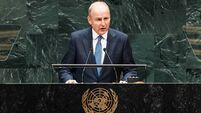
Finance Minister Brian Lenihan said he hoped the funding bank, to be wholly-owned by the Department of Finance, would be able to continue to take deposits. The new bank would not lend but would hold money that is on deposit with Anglo.
However, sources indicate the European Commission may consider this would be unfair competition for the other banks, since it would be state-owned and fully guaranteed by the taxpayer.
The nationalised bank had deposits of €23.1 billion in the first half of the year having dropped by about €4bn as money was withdrawn.
Commission experts, when they receive the final proposal from the Government, will also want to know how the state intends to fund the cost of winding down Anglo.
This has been put at around €24bn by the Government, while the credit rating agency Standard and Poor’s said a worst-case scenario was around €35bn, with other sources putting it even higher.
It is understood that the Central Bank and the Department of Finance are in talks with the European Central Bank to have them make the money available and avoid the state having to tap into the EU’s €750bn bail-out fund.
The Commission is also waiting for the Government to decide on a timeframe for the wind-down which is expected to be between ten and 15 years. This will also give more time for the loans or the assets securing them to be sold and it is hoped reduce the final bill.
The funds will also show up on the state’s balance sheet and is expected to push the deficit to around 20% for the year, up from 14%.
The EU’s statistics office, Eurostat, earlier this year ruled that the €4bn put into Anglo was not an investment, as there was no chance of getting it back and so was added to the Government deficit.
How the remaining sum of about €20bn will be treated will be decided by Eurostat over the coming months.
It is likely that some of it will be added to this year’s accounts, and some to next year’s.
The Government has undertaken to reduce the budget deficit to 3% of GDP by 2014, in line with the Stability pact designed to protect the euro, a deadline that will be difficult to keep.