EU edges closer to agreeing climate change package
Ireland, which has been supportive of the package overall, looked like securing agreement on having forestry taken into account as a means of reducing its carbon footprint.
It is also likely to have its problems in agriculture recognised, as close to 40% of the country’s emissions is methane gas from cattle. No other country has such a high proportion of its emissions from agriculture.
Ireland and a number of other countries are also objecting to having to sign up to contributing part of the proceeds of auctioning gas emission permits to less developed countries.
While they are supportive of the proposal to transfer about 40% to efforts in the third world and 10% to eastern Europe, they do not want this to be legally binding on the basis that it would interfere with the principle of economic sovereignty.
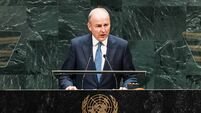
Environment Minister John Gormley said agriculture was central to Ireland’s national interest. “Agriculture is very important for Ireland and that is not going to change in the short term,” he said.
Winning the right to buy emission permits for the national herd should not be seen in terms of subsidising it, he added. Growing trees locally and importing food from abroad was not the answer as food transport contributed to emissions.
Mr Gormley said because the market for recycling has collapsed, he got the support of several countries to have the EU consider subsidising the industry.
The European Commission will also look at ways to reduce packaging waste.
The EU wants to have a united position on climate change for the international talks in Copenhagen next December. French environment minister Jean-Louis Borloo, who chaired yesterday’s meeting in Brussels, said: “We are 90% of the way there”.
Overall, the target was still intact of reducing emissions by 20% over 1990 levels, cutting energy use through efficiency measures by 20% and having 20% of energy needs from renewable sources such as wind and solar by 2020, he said.
There was also broad agreement on increasing the emissions reduction to 30% if other countries sign up to the Kyoto Protocol follow-up.
The remaining issues will now have to be resolved by the leaders of the EU countries when they meet in Brussels next Thursday and Friday.
Fine Gael MEP Avril Doyle, who has led the negotiations on emissions trading for the European Parliament, warned the parliament will not just sign off on any deal.
“There is no choice in this — we owe it to our communities, both present and future, to stand up and be counted. Europe must drive forward this process,” she said.
One of these is the demand, mainly by Germany, that industry would be hit too hard by having to pay to emit CO2 and should be given their permits for free.
They warn that unless this happens, economies will be subject to carbon leakage as these industries would be forced to shut down their operations in the EU and move to countries will less onerous targets.
Poland and a number of other countries such as Malta and Cyprus are objecting to electricity power generating plants having to buy 100% of their emission allowances from 2013.

CONNECT WITH US TODAY



Be the first to know the latest news and updates