Cork’s musical tradition tracked in ‘a first’ PhD
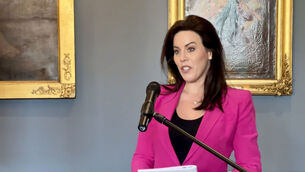
The passion and scholarship that Susan O’Regan brings to a previously unexplored aspect of the city’s social and cultural history has earned her the first PhD ever issued by Cork School of Music (CSM). She graduated yesterday alongside her daughter Rachel Deloughry, who was awarded a B Mus. The ceremony took place in the Curtis Auditorium of the CSM.
In examining the details of public concert presentation from 1754 to 1840, Susan’s study throws light on numerous aspects of the city’s past which relate to social life, the music trade, public charities and the links with the wider professional musician circles of Dublin and London.
She reveals, for instance, the visit to Cork by the great composer and violinist Niccolò Paganini who did not rely local musicians to render his work.
“He came here in 1831 but, unlike most other artists who came to Cork around that time, he brought his own supporting artists,” she says. “Most musicians who came here in the eighteenth and early nineteenth centuries were professional touring groups that entertained their audiences with a varied programme. The mix was orchestral, vocal and instrumental. Solo recitals did not emerge until later.”
Among the most popular forms of entertainment were ‘glee clubs’, not latter-day comedy clubs but choirs, mostly of men but also of just women or mixed voices, which specialised in singing short songs.
Most of the musical theatres of the day were patronised by the city’s merchant princes, most notably the Beamish family, yet they catered to all classes.
“The Theatre Royal, now the General Post Office, for instance, had tiered pricing — everything from boxes to the gods, so a wide range of music lovers could enjoy it. The Assembly Rooms were on George’s Street, now Oliver Plunkett Street, were also reasonably priced while the Athenium (now Cork Opera House) did not feature until later in the 19th century.”
But not all venues catered to the less well heeled. “From 1820 the Imperial Hotel also held concerts, mostly daytime matinees, which tended to be expensive and designed for more select audiences.”
Susan O’Regan lectures in Music History at Cork School of Music. Her interest in early music is both practical and academic and she has participated in concerts and festivals both as solo harpsichordist and continuo player.