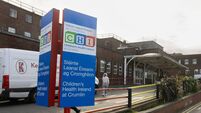
Munster’s TB testing lab forced to close
The Health Service Executive (HSE) admitted yesterday that building work at Cork University Hospital (CUH) and recent bad weather had resulted in a “major deterioration in the condition of the building”.
The lab is housed in an ageing prefab at the back of the hospital.
Major construction work on a canteen facility is going on nearby.
The HSE said it was as a result no longer safe to carry out TB testing work in the lab. It shut it down on Monday.
Medical experts criticised the move and said it would throw the management of TB in the south into chaos.
Staff at the lab grew cultures from suspected TB specimens. There is no other centre in the State that can take on that workload, the experts warned.
Working in the field without what was a readily accessible TB lab would be akin to practicing medicine in a third world country, they said.
They also claimed that the vast majority of test cultures from the south would now be sent to England, increasing the risk of loss or damage to specimens in transit.
But the HSE said a number of options are being explored to provide a short-term service at CUH.
“The laboratories in Waterford Regional Hospital, University College Hospital Galway and St James’s Hospital, Dublin have also agreed to provide assistance with a limited number of specimens,” a spokesman said.
The HSE is in the process of building a replacement TB test lab at CUH.
“Unfortunately this process has taken longer than anticipated and will not now be completed until late 2007,” the spokesman said.
“The new facility will be a cantilevered structure over the laboratory building which would meet space requirements and minimise disruption.
“Planning permission and fire certification were recently secured and work on the new facility is due to commence shortly.”
But Fine Gael TD Bernard Allen said repeated warnings about the appalling conditions of the lab had been ignored.
Its closure is another example of appalling mismanagement by the HSE and Minister Harney, he said. “The Minister should make an immediate statement on the matter.
“It is unbelievable that the lab would deteriorate to such an extent. I believe concerns have been raised on numerous occasions over the years. I will be asking why these warnings were not acted on.”
News of the closure comes just two weeks before Ms Harney is due to launch a national campaign to eliminate TB in Ireland by 2020.
She will make the announcement at the close of the third annual TB conference which will be held in Dublin on March 22 in conjunction with International World TB Day.
World experts in the study of TB, including Dr Charles Daley and Dr Masae Kawamura from the renowned Francis Curry TB Centre in San Francisco, will attend.
Tuberculosis or TB is a disease caused by a bacterium called mycobacterium tuberculosis. TB usually affects the lungs but it can also affect other parts of the body, including the glands, the bones and, rarely, the brain.
TB used to be more common in Ireland. There were nearly 7,000 cases a year in the early 1950s. But the combination of better living conditions, antibiotics and BCG vaccine has dramatically reduced the number of cases. In 2003, the national total of notified cases was 407.

CONNECT WITH US TODAY



Be the first to know the latest news and updates