Lonely walk to justice
Invited as special guests of US President George W Bush at the White House St Patrick’s Day celebrations, regular visitors to Downing Street and a cause celebre of the world’s media, it seemed the McCartney family’s story had captured the world’s imagination.
Their brother, Robert, was stabbed and beaten to death by IRA members in a Belfast bar on January 30, 2005.
He was the 3,721st person to die in a Troubles-related incident, and unfortunately not the last, but by any measure his death received far more attention than any other since 1969.
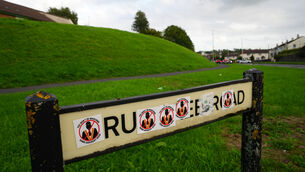
Outside Paula McCartney’s small terraced home in the republican Short Strand area of east Belfast, the global media waited eagerly for any development in the story.
Hollywood came knocking with film offers, and publishers beat a path to the door with book deals.
Today, 19 months after the murder, the phones have gone quiet and the McCartneys have moved out of the Short Strand, a community which, they say, shunned them.
Two men have been charged in relation to the murder inquiry, which at its height paralysed politics in the North and forced the IRA and Sinn Féin onto the backfoot.
So shaken were the IRA by the media backlash that they publicly offered to shoot the IRA men involved in the 33-year-old’s murder — an unprecedented development at a time when the group was officially on ceasefire.
However, a question which remains unexplored is why the McCartney murder got such attention and was given such importance when a multitude of other murders went unnoticed by a disinterested media and the political establishment in both England and Ireland.
Many in the North died horrific deaths, some were tortured for days beforehand, but Robert McCartney’s story was told, and retold, around the globe.
Nor was the response to the McCartney killing a breaking point, a cry for “no more;” seven months later, a Catholic teenager was stabbed to death by loyalists, yet there was no meeting with George Bush for his family, no rallies calling for the UVF to disband.
Indeed, in the summer of 2005, loyalists began a shooting war in Belfast, young Protestant men were killed, whole communities terrorised, but again the response was, at best, muted.
“The political climate did play a factor in the publicity surrounding Robert, but they are the sort of things that we don’t analyse,” says Paula McCartney, the instantly recognisable face of the campaign.
“We were just focused on getting justice for Robert and couldn’t see beyond that, so the rest was just details.”
Paula and her sister Catherine spearheaded the campaign, and both now feel they haven’t grieved for their brother because of it.
But both are also adamant that if the trial of Terence Davison, which is expected to start in the autumn, doesn’t deliver the verdict they want, a fresh campaign will be launched.
The European Parliament has already earmarked funding for such a civil action if the criminal case collapses or is seriously weakened.
“We don’t want to go down that road but we will,” insists Paula. “It makes me so angry when I see what this has done to my family.
“My father is destroyed by it, I haven’t seen him so bad as he has been in the past few weeks.
“He goes down to Robert’s house in the Short Strand to stay the night by himself.
“It was the family home where we all grew up, then it was sold to Robert when he started a family of his own. It is so sad.”
Like any murder, the death of Robert McCartney has had a huge impact upon his family.
His sisters say they will consider going into counselling, while his partner Bridgeen Hagans is learning to live as a widow with two young children.
The devastation of a murdered relative is a feeling that many in the North know well.
In the Short Strand, a tiny nationalist enclave surrounded by hard-line working-class communities, 29 people were killed between 1969 and 1994.
The publicity given to the McCartney murder touched a nerve among many in the community.
While some took a decision to stay loyal to the IRA at any cost, most people empathised with the McCartneys and understood the family bonds which pushed them forward.
However, many were angry and cynical over the media treatment of the death.
For some it seemed that the media and political establishment’s treatment of Robert McCartney’s murder was less a genuine expression of outrage than an attempt to pursue a political agenda: IRA decommissioning through other means.
The McCartney family admit this.
“Of course his murder was used by politicians for their own interests and ends; we knew that, but we didn’t really care,” says Paula.
“They all do it. Sinn Féin uses victims of collusion for its own purposes and Robert’s murder was used by other parties for their own ends.
“We aren’t naive, we know all too well that nobody cares about Robert except for his family.
“We just didn’t care where the support was coming from as long as the issue was being raised.”
Other murders, which took place after the ceasefires and which were more sensational in their own right, barely got any attention.
In 1997 Bernadette Martin, a Catholic teenager, was murdered as she slept in her Protestant boyfriend’s home.
The murder barely got a mention in the press.
Other high-profile murders such as that of Robert Hamill, kicked to death by a loyalist mob in Portadown as an RUC Land Rover looked on, received scant attention also.
The murders of James Morgan, a Catholic schoolboy beaten to death and mutilated by a UVF mob in 1997, Ciaran Heffron, a Catholic student strangled and mutilated by an LVF gang in Antrim in 1998, and Thomas Devlin, a 15-year-old Catholic stabbed to death by a UVF gang in August 2005, were largely overlooked by the media.
So too was the murder of Andrew Kearney, killed by the IRA in July 1998 because he beat up the IRA’s north Belfast commander.
Undoubtedly the McCartney murder was pushed onto the agenda by a number of events.
Just four weeks beforehand the £26.5m (€39.2m) Northern Bank robbery had taken place, and many blamed the IRA.
The political process had stalled in November 2004 when a potentially historic deal between Sinn Féin and the IRA collapsed over Ian Paisley’s demand that republicans should wear “sackcloth and ashes”.
The pendulum of blame had already swung toward republicans before Robert McCartney’s life was brutally ended.
His murder fitted neatly into an already established narrative of IRA criminality and oppression of working-class Catholic communities by paramilitary “godfathers”.
The McCartneys’ campaign echoed previous examples of “people-driven” initiatives throughout the Troubles.
In 1976, the Peace People emerged in republican west Belfast following the death of two children as a direct result of a confrontation between the IRA and the British Army.
In the early days the movement mushroomed, supported by clerics on both sides and given due prominence in the media.
However, the refusal of the Peace People to condemn state violence quickly alienated it from working-class nationalists, more often than not the victims of such violence.
The undoubted support it received from the British Government made it susceptible to allegations that it was a front in the “war” against the IRA.
In the 1980s Families Against Intimidation and Terror (FAIT) emerged.
Its sole purpose was to highlight the plight of victims of IRA punishment beatings.
Again it received huge support from the British Government and the media, at a time when community groups, often working with the effects of drug dealing, were marginalised by the State.
A few years later it self-imploded amid allegations of corruption and, ironically, intimidation of its own members.
The support given to the McCartneys’ campaign appeared to follow a similar pattern, especially after it emerged the SDLP’s deputy leader, Alisdair McDonnell, privately funded their trip to the US on St Patrick’s Day.
Undoubtedly the McCartney murder showed the influence the IRA has in working-class areas and the danger of having the organisation in existence at a time when its own political leaders had essentially rendered it purposeless.
The gang who attacked Robert McCartney contained at least four men who had more than 10 years’ experience of IRA activity — men who have at best been brutalised by a life in the IRA, and at worst who enjoy inflicting violence on anyone who crosses their path.
Catherine McCartney says republicans have been oppressing the Short Strand since the 1994 ceasefires.
“Once they stopped fighting the British Army they turned their attention to us. Anyone who got in their way knew the consequences,” she argues.
“They oppressed the community in the Short Strand and in other areas — they are thugs.”
However the picture painted by Catherine McCartney is hard to understand, given her previous statements.
Her own family admit that they supported Sinn Féin in the Short Strand up until their brother’s murder.
Everyone except Sinn Féin acknowledges the close ties the party has with the IRA.
The murder, and subsequent campaigning, have irrevocably changed the McCartney family’s own self-perception and relationship with the community they grew up in.
“We don’t have a history anymore,” says Catherine.
“It is as if we have no past, it is as if our whole childhood never happened.
“The Short Strand is an alien place to me.”
The McCartneys lost not only their brother, but their community.
Robert’s best friend, Brendan Devine, who was almost killed in the same attack, hasn’t contacted them in over a year.
He is currently in jail, convicted of slitting a doorman’s throat in Belfast, an offence which took place before the events of January 2005.
“If we relaunched our campaign, I don’t think we would get as much attention this time round,” says Paula.
“To be honest we were surprised by the attention it received first time round.”
Two republicans are due to stand trial this autumn in connection with the murder.
Terence Davison is charged with murder. He is currently out on bail.
Jim McCormack, initially charged with the attempted murder of Brendan Devine, has had his charges reduced to causing an affray.
The McCartneys believe that up to 15 people were involved in the murder.
Despite the scale of their campaign, only one man is looking at a serious jail term, and the family are not satisfied.
It seems that the real consequence of the campaign has not been to catch all of his killers, but to act as a catalyst for the IRA’s demise.
Less than three months later Gerry Adams publicly asked the IRA to “put all arms beyond use”. Few believed his call would go unanswered.
Now the McCartneys are left alone and their brother rests in a graveyard, which in a sad twist of events was picketed by loyalists at this year’s Cemetery Sunday.
The McCartney murder was a criminal act which had a profound political impact.
Overnight his family were thrust into the spotlight. They say that now, 20 months later, they are only starting to grieve.
CONNECT WITH US TODAY



Be the first to know the latest news and updates