Bombing conviction quashed as ‘unsafe’ by appeal court
Colm Murphy, aged 52, was jailed for 14 years by the non-jury Special Criminal Court (SCC) in early 2002 for his role in the Omagh tragedy on the afternoon of August 15, 1998.
The builder and publican, of Jordan’s Corner, Ravensdale, Dundalk, Co Louth, appealed both his conviction and sentence in a hearing before Christmas at the three-judge court of appeal.
Some 40 grounds of appeal were lodged on behalf of Murphy but only two of them were upheld in yesterday’s decision.
Giving judgment, presiding judge Mr Justice Nicholas Kearns, sitting with Mr Justice John McMenamin and Mr Justice Frank Clarke, said the conviction was “unsafe” on two grounds.
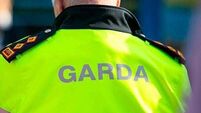
The first ground to uphold the appeal was the Special Criminal Court’s approach to the alteration of garda interview notes and the evidence given in the original trial by two garda officers who were subsequently charged with perjury.
The second ground was the Special Criminal Court’s invasion of Murphy’s presumption of innocence by having regard to his previous convictions.
Murphy’s conviction on January 22, 2002 was for conspiracy to cause an explosion of a nature likely to endanger life or cause serious injury to property.
Following yesterday’s judgment, terms for bail were set by the CCA but counsel for Murphy said his personal circumstances had changed since his arrest. He had been financially ruined since his arrest.
Murphy was remanded in custody pending a bail application in the Special Criminal Court, likely to be next week. His case will also be mentioned in the Court of Criminal Appeal on Friday next when counsel may apply for costs in relation to the previous trial.
It is not known when Murphy’s new trial will take place in the Special Criminal Court.
Already that court has a backlog and it could be late this year or early next year when the retrial is held.
Lawyers for the DPP, in opposing the appeal, had submitted that Mr Murphy’s conviction of conspiring to cause an explosion was both safe and satisfactory despite “a difficulty” which arose in relation to the evidence of two gardaí found to have perjured themselves.
It was submitted that the Special Criminal Court had been satisfied there was no interlinking between those two gardaí and four other investigating gardaí. There was no legal basis for claiming that established wrongdoing by one member of an investigation invalidated an entire investigation.
Counsel for the DPP also argued that a garda had given evidence that he believed Mr Murphy’s mobile phone was used in connection with the transport of a bomb to Omagh.
On behalf of Mr Murphy, Mr Michael O’Higgins SC, challenged the legality of his arrest and the admissibility of evidence taken during those periods. But he said a huge element of the submissions would relate to the fact that two garda officers had falsified interview notes and had committed “massive perjury”.
Mr O’Higgins attacked the Special Criminal Court’s finding that the State had produced corroborative evidence of his guilt.
He said the Special Criminal Court had identified nine factors which it found were corroborative of the alleged statements of admission.
But Mr O’Higgins said there was either no corroboration of the alleged statements of admission or less corroboration than that which had been held to exist by the Special Criminal Court.
In the CCA’s 53-page judgment yesterday, Mr Justice Kearns said it was satisfied that the alteration to the notes of one of the interviews in the case was of a nature as to raise an issue or question as to the extent to which other officers might or might not have been involved to some degree in collusion, at least to the extent of correcting an initial error and facilitating the filing of an amended third page in the material section of the notes.


CONNECT WITH US TODAY



Be the first to know the latest news and updates